Join the Conversation
Send your thoughts to Letters to the Editor. Learn more
JFK AND THE UNSPEAKABLE: WHY HE DIED & WHY IT MATTERS
By James W. Douglass
Orbis Books, 510 pages, $30
In JFK and the Unspeakable, James W. Douglass postulates two theses that are, simultaneously, intriguing, chilling and wildly at variance with common, not to mention respectable, opinion.
The first is that John F. Kennedy, that quintessential cold warrior who seemingly couldn’t wait to invade Cuba, who went to the brink of nuclear annihilation over missiles in our hemisphere and who rolled tanks to the Berlin Wall to face off with communist tanks on the other side, was actually undergoing a deep conversion to peacemaker during his brief tenure as president.
The second is that that conversion -- documented by Mr. Douglass from secret communications between Kennedy and his archrival Soviet Premier Nikita Khrushchev; between Kennedy and Cuba’s Fidel Castro; from memos and executive orders, some released as a result of a federal law enacted in 1992 -- so angered the U.S. intelligence and military communities that they got rid of him.
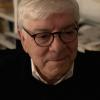
<img src="/sites/default/files/stories/images/oldimgs/10312008p17phb.thumbnail.jpg" alt="" title="-- Skip Schiel 2008 James W. Douglas" height="195" width="150" />Such a condensation skips over many of the assertions in this work of 500 pages, including enough endnotes to make up a second small book. It doesn’t begin to do justice to Mr. Douglass’ 12 years of research or to the amply documented, though admittedly circumstantial, case he lays out for both assertions.
Among the unlikely characters to show up in Mr. Douglass’ retelling is Thomas Merton, the Trappist monk who at the time was writing disturbing works about the nuclear era and peacemaking and corresponding with Ethel Kennedy, wife of President Kennedy’s brother, Robert, who served as his attorney general. In an interview, Mr. Douglass said that Ethel Kennedy’s mother was involved in helping Merton get some of his books typed and into print.
Pope John XXIII also figures in the mix as the third point of what writer Norman Cousins termed “the Improbable Triumvirate,” Kennedy, Khrushchev and the pope, in a book of the same name. Mr. Cousins, a friend of Kennedy, was his informal emissary between the pope and Khrushchev, who, according to Mr. Douglass’ account, received an early copy in Russian of John XXIII’s encyclical Pacem in Terris and was impressed with it. It was hand-delivered by Mr. Cousins, who had just received it during a meeting with the pope. While nuclear peril was in the air, so was peacemaking.
If some of this goes terribly against type -- Khrushchev, the nearly berserk communist leader who banged a table with his shoe at the United Nations -- one might recall also that Khrushchev was, in his own right, a reformer. He advocated “peaceful coexistence,” negotiated the 1963 test ban treaty with Kennedy and pushed enough reforms within the Soviet Union to inspire a coup led by Leonid Brezhnev that overthrew him in 1964. By many accounts, he gave Kennedy the line about modern warfare: “The living would envy the dead.”
Some of the case Mr. Douglass builds relies heavily on tapes that Kennedy made while in office and that were released only in the mid-1990s. The same goes for the secret correspondence between Kennedy and Khrushchev. The material was released following the publication of some of the most highly regarded biographies of Kennedy.
More recent histories, Mr. Douglass said in an interview Sept. 9, “have taken a view of JFK different from previous historians,” though “even professional historians have drawn relatively little from the Kennedy documents from the point of understanding the story.”
<img src="/sites/default/files/stories/images/oldimgs/10312008p16phb.thumbnail.jpg" alt="" title="-- Department of the Interior/National Archives/MCT President John F. Kennedy signs the “Proclamation for the Interdiction of the Delivery of Offensive Weapons to Cuba” at the White House Oct. 23, 1962." height="199" width="300" />A major piece of evidence is Kennedy’s June 1963 commencement speech at American University in which he dealt with the matter of peace, “a topic on which ignorance too often abounds and the truth is too rarely perceived.”
He emphasized that he was not speaking of a “Pax Americana enforced on the world by American weapons of war.” Nor was he speaking of an idyllic and impossible peace or “a peace of the grave or the security of a slave.”
He spoke of peace, he said, “because of the new face of war. Total war makes no sense in an age where great powers can maintain large and relatively invulnerable nuclear forces and refuse to surrender without resort to those forces.”
Not only was such talk anathema to the industrial portion of the military-industrial complex but to his own Joint Chiefs of Staff, whose members had at least twice advocated a preemptive strike against the Soviet Union and also the use of nuclear weapons in our own hemisphere during the Cuban missile crisis.
The April 1961 Bay of Pigs disaster, a failed invasion of Cuba, was a blunder by Kennedy but also, as Mr. Douglass sees it, a setup by CIA operatives who wanted to draw the United States into a full-scale military campaign against the Castro regime. Kennedy pulled back and remarked afterward that he wanted “to splinter the CIA in a thousand pieces and scatter it to the winds,” Mr. Douglass writes. Kennedy used the lessons he learned as a result of the Bay of Pigs in a separate confrontation with the same security agencies when Kennedy advocated neutrality for Laos in Southeast Asia while the CIA and military establishment pushed for deeper engagement.
<img src="/sites/default/files/stories/images/oldimgs/10312008p17pha.thumbnail.jpg" alt="" title="-- Newscom/Zuma Photos From left, Secretary of State Dean Rusk, President John F. Kennedy and Soviet Premier Nikita Khrushchev during talks in Vienna in June 1961" height="219" width="300" />Kennedy won that tussle, but in Mr. Douglass’ view was never able to gain control over the intelligence and military apparatus when it came to neighboring Vietnam and the wider question of growing U.S. involvement in Southeast Asia. Kennedy’s order substantially increasing the number of military “advisers” to Vietnam is but one of a number of actions the president took that would strongly contradict the notion that he was becoming a Cold War pacifist.
Mr. Douglass builds a compelling case for the tension that grew during his short administration between the president and both the CIA and his Joint Chiefs of Staff. JFK’s repudiations of the military’s wish for a first-strike strategy added fuel to the feud, which began early in his tenure. The Joint Chiefs first pressed him to support a nuclear surprise attack on the Soviet Union in the summer of 1961 “in a National Security Council meeting whose significance remained deeply hidden until the declassification of a top-secret document in 1994,” writes Mr. Douglass. According to other reports, Kennedy walked out of the meeting in disgust. Several members of the administration, including Dean Rusk, said Kennedy commented to Rusk as they walked back to the Oval Office, “And we call ourselves the human race.”
If publicly he remained a cold warrior as well as a budding pursuer of peace, there did exist National Security Action Memo 263, a presidential document dealing with a U.S. withdrawal from Vietnam that Kennedy signed six weeks before his death and that would never be carried out.
And there was the advice he received and seemed to value above all others and the comments he made to associates.
In 1951, Kennedy, a young member of Congress, visited Vietnam with his brother Robert and had a conversation atop a Saigon hotel with Edmund Gullion, an official at the U.S. consulate. The French were trying to assert control over Vietnam and the three men could hear the “distant blasts from the Viet Minh’s artillery” as Mr. Gullion told Kennedy, “The French have lost. If we come in here and do the same thing we will lose, too.”
Kennedy received the same advice from Gen. Douglas MacArthur.
A great deal of what Mr. Douglass writes about Vietnam -- the downfall of the Diem government and Diem’s assassination, Kennedy’s regret over appointing Henry Cabot Lodge instead of Mr. Gullion as ambassador to Vietnam, Lodge’s defiance of his orders and the defiance of generals of an order, conveyed through Secretary of Defense Robert McNamara, to devise a plan for quick withdrawal of all troops from Vietnam -- also cuts across more conventional understandings of the history of that period.
Finally, in National Security Action Memo 263, Kennedy called for the withdrawal of “1,000 U.S. military personnel by the end of 1963” and “the bulk of U.S. personnel” by the end of 1965.
One might, of course, see some wiggle room in the statement since the withdrawal was to be done in stages and “the bulk” is an imprecise term. But the intent seemed rather clear, particularly combined with Kennedy’s private comments, which were often at variance with public pronouncements, a contradiction that Kennedy chalked up to political considerations and his need to get re-elected in 1964.
The American University speech was preceded by a September 1961 speech at the United Nations in which he called for an abolition of “the weapons of war ... before they abolish us.” He challenged the Soviet Union “not to an arms race, but to a peace race -- to advance together, step by step, stage by stage, until general and complete disarmament has been achieved.”
Four days after the speech at American University, Khrushchev wrote his first confidential letter to Kennedy, smuggled in a newspaper delivered by a Soviet intelligence agent to Kennedy’s press secretary. In the letter, Khrushchev compares the U.S.-Soviet predicament in the nuclear age with “Noah’s Ark where both the ‘clean’ and the ‘unclean’ found sanctuary. But regardless of who lists himself with the ‘clean’ and who is considered to be ‘unclean,’ they are all equally interested in one thing and that is that the ark should successfully continue its cruise.”
Mr. Douglass taught college students early in his career, and it was while teaching a course on the theology of peace during the 1960s at the University of Hawaii that his students began studying the assassination of the Rev. Martin Luther King Jr. It was a turning point for Mr. Douglass, who was drawn into peace activities and protests. His previous books include The Nonviolent Cross, The Nonviolent Coming of God and Resistance and Contemplation, all three staples of religious peace activists. His interest in the assassination of King led him to an interest in the other giant figures killed in that period, including JFK and his brother Robert. He saw parallels between Kennedy and King, particularly the last phase of King’s life when his critique of the culture expanded from racism to ringing condemnations of its militarism.
Mr. Douglass’ path to publishing JFK was not easy. Orbis Books rejected the manuscript three times before accepting it. Publisher Robert Ellsberg wrote he rejected it for several reasons. First, it was long -- more than 500 pages. Second, it was outside the realm of usual subjects for Orbis, the book publishing arm of Maryknoll. Third, he regarded the world of Kennedy conspiracy theories as a “dark thicket” he was apprehensive to enter. Eventually, after sending the book to a wide range of historians and analysts, Mr. Ellsberg was persuaded of the book’s significance.
Should the book receive wider attention, its delineation of the conspiracy against Kennedy rather than his conversion to peacemaking will be the most controversial aspect since it concludes with a minute examination of old and new evidence that Kennedy was done in by his own security apparatus. That’s a jarring thought, but Mr. Douglass is not the first to claim that something is amiss between the government’s official version of events as contained in the Warren Commission Report and that of a host of witnesses who paint a picture of Lee Harvey Oswald being manipulated as the perfect suspect.
The way Mr. Douglass' "how" stacks up with other theories that point toward the Mafia, the Russians, the Cubans or a combination of any or all of those is unclear.
What is clear is that Mr. Douglass seems to have responsibly and painstakingly plumbed the evidence of the Kennedy assassination from a new angle and raised disturbing yet essential questions.
[Tom Roberts is editor at large of NCR. His e-mail address is [email protected].]
National Catholic Reporter October 31, 2008