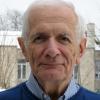
Theologian Edward Schillebeeckx dead at 95

He was a towering Dominican theologian and advocate of Vatican II reform

Dec. 24, 2009
Photo by Margaret McClory

The Belgian-born Dutch Dominican theologian, Edward Schillebeeckx, died Dec. 23 at the age of 95 in Nijmegen, Netherlands, where he lived and taught for more than five decades. He wrote well into his 90s.

He died of natural causes.

Precious Blood Fr. Robert Schreiter, considered the leading U.S. expert on Schillebeeckx, said his legacy will live on, principally for several major contributions. He was the first Catholic scholar to take seriously all the historical research on Jesus that had been done in the 19th and 20th centuries and present it in an intelligible way.

"Anyone who ignores that will not be taken seriously today," said Schreiter, a professor of theology at Catholic Theological Union in Chicago. Schillebeeckx also pioneered the idea of examining "the historical backgrounds of what seemed to be infallible truths and relating their real meaning" in an intelligible way, he said. "He insisted that normal people ought to be able to see a measure of reasonableness in Catholic teaching and be able to link their experiences with the revelation traditions of the Christian faith."

From the time of his appointment to the theological faculty at Nijmegen in 1958, Schillebeeckx was a tireless advocate of a more pastoral, personal theology, one that would also take into consideration the experiences of people rather than base conclusions exclusively on abstract, intellectual concepts. His first major book, Christ the Sacrament of the Encounter with God, published in English in 1963, represented a serious attempt to apply this thinking to sacramental theology. It sharply challenged the more mechanistic approach to the sacraments as mere dispensers of grace and stressed them instead as interactive meetings with Jesus.

With the appearance of some 75 new dissertations on Schillebeeckx's work in the past year, Schreiter said he believes Schillebeeckx's theology may be on the verge of a comeback. "Younger scholars are showing interest in his approach," said Schreiter, who said he is working with the Schillebeeckx Foundation in the Netherlands to produce an 11-volume English translation of all of the theologian's writings, including some that have never before been available in English. Among these is Schillebeeckx's 1984 Theological Testament, which Schreiter said is the best unified presentation of his overall thinking.

According to Schreiter, anyone interested in a sense of how the man approached his work should first read his sermons, three volumes of which are available in English. Schreiter himself had planned to visit Schillebeeckx at his home in Nijmegen in early January.

Preview NCR's Family Life Issue

Watch this video from NCR Editor Dennis Coday for highlights from our annual Family Life special section.

You won't find these articles on our website. Subscribe now to receive all the content from each biweekly issue.

When plans for the Second Vatican Council (1962-65) were announced, Schillebeeckx responded as coauthor of a statement, signed by the seven Dutch bishops, that anticipated virtually all the progressive changes that would come out of Vatican II on issues like liturgy, ecumenism and openness to other faiths and the encouragement of lay initiative. Although Schillebeeckx was not a peritus (expert) at the council, he worked closely with Utrecht Cardinal Bernard Alfrink and others to emphasize the collegial nature of the episcopacy, as a balance to papal infallibility pronounced at Vatican I (1869-70). The Dogmatic Constitution of the Church reflected his views on the subject. Also during the Second Vatican Council, Schillebeeckx joined with fellow theologians Hans Küng, Karl Rahner and Yves Congar in launching the theological journal Concilium.

After the council the Netherlands became the most progressive country in the world in implementing Vatican II initiatives, and Schillebeeckx, often behind the scenes, was at the center of this movement. Perhaps the most ambitious was the effort to form a Dutch National Pastoral Council, an ongoing body with 56 members (some clergy, some laity) elected by diocesan pastoral councils, and another 28 members chosen by the council itself.

Despite a lengthy, elaborate, nationwide preparation, the national pastoral council never got off the ground after the Vatican Congregation for the Clergy declared that members should be appointed by the bishops, not elected, and that the council should not have a permanent character and should not present itself as in any way representing the body of the faithful. The congregation said, "All believers have the right and duty to take an active part in the mission given to the church … but they do not have either the right or duty to give advice to the hierarchy in their exercise of their pastoral task."

Schillebeeckx's personalist thinking was very much a part of the New Dutch Catechism, which became a worldwide Catholic best-seller in the mid-1960s, but the book failed after the Vatican persuaded bishops not to grant an imprimatur to translations of the catechism and suggested much of its content was suspect.

Over the years, Schillebeeckx continued to produce volumes, largely on scripture, history and doctrine. His most influential work, Jesus: An Experiment in Christology, was considered questionably orthodox by the Vatican in 1984 and the Congregation for the Doctrine of the Faith summoned Schillebeeckx to Rome. The congregation questioned him again in 1985 regarding his views on the resurrection of Jesus and again the following year for his understanding of ministry in the church. But he was never officially charged or found guilty.

The international buzz that accompanied a booklet sent to all Catholic parishes in Holland in 2007 was not directly linked to Schillebeeckx, although it clearly contained his theological reasoning. The booklet, approved by the country's Dominican province, stated that, with the scarcity of priests today, Catholic parishes should begin selecting members who would preside over the Eucharist, as was the approved method in the early church. The Dominicans were aware that such a practice would be illegal, but they were undoubtedly basing their approach on something Schillebeeckx wrote in his 1980 book on ministry:

Against the background of the existing church order then, new and sometimes urgently required possibilities are often only to be seen through the medium of what is bound to be regarded as at least temporarily illegal. This is not a new phenomenon in the church — it has always been the case. I am bound to say that an alternative praxis of critical Christian communities is both dogmatically and apostolically possible. It is, in my opinion, a legitimate alternative Christian possibility which is demanded by our present needs. Given the existing canonical order of the church, this alternative praxis is not even contra (against) the order but praeter (alongside) the order, that is, it is not in accordance with the letter of the church's order, but it is in accordance with what (in earlier situations) that church order really wanted to safeguard.

When I visited him in Nijmegen in 2007 I was impressed with his calm demeanor. It came, I think, from his confidence in God and in Christ. He knew the story was not over, though he was keenly aware of the hierarchical church today and had no misapprehensions about the direction in which it seemed to be heading. This is what he said in 1990:

My concern is that the further we move away in history from Vatican II, the more some people begin to interpret unity as uniformity. They seem to want to go back to the monolithic church which must form a bulwark on the one hand against communism and on the other hand against the Western liberal consumer society. I think that above all in the West, with its pluralist society, such an ideal of a monolith church is out of date and runs into a blind alley. And there is the danger that in that case, people with that ideal before their eyes will begin to force the church in the direction of a ghetto church, a church of the little flock, the holy remnant. But though the church is not of this world, it is of men and women. Men and women who are believing subjects of the church.

[Robert McClory is an author and frequent contributor to NCR.]

May he find the peace so

May he find the peace so often interrupted here on earth.

He was a giant. A holy man, a

He was a giant. A holy man, a light to the Church and like Teilard de Chardin, his thought will gain greater prominence in years to come. Rest in peace good and faithful servant.

Amen to that, Faithful

Amen to that, Faithful Catholic. Part of that thought growing prominent will be, I'm sure, his major support for the reforms to come out of the Council. Another segment will have as platform, his "view that most young Catholics are 'choosing their own version of Christianity.'" Perhaps that's what scares other churchmen living in fear of a "greatest crisis" posed by Vatican II and whose efforts go to developing and boxing up a non-vibrant view of Catholic Identity to be "governed by love"(Cardinal Francis George)after the top-down manner of our present hierarchy. As for me, I prefer optimism rising from institutional "movement toward Jesus Christ" (Schilleebeeckx)after the manner of People of God or the Pilgrim Church.

Another giant is gone from

Another giant is gone from our midst! Rest in Peace!

“I believe in God and in

    “I believe in God and in Jesus Christ,”   he said,   as if to ask:   “And what else would one need?”

.
Amen... Amen... Amen!

"... parishes may move

"... parishes may move forward without the bishops’ participation, remaining confident “that they are able to celebrate a real and genuine Eucharist when they are together in prayer and share bread and wine.”

"This notion of community-based ordination was in the background as we sipped our wine, nibbled on cheese crackers and talked of other things."

Were they celebrating a "community-based" Eucharist?

How appropriate to leave us

How appropriate to leave us on Christmas Eve. We will miss his physical presence, but his brilliant spirit stays with us in all the ways he was able to share his deep faith in the essentials. We can thank God for his legacy and know that we have accessible to us the same gifts of faith and hope in the Incarnate God who lives among us still.

What a wonderful man. What

What a wonderful man. What insight and certainly with belief in God and his son, Jesus Christ, what else do we need. Let us not be dishartened by the Church as it seems to officially move furthr and further away from Jesus.

This piece on

This piece on Fr.Schillebeeckx lifts my spirit again. His works formed my theology in my youth, and to hear them again gives me hope and joy. We live through the dark so that we can come to the light. Thank you, Fr. Schillebeeckx, for your words on this Christmas Eve. May you know the fullest realization of our hope.

Schillebeeckx was one of the

Schillebeeckx was one of the greatest minds and hearts in the entire history of Catholicism. We will miss him but his work will live on forever in his published books.

“Men and women can be chosen

“Men and women can be chosen to preside at the Eucharist by the church community; that is, ‘from below,’ and can then ask a local bishop to ordain these people ‘from above.’ ” What a beautiful and far-sighted doctrine! A local chaplain of a women's group had to end his chaplaincy because the women believed that favoring women's ordination is heresy. How far are people in the pews--at least in Mid-America---from Edward Schillebeeckx and the Holy Spirit.

JR

not that far at all we only

not that far at all
we only need read

Perhaps the better question

Perhaps the better question is how far from the Holy Spirit was Schillebeeckx. If authority rests in the people, not in the magisterium, why would the conclusion of these women be doubted as not of the Holy Spirit? The interesting thing to note is that diocese with a more traditional bent do not have vocations problems as severe as those in ultra liberal diocese as in the Netherlands.

"How far are people in the

"How far are people in the pews--at least in Mid-America---from Edward Schillebeeckx and the Holy Spirit."

If the people in the pews are so far from the Holy Spirit, then they can't ordain, then Schillebeeckx is wrong.

For all that liberals like Schillebeeckx et al. like to rave against the hierarchy, they're no better. You just want to impose your ideologies on everyone else. If the people in the pews should be in charge, it means that wannabe hierarchs like McBrien or the mercifully late Schillebeeckx shouldn't be.

Dear sir, your comments on

Dear sir,
your comments on Fr. Schillebeeckx make me angry and sad. Prof. Schillebeeckx never 'raved' against the hierarchy, nor was he a 'wannabe hierarch'. Conducting serious, honest and open-minded research is the task of every theologian, and Fr. Schillebeeckx did just that. Fr. Schillebeeckx was an excellent theologian and never aspired to more than that (and to being a good Dominican). He was an integer person who was loyal to the Church, despite that Churche's many flaws. He sought to serve that church and did that faithfully for many years. Even if you don't like his ideas or his proposals, it is obsetting and sad that you should call him 'mercifully late'. 'De mortibus nil nisi bonum' (about the dead, nothing but good) is something to take at heart

Truly Schillebeeckx was a

Truly Schillebeeckx was a skillful servant. He feared the institutional church did not “have enough movement toward Jesus Christ.” Movement toward Jesus Christ = helping and honoring the poor.

Father Schillebeeckx, a

Father Schillebeeckx, a Belgian by birth, passed away; may he rest in peace. However, may his books, papers, his work in theology, etc. NEVER rest in peace.

Old in years but obviously

Old in years but obviously young at heart.

Just the opposite of too many of our traditionalist hierarchs young in age but old in heart.

"I have come that you may have life" (which, of necessity, embraces change).

But don't tell that to the old fogeys and lackeys in Rome and elsewhere.

Well said. I would like his

Well said. I would like his thoughts to be listened too. We need to hear more about Jesus and His Love especially tha all take and eat.

What an astonishing mind; I

What an astonishing mind; I can recall, at the age of 18 or 19, reading some of his essays and being given great hope by them. Even at that tender age, his writing was cogent and accessible to a young Catholic.

Thank you, Fr. Edward, for your body of work!

The New Dutch Catechism

The New Dutch Catechism enabled me to do two things: 1) to accept the historical Jesus, and 2) to embrace Roman Catholicism (1971). I am now a Cistercian (Trappist) monk. I owe Schillebeeckx a great deal, for, I believe, he oversaw the production of that catechism.

I owe Fr. Schillebeecks a

I owe Fr. Schillebeecks a debt of gratitude. The New Dutch Catechism enabled me to do two things: 1) to accept the historical Jesus, and 2) to embrace Roman Catholicism (1971). The result is that I am a Cistercian (Trappist) monk. RIP.

A wonderful Holy man and a

A wonderful Holy man and a true scholar.

I pray the day will soon come

I pray the day will soon come when the truths Father Edward propounded will gain acceptance, even among the heirarchs of Rome, so that the march towards unity among Christians will once again become a dominent theme in the lives of the faithful. Thanks be to God for Edward's life and witness.

SANTO SUBITO the most

SANTO SUBITO
the most profound loss for our Holy Roman Catholic Church remains our failure to read this greatest modern theologian.

I keep in the central spot in the chapel bookshelf both Jesus and Christ, and urge everyone devote to our Faith to read them carefully, regularly.

Please see also his Ï am a Happy Theologian!

And I wish this Christmas the bishop of Bellevue Illinois, and Morlino, and Dolan, and company, and each and every one of us, top down, read his works on Ministry

A great loss for our Church is not to read him and keep his Spirit alive.

What a great gift he has given our Church for a good half century. What a great gift God has given us in his work.

Father Schillebeeckx, ora pro nobis
frère charles du désert OSB OBLAT (Congrégation de Subiaco)

Speaking of optimism, on this

Speaking of optimism, on this last day of Advent I'm buoyed by the addition of NCR'S promise, "STORY DEVELOPING. MORE TO COME." What a way to begin celebrating the inruption of God into history as well; it so parallels Fr. Shillebeeckx's own contributions. I'm optimistic, "always optimistic." Thank you.

For us VII Catholics (b.

For us VII Catholics (b. 1958), Father Schilbex was an unknown.

His views on ordination don't

His views on ordination don't sound too orthodox to me!

They are quite orthodox

They are quite orthodox because they are historically sound.

See Kenan Osborne's PRIESTHOOD: A HISTORY OF THE ORDAINED MINISTRY IN THE ROMAN CATHOLIC CHURCH. Ordination in some rudimentary form took perhaps as long as 200 years to develop after the resurrection.

History and doctrine are not necessarily the same.

"[F]acts, as history teaches, carry more weight than pure doctrine" (Joseph Ratzinger, HIGHLIGHTS OF VATICAN II, Paulist Press/Deus Books, 1966, p. 16).

Historical fact trumps church doctrine.

JJ, Would you mind

JJ,

Would you mind explaining the last statement in your post, "Historical fact trumps church doctrine."? I don't think they are the same at all but two completely different things. Also, what is the context of the Ratzinger quote above. He seems to be talking in the secular context. Secular people place no value in doctrine at all.

Doctrine if it is valid at all is an insight into the mind of God put in human language which is an imperfect way of expressing what is in God's mind. If the Church rules a doctrine De fide (Of the faith) then the human language approximation of what is in God's mind is as close as humans can get to expressing the Godly concept.

and greek philosophy doesn't

and greek philosophy doesn't have the monopoly of the human language to express in finite ways the infinitely rich concept of the mystery...

The word 'doctrine' means

The word 'doctrine' means 'teaching', nothing more, nothing less.

Ratzinger's quote relates to the recognition of national episcopal conferences that, per the cardinal, had a certain legitimacy and authority in their own right vis-a-vis approval of liturgical matters including translation.

I cannot speak for the future pope, but his assertion that "facts, as history teaches, carry more weight than pure doctrine" means that, as I noted earlier, fact ultimately trumps doctrine/teaching. As an example, we have a doctrine that "Jesus founded the Church". We know from history, however, that Jesus and his disciples knew only the Jewish faith and Jewish priesthood. It is pretty well accepted that reference to "church" in Matthew is an interpolation, i.e., phraseology added later in the passing on of this oral tradition. We have another doctrine that the validity of a mass (and consecration of the eucharistic elements) is contingent on the service being presided by a duly ordained priest/presbyter. In fact, this doctrine flies in the face of ecclesial history in that the earliest liturgies/masses were presided by non-ordained men whose liturgical leadership was predicated, first and foremost, on their community leadership.

In short, we need to acknowledge that today's teaching must not contradict the earliest teaching and practices considered valid by our primitive ancestors in the faith. Ultimately, what was fundamentally good enough for them must be fundamentally good enough for us today. We must be prepared to question those assumptions, i.e., "taken for granteds", that we learned years ago in religion classes. We must not ignore how our ecclesial roots have been obscured by the overgrowth of ecclesial accretion.

No, your argument fails & you

No, your argument fails & you don't offer much to defend your position. There is a doctrine that only a validly ordained priest can effect the change in bread & wine to the Body & Blood of Christ. This is part of the doctrine of the Eucharist. Admittedly things were different in the beginning of the Church where the essentials were there in germinal form. Doctrine develops, the Church moves through history and the Spirit guides it. This is the premise of the Catholic Church. If you wish to return to the beginning and maintain that the Church lost her way as the Reformers did, then you are a Protestant. So why are you posting here? Do you believe that Vatican II somehow validated the Reformation?

As far as Christ founding the Church upon Peter, the Rock, admittedly, the word "Church" as we understand it was not in the ancient languages. But surely there was a word to denote a religious community, a faith community, what have you back then. The Jewish faith community is not that different from a church when you think about it. This word in germinal form became what we understand the Church to be now.

Admittedly though for any Catholic doctrine today to stand, there couldn't be historical facts which actually contradicted it back when. I don't believe one can set such facts forward. Whatever one thinks of the Catholic Church & her doctrinal system, logically & historically all of her teachings are sound.

Fr. Edward, pray for us! My

Fr. Edward, pray for us! My spriritual father for many years, Fr. Luis Manuel Guzman, M.Sp.S., founder of our youth ministry in Guadalajara, Jal. Mexico, had us reading Fr. Edward, OP. They had the same teachers at the Angelecum. Fr. Luis Manuel, wanted us to follow the Vatican II events closely. Fr. Edward was a key in this. Like Fr. Micah, ocso, he helped form my perception of Church. He was a follower of Fr. M.J. LaGrange. God bless him! Now it is our turn to keep this Church alive.

The most influential catholic

The most influential catholic theologian of the 21st century - so far :-)

In what way? His theories

In what way? His theories were fleeting, his influence waned years ago. Ratzinger, Wojtyla have outclassed and outlasted him.

In late October I was at a

In late October I was at a Jesuit retreat house, when I came upon Fr. Edward's Jesus, An Experiment in Christology. It's not easy reading for a layperson like me, but it's worth the challenge. Every page inspires me to stronger faith in Christ. Schillebeeckx validates my intelligence and intellect in a way these have never been validated by blind obedience to myth. Intelligence and intellect are tools created by God, that we may know God as fully as humanly possible. The Vatican need not worry that Schillebeeckx would mislead Catholics. It should be concerned that it is not able to discern the truth that Schillebeeckx is speaking. To deny what Schillebeeckx writes is to deny Christ. The Congregation for the Doctrine of the Faith needs to examine its motives in judging Schillebeeckx as unorthodox; that the Vatican bureaucracy doesn't recognize Christ in Schillebeeckx's teaching is symptomatic of the Vatican's ongoing denial of clergy sexual abuse. In both instances the Vatican prefers and chooses myth over and above Truth, thereby being the heretic it projects onto those who see beyond its narrow vision. Would that the Congregation for the Doctrine of the Faith had Schillebeeckx humility.

He seemed to be trying to

He seemed to be trying to form a parallel to the hirechy. Ultimately the Holy Spirit runs the church, and not theologians.
The Church is definately headed where the Holy Spirit desires.

May he rest in peace. And may

May he rest in peace. And may his works be read by many more…

This blog leaves out the fact

This blog leaves out the fact that Fr Schillebeeckx had heterodox views on sexual ethics which got him into trouble with the Vatican as well. It seems to me that he always sailed close to heretical waters but never quite landed in them.

But the idea of the scarcity of priests as a rationale to do something illegal is the biggest joke in the Catholic world! Ha, ha! Why is there a scarcity of priests? Because Catholic married couples practice the mortal sin of contraception. God will not reward mortally sinful marriages with vocations, period! No one DESERVES the Eucharist. The Eucharist is a privilege to be thankful for when it is available and it should not be received by those conscious of grave sin. This includes those who by their mortal sin of contraception have left the Church without enough priests.

Oh please! Why are the only

Oh please! Why are the only people in the Church "good Catholics" because they think like you do? I am amazed at the arrogance of judging another's "sinfulness" be it who should be "allowed" to receive Jesus in the Eucharist or the shortage of priests is due to couples using contraception and living in sin. I am appalled by some of the arrogant, privileged young men who are coming out of our seminaries more conservative and rigid than I thought could be possible. And how is it that we as humans can put God in a box and tell Him who He may or may not gift with a vocation to the priesthood? We are so small compared to our God whose only Son came to show us the Father. And how did our Jesus do this? Read Scripture and realize that he did not scold anyone (except those desecratingi the temple with their wares) but loved them and made them accountable to search their hearts for their sins. He associated with sinners AND women--who believe it or not just may have been holy people. Please, look at yourself and judge the only person whose heart YOU truly know--your own! And stop judging others, including God who just may be calling women and married priests to be presiders of the liturgy and the sacraments. I believe there is a shortage of priests not because of birth control but because those responsible for accepting candidates are not listening to the Holy Spirit's call to a new group of people who believe God is callng them to the priesthood.

God can call anyone He likes

God can call anyone He likes to the priesthood & religious life; I don't deny that. What I said was that He will not reward a sinful Catholic marriage with vocations; I stand by that. He still might call a person in such a family to the priesthood or religious life in spite of their sinful parents. Like it or not, contraception is a moral evil.

You cafeteria types know nothing of the real Catholic faith & Tradition. I suggest that you educate yourself instead of shooting your mouth off on this forum & showing your ignorance!

HOME for Christmas...a

HOME for Christmas...a fitting "Nunc Dimittis" for this good and faithful servant of his Dominican vocation to CONTEMPLATE and SHARE THE FRUITS OF HIS CONTEMPLATION (Contemplare et Contemplata Aliis Tradere).
http://www.amazon.co.uk/Edward-Schillebeeckx-Theologian-Catholic-Theolog...
cf. especially pages 29-36 about why he became a Dominican and not a Jesuit!

Beloved +Pere Congar, O.P.

Beloved +Pere Congar, O.P. provides a worthy testimony to his student, Fr. Schillebeeckx, O.P.'s life and work in a "Mon Journal du Concile" entry for Sunday, October 21, 1962:

"D'autre part, il existe dans l'Eglise un large groupe de theologiens vivants et qui ne se cantonnent pas dans les chapitres tout faits de la theologie d'ecole, mais S'EFFORCENT DE PENSER ET D'ECLAIRER LES FAITS DE LA VIE DE L'EGLISE." (tome I, psge 137)

http://www.editionsducerf.fr/html/fiche/fichelivre.asp?n_liv_cerf=5861

My somewhat free translation with emphasis added (que Congar ne m'en veuille pas trop pour ceci):

"Moreover, there exists within the Church a large group of vibrant theologians who refuse to confine themselves to the ready-made chapters of schoolboy theological manuals, but who STRUGGLE TO THINK AND ENLIGHTEN THE CHURCH'S LIVED REALITIES."

And the STRUGGLE CONTINUES....

Specific funeral arrangements

Specific funeral arrangements and details at:

http://schillebeeckx.nl/stichting?langswitch_lang=en

Fr. Edward loved the Church

Fr. Edward loved the Church so much that he became a dissenting theologian - and a happy one at that. May there will be more.....

Thank you so much

Thank you so much Fr.Schillebeeckx

Schillebeeckx is a continuing

Schillebeeckx is a continuing blessing to the Church. Unlike Hans Kung, Schillebeeckx humbly accepted the Vatican request to appear before its inquiry. When they asked him how he could decline to trace the structure of ministry to the Church's earliest days, he said it was because there is not historical evidence to that effect. There was no real response by his inquisitors. He was never found to be a heretic. The Vatican has ruled in its new Code of Canon Law that the Eucharist is indeed a right. This fact should lead the Church to changes in criteria for ministers, including allowing for female priests and married priests. Von Hugel and David Tracy and Edward Braxton do not reduce Church teaching to the hierarchy; neither do they reduce Church teaching to theologians. They outline three mediations--the episcopal magisterium, the theologians, and existential mediation (people's personal appropriation and/or mystical experience). Some ideas of Vatican II didn't work out so well; and some of the blame goes to theologians. Commonweal's issue on the 25th anniversay of Vatican II liturgy changes found virtually every theologian contributor agreeing that the liturgical changes had resulted in a lamentable loss of the sense of the sacred. Liturgy is too important to be left only to liturgists. Improvement and correction can be and should be made.

Schillebeeckx is a continuing

Schillebeeckx is a continuing blessing to the Church. Unlike Hans Kung, Schillebeeckx humbly accepted the Vatican request to appear before its inquiry. When they asked him how he could decline to trace the structure of ministry to the Church's earliest days, he said it was because there is not historical evidence to that effect. There was no real response by his inquisitors. He was never found to be a heretic. The Vatican has ruled in its new Code of Canon Law that the Eucharist is indeed a right. This fact should lead the Church to changes in criteria for ministers, including allowing for female priests and married priests. Von Hugel and David Tracy and Edward Braxton do not reduce Church teaching to the hierarchy; neither do they reduce Church teaching to theologians. They outline three mediations--the episcopal magisterium, the theologians, and existential mediation (people's personal appropriation and/or mystical experience). Some ideas of Vatican II didn't work out so well; and some of the blame goes to theologians. Commonweal's issue on the 25th anniversay of Vatican II liturgy changes found virtually every theologian contributor agreeing that the liturgical changes had resulted in a lamentable loss of the sense of the sacred. Liturgy is too important to be left only to liturgists. Improvement and correction can be and should be made.

Fr. Schillebeeckx's passing

Fr. Schillebeeckx's passing reminds me of the Sixties song: "Where have all the flowers gone?"

Note Schillebeeckx's prophetic voice on where the church is heading.

Are we in the Catholic Dark Ages again? Are there no flowers blooming?

Goodbye, old friend. I wish

Goodbye, old friend. I wish I had written this poem by Kenneth Rexroth. It seems to be written for you, about you, and about all of us. Rest in peace. Venceremos!

FOR ELI JACOBSON
Kenneth Rexroth December 1952
There are few of us now, soon
There will be none. We were comrades
Together, we believed we
Would see with our own eyes the new
World where man was no longer
Wolf to man, but men and women
Were all brothers and lovers
Together. We will not see it.
We will not see it, none of us.
It is farther off than we thought.
In our young days we believed
That as we grew old and fell
Out of rank, new recruits, young
And with the wisdom of youth,
Would take our places and they
Surely would grow old in the
Golden Age. They have not come.
They will not come. There are not
Many of us left. Once we
Marched in closed ranks, today each
Of us fights off the enemy,
A lonely isolated guerrilla.
All this has happened before,
Many times. It does not matter.
We were comrades together.
Life was good for us. It is
Good to be brave * nothing is
Better. Food tastes better. Wine
Is more brilliant. Girls are more
Beautiful. The sky is bluer
For the brave * for the brave and
Happy comrades and for the
Lonely brave retreating warriors.
You had a good life. Even all
Its sorrows and defeats and
Disillusionments were good,
Met with courage and a gay heart.
You are gone and we are that
Much more alone. We are one fewer,
Soon we shall be none. We know now
We have failed for a long time.
And we do not care. We few will
Remember as long as we can,
Our children may remember,
Some day the world will remember.
Then they will say, “They lived in
The days of the good comrades.
It must have been wonderful
To have been alive then, though it
Is very beautiful now.”
We will be remembered, all
Of us, always, by all men,
In the good days now so far away.
If the good days never come,
We will not know. We will not care.
Our lives were the best. We were the
Happiest men alive in our day.

Unlike Hans Kung, whom I

Unlike Hans Kung, whom I would class as clever and articulate, Edward Schillebeeckx was definitely in the same class as Rahner, de Lubac, Congar, von Balthasar and Ratzinger - that is - profound. However, like Rahner, there are elements of his theology which are profoundly wrong. No doubt he meant well, but the Dutch Church, which is now on life support, was profoundly influenced by his theology. I wonder how Fr Edward explained to himself the slow spiritual suicide of the Church in the Netherlands?

This message is for

This message is for trumpeter, just to let him know that Protestants read Schillebeeckx too. Half a dozen or so of us Episcopalians just finished JESUS: AN EXPERIMENT IN CHRISTOLOGY. Admittedly, we may read a little slower than Catholics. It took us a year and a half to complete the book. It was hard work, and rewarding. Thank you, Fr. Schillebeeckx, for your determination to make our common faith intelligible.

Glory be to the Triune God

Glory be to the Triune God for the the bright stars which pierce, from time to time, the foreboding darkness and lend hope to all who try to understand more deeply the One of Infinte Love.

Eduard Schillebeeckx

Eduard Schillebeeckx exit.
Eindelijk is de theoloog, Doctor, Magister, Professor Eduard Schillebeeckx op 95 jarige leeftijd geschiedenis geworden.
Hij was de stichter, en daardoor het boegbeeld van de beruchte, opstandige 8 Mei Beweging – intussen al lang ter ziele gegaan. Hun principe werd uitstekend door een zuster verwoord, die in die periode kraaide: De Paus moet maar eens goed naar ons komen luisteren.
Nicaragua heeft de toenmalige Paus het alleronbeschoftst behandeld. Nederland kwam op de tweede plaats dank zij E.S. en handlangers.
Zou hij nog in aanmerking komen voor een loutering in het vagevuur, of zou hij door zijn halsstarrig gedrag zich in het eeuwig ongeluk gestort hebben?
Zo`n vijftig jaar geleden kwam er in Engeland het boek op de markt: “God is dead.“ E.S. heeft daarover een afkeurend commentaar geleverd. Van bepaalde zijde werd hij daarover aangevallen. Toen heeft onze Grote Wetenschapper een nieuw, positief commentaar gegeven.
Als een wetenschapper vanwege kritiek plotseling een tegengestelde mening verkondigt, is zijn gezag twijfelachtig geworden.
Ofschoon hij de Belgische nationaliteit had, heeft hij nooit een eredoctoraat aan de Universiteit van Leuven gekregen. De reden? Hij heeft voor een Belgische rechtbank een proces met gesloten deuren gehad wegens zedenmisdrijf in Belgie. Het toenmalige weekblad DE TIJD heeft daarover een kort bericht gepubliceerd.
Het veelgeroemde boegbeeld van de AMB ziet er niet zo fraai uit.

Was encouraged to see the

Was encouraged to see the Episcopalian response about reading Schillebeeckx. I am an American Methodist and have four of Father Schillebeeckx's books. I have read and re-read them since the late '80's. His interpretations of Aquinas into contemporary application are brillant. I see many of his intellectual struggles with the truth of the Gospels as reflections of the same struggles of Wesley and Whitefield during the awakening to which they contributed. Schillebeeckx lived a long and productive life and seemed to have died a contented man in the arms of Christ. What more can one ask of life?

Edward Schillebeeckx lost his

Edward Schillebeeckx lost his soul, died outside of the Catholic Church as a member of the Vatican-2 heretic cult which was founded in 1965 at the Vatican.

There are over 200 anti-Christ heresies in the Vatican-2 documents, one heresy makes an organization a heretical society in which we cannot participate under pain of automatic excommunication.

See Section 12 of Immaculata-one.com for 50 of the V-2 heresies with Catholic corrections.

I have over 40 Catholic Dogmas and citations addressing automatic excommunication for heresy and participation in a heretic cult on Section 13.2.

The Water Baptism Dogma is on Section 7.2 -- which shows that "baptism of desire" is a complete fraud.

The Salvation Dogma, Ex-Cathdra citations is listed in Section 1.

Catholic citations on the fewness of the saved is on Section 22.

See Section 19.1 for a Formal Abjuration for re-entering the Catholic Church after your automatic excommunication.

Mike
Our Lady of Conquest
Pray for us

It is up to our prudence and

It is up to our prudence and the enlightenment of the Holy Spirit to discern which is which in the teachings of E. Schillebeeckx. Needless to say, he was a man of profound erudition and concern for the Church. May he rest in peace.

Post new comment

NCR Comment code:

  1. Be respectful. Do not attack the writer. Take on the idea, not the messenger.
  2. Use appropriate language. Avoid vulgarities and slurs.
  3. Keep to the point. Deliberate digressions don't aid the discussion.

For more detailed guidelines, visit our User Guidelines page.

The content of this field is kept private and will not be shown publicly.
(if you have one; if not, leave this blank)
  • Web page addresses and e-mail addresses turn into links automatically.
  • Allowed HTML tags: <a> <em> <strong> <cite> <code> <ul> <ol> <li> <dl> <dt> <dd> <font> <swf> <swf list>
  • Lines and paragraphs break automatically.
  • You may use <swf file="song.mp3"> to display Flash files inline

More information about formatting options

CAPTCHA
This is to prove you are a human visitor and to prevent automated spam submissions.
Image CAPTCHA
Enter the characters shown in the image.