
The church will submerge before any emergence

'It could be a generation or two of real darkness before something happens'

May. 15, 2009
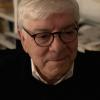
Fr. Donald Cozzens speaking at St. Joseph's College in Patchogue, N.Y., in 2005. (CNS)

In Search of the Emerging Church

Fr. Donald Cozzens, who has produced arguably one of the most candid examinations of the contemporary Catholic priesthood and hierarchical culture in the United States in a series of four books published since 2000, believes the church will submerge in many ways before any emergence occurs.

Cozzens is a priest of the Cleveland diocese and had been for decades before he began writing the series of books on the priesthood and the structure of the church. He edited an earlier volume on Spirituality of the Diocesan Priesthood that appeared in 1997. He had been vicar of priests for the diocese as well as president of St. Mary's Seminary, so his writing has a ring of authenticity and experience.

These days he is writer in residence and teaches a course in Christian Spirituality at John Carroll University. During my time in Cleveland, I visited Cozzens in his office on the campus of the Jesuit school.

Our conversation began with a discussion of the premise for this trip -- the hunch that something new is emerging in the Church. Cozzens takes a dimmer view.

"Let me say that before I see the church emerging into new forms, it actually is going to do some submerging," he said. "A good percentage of the church is grieving right now. We're closing parishes. We're consolidating parishes. Fewer people are going to Mass on Sunday," he said, also mentioning the declining number of priests and nuns.

"From your point of view, the church is emerging," he said. "It's pregnant with possibility, but how it's going to emerge, I don't know."

Cozzens said any emergence is going to be affected by the attitude of bishops toward laity, toward vowed religious and toward priests. "If what I've written earlier is more or less on target, we're witnessing the last era of the feudal church, especially in the West. … If we are witnessing the last decades or generation of the feudal church, what is going to happen?"

He thinks a lesson can be drawn from Western Europe, where the church has shrunk dramatically and few people attend Mass. "The claim that the Eucharist is really the center, the pulse and heart of our faith, will be put to the test. We're going to be asking Catholics to fast from the Eucharist, and the crisis, to a certain extent, is church made." While emerging styles of leadership in ministry and pockets of vitality exist in the U.S. church, he said, for many there is increasing confusion as the church submerges.

NCR: February 3-16, 2012

Subscribe to NCR to get all the news and special features that aren't always available online. In this issue:

- US News: Bishops Host Conference on Immigration
Conference fields advocates' questions on law, policy

- Special Section: Deacons. Serving as parish administrator; roles of wives; and more

- Study: Black Catholics are more engaged
New study by Notre Dame researcher about parish involvement in America

Subscribe now!

Most Catholics, he contends, are content with things as they are. If their church closes, they have a car and will go where they're told. If they get a good sermon, they're happy. Others who care deeply and keep informed of what's happening in the church, while a minority, "can't understand why women are treated the way they are. They can't understand why the church insists on mandatory celibacy. They can't understand why some pastors won't let their daughters serve Mass. They're not leaving. They're just heart sick, I think. I think many of them feel sad. I used the word grieving earlier. I think we are grieving, and so what goes on during this period of being submerged?"

His hope, he said, is that "we're not going to become embittered and cynical," but rather that "there will be a real spiritual awakening. I hope there will be a turn to contemplative prayer. I think Karl Rahner was on to something when he said, 'The Christian of the 21st century will be a mystic or not at all, a contemplative or not at all.' "

Cozzens said he generally agreed with the point Phyllis Tickle makes in her book The Great Emergence: How Christianity Is Changing and Why that Christianity is currently going through one of it's every-500-years convulsions and that a central question that accompanies each of the upheavals is: Where is the authority?

"I think we are in the midst of change," he said. "There is a lot of anxiety going on and a lot of uncertainty." He mentioned that in class he's using the work of theologian Fr. Ronald Rolheiser, a member of the Oblates of Mary Immaculate, who contends, according to Cozzens, that "even more upsetting for some people is the undermining of their long-held certainties. The challenge they face might not be that of changing one idea for another, but rather that of replacing certainties with uncertainty.

"We talk about the certainty of faith, but that's a special kind of certainty. The anxiety is grounded in the fact that we have a different way of looking at authority. We have a different way of looking at the Catholic church which, until recently, claimed to be a perfect society. We see that's not true any more, and we'll have ongoing financial scandals, I believe, in the decades ahead, simply because the system almost invites financial scandals. A benefice system doesn't work anymore because the serfs are well educated people. They want to see the books. They would like to know what is going on."

At another point in the conversation, Cozzens referred to authority as "one of the biggest issues for my ordained brothers of the priesthood. … We're in the midst of a crisis of authority right now because in a feudal system, authority calls for one virtue over the others, and that's obedience."

In priest retreats, which he has conducted throughout the United States and in Ireland, Cozzens is telling priests that he believes "our first authority has to be the Gospel," followed by conscience as we understand the Gospel. "I'm going to Gospel values ahead of conscience. The third authority should be the church as not only the bishops, but the sensus fidelium [Latin for "sense of the faithful"]. If I behave in a way that is contrary to the communion of the church, I really have to ask myself, 'Don, do you know what you're doing here?' "

In a sense, he says, the hierarchy of Gospel, conscience and church "is a false hierarchy because I think that those three dimensions of the spiritual life of the baptized Catholic are not necessarily one, two and three.

"I know the Gospel can be looked at in many different ways, but I think there is a certain Gospel truth. The radicality of Jesus' message, how does my conscience fit with that and this church I belong to?"

In ways not unlike earlier eras, he thinks science today is "shaking the Catholic imagination."

Sr. Elizabeth JohnsonSr. Elizabeth Johnson He mentions the work of Sacred Heart Fr. Diarmud O'Murchu, theologian Elizabeth Johnson's The Quest for the Living God and the cosmology of contemporary scientists. "I'm so blown away by how old our universe is, and then people are talking about multiple universes. So you've got time, and then you've got space. We are in the heavens. We know that right now. That has to have an impact on a lot of the imagery, especially biblical imagery that we Catholics have been raised with.

"I think most of our clergy still have a pretty traditional image of God even though our God is fundamentally mystery, and we know little about God, in spite of the revelation of Jesus the Christ and the Hebrew scriptures.

"So, you take time, our new understanding of the mystery of time, our new understanding of the mystery of space, and a more humble acknowledgement that God remains fundamentally mystery to us … all of this is creating a perfect storm, with winds blowing every which way."

And he believes it could be decades before the storm settles. "What's happening now, what's emerging right now, if it's a movement of integrity and wholeness, then I hope we're going to have a new respect for the freedom of the Holy Spirit to give charisms of leadership in ministry where the Sprit wills," he said.

"As I say that, I'm afraid I'm a little nervous that I am being too optimistic here. It could be a generation or two of real darkness before something happens."


Cozzens’ books on the priesthood include:

  • Spirituality of the Diocesan Priest, a book he edited, 1997.
  • Changing Face of the Priesthood, which appeared in 2000. It is a psychological and spiritual look at priesthood.
  • Sacred Silence: Denial and the Crisis in the Church, published two years later, focused on church structure and the silence around such issues as the sex abuse scandal.
  • Faith That Dares to Speak, published in 2004, argues that the church is the last feudal system in the West.
  • Freeing Celibacy, 2006, his latest, calls for a review of mandatory celibacy.

------------------------------------------------------------------------------
Tom Roberts, NCR editor at large, is traveling the country reporting on parish life. He is on the first of several trips he plans to take, this time moving through Ohio, eastward into New Jersey and on to the nation’s capital. His e-mail address is troberts@ncronline.org. Read the full series here: In Search of the Emerging Church.

--------------------------------------------------------------------------------

Follow Tom Roberts on his journey "In Search of the Emerging Church." Sign up to receive an e-mail alert when his stories are posted to this series. If you already receive e-mail alerts from NCR, click on the button that says "update my profile."

--------------------------------------------------------------------------------

Fr. Donald Cozzens has

Fr. Donald Cozzens has written many thoughtful and well respected books that deserve our admiration. Tom Roberts is to be commended for this article and many other articles he has contributed to NCR. We are in one of the most dark periods of the Catholic church no doubt. Light is breaking through with the help of the Holy Spirit. We are on the doorsteps of a new and emerging church where all will be made whole and equality of the sexes will be a small part of this new church. Exciting days ahead. The old guard is near death. The lay people have become educated and are filled with the Holy Spirit. A new day dawn.

I pray, everyday, that this

I pray, everyday, that this is true.

"We're in the midst of a

"We're in the midst of a crisis of authority right now...."

We have had a generation of "Powerful" and "Influential" gang of "Feudal Crooks and "Criminals" (Pedophiles who have been "tolerated and protected" by their Bishops and Cardinals like Cardinal Law) take over most of the "resource-rich" ("real estate" rich) dioceses in the Catholic Church in America.

In their quest for power, they "tolerate and promote" priests like this priest in New York:

http://www.buffalonews.com/nationalworld/state/story/480629.html

11/01/08 06:39 AM
Diocese bars priest named in suit

NEW YORK — A Catholic priest accused of seducing a distraught New York divorcee has been dropped as a hospital chaplain and barred from serving as a priest in the city.

The Rev. Elvis Elano is named in a $25 million lawsuit that details his relationship with Judith Rodrigues-Lytwyn, whom he met when she came to him for confession at a Queens church.

He left two months ago to work as a chaplain at Benedictine Hospital in Kingston, living in the rectory of nearby St. Joseph’s Church.

“Father Elano has been suspended from his duties at Benedictine Hospital, where he provided pastoral care to our patients since August,” hospital spokesman Sean Casey told the Daily News.

Church officials in New York City said Elano — ordained in the Philippines in 1992 — also had been barred from serving as a priest here. But the Rev. Kieran Harrington, a church spokesman, said Elano’s departure from Our Lady of the Snows Church in Queens had nothing to do with the sex scandal.

In the lawsuit, filed in Brooklyn state Supreme Court, the 50-year-old woman said her affair with the 44-year-old priest began in March, after she told him about her divorce during confession at Our Lady of the Snows Church in Queens.

She said he began “encouraging her to engage in a sexual liaison with him to assist her in overcoming her pain associated with her husband and because it was ‘ordained by God,’ ” according to the lawsuit.

The lawsuit also names the Diocese of Brooklyn, which includes Queens, and the Our Lady of the Snows Church as defendants, charging them with negligence for failing to properly supervise the priest.

On Thursday, the Vatican issued a new document saying that candidates for priesthood should take tests to screen out heterosexuals who cannot control their sexual urges and those with strong homosexual tendencies.

Priesthood “requires certain abilities as well as moral and theological virtues, which are supported by a human and psychic — and particularly affective — equilibrium, so as to allow the subject to be adequately predisposed for giving of himself in the celibate life,” said the document from the Vatican’s Congregation for Catholic Education.

Fr. Donald Cozzens has

Fr. Donald Cozzens has written many thoughtful and well respected books that deserve our admiration. Tom Roberts is to be commended for this article and many other articles he has contributed to NCR. We are in one of the most dark periods of the Catholic church no doubt. Light is breaking through with the help of the Holy Spirit. We are on the doorsteps of a new and emerging church where all will be made whole and equality of the sexes will be a small part of this new church. Exciting days ahead. The old guard is near death. The lay people have become educated and are filled with the Holy Spirit. A new day dawns.

I appreciated Donald

I appreciated Donald Couzzin's and Phyllis Tickle's comments and would like to go beyond what they has said. I am seeing an 'ascending spirituality' emerging leaving institutional forms behind. This all inclusive spirituality will blend theology, cosmology and science and encompass all of creation, the planets, the stars, the entire cosmos. It is marked by increasing levels of consciousness (the evolutionary task of our time),convergence as in the ideas proposed by Teilhard de Chardin many years ago, and the experience of the 'Now'(as so passinately expounded upon by Eric Tolle), as never before. As one moves into higher levels of consciousness, time, place and space are non-local and the primacy of Divine energy and intelligence (for want of a better word) are a part of our human legacy, we are divine and our journey draws us back toward Divinity and the primal whole/collective. Personally, I find the male dominated, hierarchical church lacks congruence, legitimacy and authority and is indeed a good expression of the sociological definition of a 'beaucracy,' self-perpetuation (at the expense of dialogue and fresh insights stemming from one' own experience of God as in the case of the Catholic Church) and sustaining the institution's position of authority, power and wealth. As a divine feminist I now realize how undervalued and expendable women like myself have been through church history.----even into the 21st century! Many spiritual writers talk about the gospel being the operative christian value in their spirituality, that is fine is you are male and don't really mind being left out of the gospel story. The Bible, old and new testaments, certainly have value but they can be very politicized, and somewhat culture-bound. Stories were picked and chosen for inclusion often with political agendas in play. They are a good version of an anthropological record of groups that journeyed to find God and those that saw Christ as God and followed his model of enlightenment, for example, the Sermon on the Mount and the Last Supper. I believe that I am now being guided beyond that story. I certainly feel more hopeful and alive to the Spirit and Sophia wisdom in my life. It is a very exciting time and journey for me. Christ came as an enlightened one to bear witness to what we can and must become. The seeds for enlightened-ness are given to all, where you end up, in a sense, depends on how your nurture these potentialities or seeds and respond to the divinity within, always striving for growth, greater wholeness and connectedness to all of creation. Thank you for allowing this avenue of expression.

Carole Jennings, PhD, Anthropologist and Cosmologist
Silver Spring, Maryland

Yes, oh yes, the grieving is

Yes, oh yes, the grieving is everywhere. And we are often grieving for very different things. I think Fr. Cozzens is right on in this article. It remains a lot of grieving before the phoenix rises.

That the availability of Eucharist--for us shaped to a Eucharist together--is going to be the great gaping grief that stretches ahead will be the greatest grief of all.

I cannot for the life of me

I cannot for the life of me figure out why anyone who subscribes to the point of view expressed by this magazine, which are manifestly progressive, could care less if the church allows women to become priests, girls to serve at the altar, priests to marry, etc.

WHO CARES? It's all fake anyway, a big fat lie. So you want to put on vestments and prance around the altar. Start your own "church" and knock yourselves out. Heck, even call yourself "Catholic" if it makes you happy.

With all the real serious issues on this planet you guys are worrying about silly, irrelevant stuff like this. It's mind-blowing. You're acting like little children who aren't allowed to play ball with the in-crowed. All you do then is just start your own team!

Grow up already. There's so much more to life than putting on fancy clothes and acting like you're talking to God. If you want to really make a difference do something like activism, politics, volunteering, social work, etc. You don't NEED a "church" to do any of that.

It is not a big fat lie and

It is not a big fat lie and as for addressing the very serious problems facing humanity, the Catholic Church addresses them all: poverty, disease, etc. The problem is that the left doesn't like the way the Church addresses these problems. The left doesn't like the Church's answers so it dismisses the Church's efforts completely. So much for open minded and tolerant.

Catholics will get the church

Catholics will get the church they deserve because they simply sit back and take it all. Some leave but the rest: so long as they get their ticket punched when they choose to attend Mass, that's enough for them.

No wonder the young leave in droves: there is nothing really there to keep them around except a bunch of old white guys spewing rules and anethamae at will.

Prevaling pious agnosticism will no longer suffice. Catholics need to develop a bit more of the Protestant push-back if they want to continue to have a church that replicates what they have been taught it should be: a Eucharistic community.

A bunch of "Mostly Old White

A bunch of "Mostly Old White Guys" spewing rules and anethamae at will:

1. Bishop Robert Baker - Birmingham, AL
2. Bishop Anthony Taylor - Little Rock, AR
3. Bishop Thomas Olmsted - Phoenix, AZ
4. Bishop William E. Lori - Bridgeport, CT
5. Bishop Michael Sheridan - Colorado Springs, CO
6. Bishop Thomas Wenski - Orlando, FL
7. Bishop Gerald Barbarito - Palm Beach, FL
8. Bishop Victor Galeone - St. Augustine, FL
9. Bishop Robert Lynch - St. Petersburg, FL
10. Bishop Frank J. Dewane – Venice, FL
11. Bishop R. Walker Nickless - Sioux City, IA
12. Bishop Thomas Doran - Rockford, IL
13. Bishop George Lucas - Springfield, IL
14. Bishop Gerald Gettelfinger - Evansville, IN
15. Bishop John D'Arcy - Fort Wayne-South Bend, IN
16. Bishop William Higi - Lafayette, IN
17. Bishop Paul Coakley - Salina, KS
18. Bishop Michael O. Jackels - Wichita, KS
19. Bishop Glen Provost - Lake Charles, LA
20. Bishop Sam Jacobs - Houma-Thibodaux, LA
21. Bishop Alexander Sample - Marquette, MI
22. Bishop John LeVoir - New Ulm, MN
23. Bishop Bernard Harrington - Winona, MN
24. Bishop John Gaydos - Jefferson City, MO
25. Bishop Robert Finn - Kansas City-St. Joseph, MO
26. Bishop James V. Johnston - Springfield-Cape Girardeau, MO
27. Bishop Robert Hermann - St. Louis, MO
28. Bishop Joseph Latino - Jackson, MS
29. Bishop Michael Warfel - Great Falls-Billings, MT
30. Bishop George Thomas - Helena, MT
31. Bishop Peter Jugis - Charlotte, NC
32. Bishop Samuel Aquila - Fargo, ND
33. Bishop Fabian Bruskewitz - Lincoln, NE
34. Bishop John McCormack - Manchester, NH
35. Bishop Joseph Galante - Camden, NJ
36. Bishop John Smith - Trenton, NJ
37. Bishop Nicholas Di Marzio - Brooklyn, NY
38. Bishop William Murphy - Rockville Centre, NY
39. Bishop Leonard Blair - Toledo, OH
40. Bishop George Murry - Youngstown, OH
41. Bishop Edward J. Slattery - Tulsa, OK
42. Bishop Robert Vasa - Baker, OR
43. Bishop Edward Cullen - Allentown, PA
44. Bishop Joseph V. Adamec - Altoona-Johnstown, PA
45. Bishop Donald Trautman - Erie, PA
46. Bishop Lawrence Brandt - Greensburg, PA
47. Bishop Kevin Rhoades - Harrisburg, PA
48. Bishop David Zubick - Pittsburgh, PA
49. Bishop Joseph Martino - Scranton, PA
50. Bishop Richard Stika - Knoxville, TN
51. Bishop Emeritus John Yanta - Amarillo, TX
52. Bishop Gregory Aymond - Austin, TX
53. Bishop Reymundo Pena - Brownsville, TX
54. Bishop Paul Loverde - Arlington, VA
55. Bishop David Ricken - Green Bay, WI
56. Bishop Jerome Listecki - La Crosse, WI
57. Bishop Robert Morlino - Madison, WI

Path for Promotion:

Bishop----->Archbishop----->Cardinal----->Vatican---->FIRST AMERICAN POPE!!!!!

How could you forget CHAPUT

How could you forget CHAPUT and BURKE??? =/

One change that would

One change that would accelerate the 'new' church' would be the end of mandatory celibacy for diocesan priests ..[Fr Cozzens calls for this].. one positive effect would be that parishes in inner cites and rural areas would not have to close. It seems only retiring hierarchs have the courage to make the call for this change. The 16000 married deacons are silent on this issue. Is it because they are in fear of losing their once in while homily job, they are afraid to call for 'full' ordination? Besides the Frs Cozzens, McBrien, Reese, Greeley and others where will the 'push' come from? How can the laity create the 'perfect storm'.Maybe few thousand demonstrators out in front of the next USCCB meeting with placards and willingness to trespass, would at least get some bishops to put the issue on the table... it's a start..

Mandatory Celibacy has given

Mandatory Celibacy has given us the likes of FR.Elvis in Queens!!

For every FR. Elvis exposed in Queens, New York, there may be a thousand more hiding in the confessionals (excluding the "Pedophiles" still to be exposed)!!

http://www.buffalonews.com/nationalworld/state/story/480629.html

Catholics have a very

Catholics have a very difficult time forming conscience (if not an impossible time) because it is so deeply imprinted in them that conscience is what Church teaches. Church (hierarchy) has a fundamental problem with conscience because of the false dualism (male/ female) that it is so beholden to and because of hierarchical fixation in maleness --- what is idolatry. Hierarchy and laity together need to relearn what conscience is all about, from the perspective of Covenant relationship in and with nature and each other.

This probable Doctor of The

This probable Doctor of The Church has an answer for us:

"I should look to see what theologians could do for me, what the Bishops and clergy around me, what my confessor; what friends whom I have revered: and if, after all, I could not take their view of the matter, then I must rule myself by my own judgement and my own conscience."

From Newman's “Letter to the Duke of Norfolk”

"For Newman, conscience represents the inner complement and limit of the church principle. Over the pope as the expression of the binding claim of ecclesiastical authority there still stands one's own conscience, which must be obeyed before all else, if necessary even against the requirement of ecclesiastical authority. This emphasis on the individual, whose conscience confronts him with a supreme and ultimate tribunal, and one which is in the last resort beyond the claim of external social groups, even of the official Church, also establishes a principle of opposition to increasing totalitarianism. Genuine ecclesiastical obedience is distinguished from any totalitarian claim which cannot accept any ultimate obligation of this kind beyond the reach of its dominating will."

Joseph Ratzinger on article 16 of Gaudem et Spes, in Volume 5 of the "Commentary on Documents of Vatican II", edited by Vorgrimler (New York/London 1969).

And, of course, there is this obscure theologian ....

“It is better to die excommunicated while following your conscience than to die canonized while acting against your conscience."

St. Thomas Aquinas, Summa Theologica.

The question was never about

The question was never about the importance of conscience, but rather a question of the individual's responsibility to strive to have a well formed conscience.
The only reason Newman, Ratzinger, and Aquinas are worth listening to on the subject is because of their fealty to the Church to which they gave their obedience. St. Augustine's "love, and do as you please" is not a description of license or autonomy, but rather "living in the truth." Note, that's "the" truth, not "my" truth. Freedom of consience makes no sense except in relation to the truth. And the Truth is found in its fulness in the Catholic Church.

I respect Father Cozenns and

I respect Father Cozenns and his writings greatly.I think he understands the depth of our Roman Catholic metaphysical shudder. What I hope and pray for is that when the emergence rises it is under a great umbrella. I fear for all of us at the edge or fading away, along with the next generation. Will there be a saint like human who can hold them, hold us on and upwards during these days of sadness. One would hope the Holy Spirit would choose someone for this type of role.It would be a great loss to lose the thinkers, the rebels, and have left only those who follow without question. We need all of us.

One thing of note regarding

One thing of note regarding the term "sensus fidelium". Sensus is a form of the Latin verb sentire. Sentire can mean to feel, think, or have an opinion. In this light, sensus fidelium could therefore be translated to mean "opinion of the faithful", making it a form of public opinion. Something to think about.

When we read about the lives

When we read about the lives of some of the saints, we discover that a number of them experienced what is called the "Dark Night of the Soul." But it seems like the whole Western Church is already entering into the dark night of the soul. As Annie O, stated the 'availability of the Eucharist...is going to be the great gaping grief that stretches ahead will be the greatest frief of all."

I believe that we will grieve and experience a great hunger---a hunger of the soul---because the Eucharist will not be available to us as in the past.

Fr. Cozzens is right on target when he speaks of the Church spending decades in this dark night of the soul, before we emerge from being submerged.

And I believe that people who are concerned about their faith development---will seek out spiritual guides to help them grope through their grief and struggle with their spiritual hunger. Spiritual guides can be either men or women, lay, religious or clerical---those given the gifts by the Holy Spirit to lead and to minister to others. We are indeed entering into the Age of the Holy Spirit----where we can be snatched up and set down anywhere to minister as was St. Philip in the book of the Acts of the Apostles.

It is both an exciting, but a challenging time to be in.

This is a quote from the

This is a quote from the article," he thinks science today is "shaking the Catholic imagination. He mentions the work of Sacred Heart Fr. Diarmud O'Murchu, theologian Elizabeth Johnson's The Quest for the Living God and the cosmology of contemporary scientists. "I'm so blown away by how old our universe is, and then people are talking about multiple universes. So you've got time, and then you've got space. We are in the heavens. We know that right now. That has to have an impact on a lot of the imagery, especially biblical imagery that we Catholics have been raised with."

Is he saying that science is making Catholics doubt their faith? If I’m reading this wrong let me know. But if he saying that, he needs to help teach Catholics that faith and reason go hand and hand. I see this so often, when older Catholics refuse to believe the universe is over 13 billion years old, and evolution may be true. Young Catholics have this problem too.

The Roman Catholic Church's perspective on the relationship between science and religion is not one of contrast or opposition, but of a complimentary relationship.

Pope Benedict XVI, in an American Catholic News Letter said, "Pope Pius XII and Pope John Paul II had found there was no opposition between faith's understanding of creation and the evidence of the empirical sciences". He was also quoting in saying that “science has helped deepen the church's understanding that humanity has a unique and distinctive place in the cosmos. Only the person, a spiritual being, has a hunger and capacity for God."
Pope John Paul II is quoted as saying, "God is the creator, and we'll leave the explanation up to the scientific community to help us understand the world. If God used the evolutionary process, then that's not a problem for us." Pope John Paul II also said, "Faith and reason are like two wings on which the human spirit rises to contemplation of truth."
A prominent author of Catholic doctrine, Dr. Scott Hahn, writes in his book about faith and reason. To paraphrase from his book entitled, 'Reasons to Believe', he says, "Reason is simply a reflection of how the mind structures its thought. It is not merely a set of rules for self-consistency. This is used in natural theology, which treats God's existence and attributes by means of reason. Faith along with reason are used in religion to find the contemplation of truth".

The Catholic Church teaches that biological evolution is ok to believe, as long as we realize it is not random, and God is in control of creation from beginning to end.

To someone that believes Darwinism's evolution, everything has no purpose, which means to be consistent, our lives must not have purpose. God influences the direction of evolution by influencing the information inherent in the system.

The Pontifical Academy of Sciences based in the Vatican has scientists in the disciplines of astronomy, chemistry, physics, molecular biology, genetics, neuroscience, mathematics and many others.
The Pontifical Academy of Sciences has its roots in the Academy of the Lincei which was founded in Rome in 1603 as the first exclusively scientific academy in the world.

Catholicism should not be confused with Intelligent Design or Creationism.

If there are multiple universes, the energy and information to begin the first universe still had to come from somewhere. In philosophical proofs, there has to be one Unconditioned Reality in all possible realities, and all possible space/time, and all possible universes. This Unconditioned Reality is God. The absence of this aspect may be a strong reason why Atheism is on the rise in America.

Hmmm...well if Fr. Cozzens'

Hmmm...well if Fr. Cozzens' analogy is correct, and with so telling situations currently it look as if he's right on the money, the Church will have to endure a period of suffering before it can be revitalized. While it is a sobering realization we mut remember that before the Resurrection there was the the Passion and the Cross. Perhaps the Church must endure its own passion of coming to terms with its faults before we can emerge to a new, luminous day of dawn filled with hope for all men, WOMEN, straight, and GAY...

All of the church will have

All of the church will have to learn to recover and respect the primacy of the individual conscience. Some of the hierarchy especially, will have to rediscover the authority of the individual conscience, both within our church and outside of it. The church, as located within the West, is located within a sophisticated, modern, secular, and highly educated world. Thank God for this fact. The secular world is not something that the church should fear. The secular and the sacred are equal parts of the world that God has given us. I believe that the secular informs the sacred and visa versa. Likewise, some fields of science engender a palpable suspicion within the offical church, and this has to be slowly unlearned through time. In tomorrows church, nobody will bat an eyelid to married priests, women priests, to an individual's sexual orientation, to remarried catholics receiving the eucharist, or anyone for that matter that wants to receive the eucharist sincerely, or to the unfettered academic freedom of theologians and philosophers in conducting 'controversial' research in catholic universities.

The primacy of the individual conscience, the need to appreciate and not fear the secular world that we live in, and the need to incorporate modern knowledge within theology and philosophy, as generated by university research in the sciences and the humanities, will contemporise the church and make it acceptable to a modern and educated public. In addition, the reform of church governance from the current fuedal, monarchical model to a democratic, open, accountable, and transparent church, based on everybody's equality through baptism, will be important parts of the essential regeneration of a future Catholic church. I long for this day! Oh Jesus, please do it now!

Dear John Candido, your note

Dear John Candido, your note is clear and sensible in a Church that for the moment is lost in a deadening lack of sense. You describe the new renaissance, but before this can happen, we unfortunately are looking directly at a new Dark Age. There have been too many authoritarian Bishops appointed by JPII and Benedict. The problems have not been so much with the ethics of secular society but with the ethics of clericalism. These fellows are supposed to regulate themselves in our feudal governance structure; instead they have turned to the ideas of magisterium and their control over the People of God. They have fooled themselves and sent our Church back into a Dark Age. It is hard to watch and I grieve at the way our leaders have become irrelevant. We as a Church are once again in need of Re-Birth! There will be some unsuccessful starts until the Church finds a way to put integrity at the top of the list to qualify as a formal leader. This will require much more input from the true source of authority, that of the Holy Spirit, as she whispers to all the people of God particularly its seekers- the philosophers, scientists, and theologians. Until a larger section of the People of God realize that the Bishops have no more special conduit to the Spirit than anyone else, we will remain feudal, and the Church will continue to fail its mission as a universal means of transmitting the minds of men and women toward true spirituality.

While painful, grief is also

While painful, grief is also enlightening. If we look ahead with hope that God, although mysterious, is still in control we can find the journey a real blessing. As the old saying goes, "there is no gain without pain." Speak truth to the powerful and trust God to deal with hierarchy and laity alike. We belong to God anyway. Thank you Fr. Cozzens for your insight and wisdom.
-Rome's Stepchild

I fear for Fr Cozzens when I

I fear for Fr Cozzens when I think of what happens to prophets....

This article and the one on

This article and the one on Phyllis Tickle have both been interesting and informative. However, the one thing i have noticed in the analysis and predictions on the future of Christianity and the Catholic Church in particular, is no reference to the Church in South America, Africa and Asia, what John Allen refers to as the Global South. I think that many liberal or progressive Catholics seem to think that the future of the Church lies with the American Church. There are many other communities and groups out there in the world, all with different priorities concerning the Church and it's role in the world, and some of them will be at odds with our priorities. If American Catholics want change in the Church, they need to also enter into dialogue with the rest of the world. If we do not, then I fear we will find ourselves in the same situation that the Anglican Communion finds itself in. And that harms the mission of the Church to proclaim the Gospel.

Indeed: I am also of the

Indeed: I am also of the opinion that what Fr. Cozzens and others write about, is too much from an American perspective; they write about the American church rather than the universal church. For example: the abortion issue, as it plays out in the USA, is a nearly non-issue in other countries (like, for example, in western European countries). And what about feminism, traditional versus more modern liturgies, issues around sexual orientation, etc., etc. The American church is not the universal church, even though there is plenty of overlap, there are "American" issues that are shared with those in other regions where the catholic church is present. But "American" doesn't necessarily mean "Universal". Nevertheless, what Fr. Cozzens and others are writing about from an American perspective, is not only of importance to Americans, but to all of us catholics, wherever we may live.

Let's pray for more mystics

Let's pray for more mystics and contemplatives, as I believe that Karl Rahner's vision is central.

The Great Irony is that many

The Great Irony is that many Catholics of my generation, which came of age in the 60's, received 12 or 16 years of Catholic education. We were taught to think for ourselves and make our own decisions by dedicated nuns and priests and to celebrate out Catholic heritage.

Then we recognized the hypocrisy of the Church and the fact it failed to practice what it preached. We left in droves to seek the goals of Faith, Hope and Love which our education ignited burning fires for.

We realized logically, that is, reason building on Faith, women should be priests, celibacy should be optional, the welcoming doors of our Church for the whole World are closed to far too many and that Bishops can be wrong among other broken ideals.

We are left stranded trying to keep a small fire of Faith burning as witness to a Church that no longer even pretends to be the one we were educated to believe in.

FDWest, you seem very correct

FDWest, you seem very correct in your summation. I have had 20 plus years of Catholic education, and feel the painful desertion of an Episcopacy that is much more concerned about the law then the person and the individual soul. It is very painful to watch us as a church descend into a time of clerical darkness. It seems that the vigor for cannons and illusive infallibility has deadened the Church to reason and Christly action.

We are descending into this dark night, in order to think, pray and act in the good conscience that comes not from the Church leaders but from the church of our loyalty and study. We must follow the Spirit within us and gently or even at times forcefully reject that fear mongers whose concern is basically loss of power, authority and respect. In their fear, they have lost much in the way of integrity. They have lost so much in terms of respect for their authority by the People of God that we can only pray that these men will be stopped by the Spirit from doing more harm. Enough is enough.

The times are indeed very sad.

Peace and perseverance!
R. Dennis Porch, MD

Another tangible thing that

Another tangible thing that stands in the way of married priests is the salary they receive. No professional would work for the wages that the Church pays to their priests and pastors. This is the crux of diocesan priests, they know that to have a comfortable life as a priest- one must get the affluent parish assignments and/or find alternative sources of income. Such alternative sources of income are more than stipends, but friends, and hidden bank accounts.

Paying priests enough to support a family would mean a decrease in monies sent to the local Chancery/Pastoral Center. I cannot imagine a Bishop seeing half of his income from the parishes disappearing into priests families. The base rate of pay for most priests, if they had a family of four, would put them beneath the poverty line. They would qualify for food stamps. Aside from theology, the real reason for celibate priesthood is practicality. The church gets cheap labor and the Bishops get men that they can move about without any concern for a priest's families.

Fr. Cozzens tells us what any

Fr. Cozzens tells us what any idiot already knows. He is like so many supposedly brilliant Catholic intelectuals that circumvent the reasons why the church is where it is. We're big boys Fr. Cozzens and we know how difficult it is for you to point out the culprits.. The hierarchy, abusive un registered, pedophiles, bishops using billions of dollars of church money to protect themselves, stealing millions from Sunday collections, no ACCOUNTABILITY,no OPENNESS,no TRANSPARENCY by our royal robe leaders and more of the same will continue. Do you know why, Fr. Cozzens, its because they are still in complete control. It will be a very, very long time before we see the light at the end of the tunnel for the Catholic church because bishops have a very very, very strong organization and all our money. Is it any wonder that the Catholic Church is loosing soo many Catholics? Thank you, bishops of America.

Complicating matters is the

Complicating matters is the desire by this Pope for Christian unity, both with Rome and the Protestants. He may yet realize that to do that he will need to fire the Congregaton on Bishops and let each national or local church run its own appointments or even elections. Creating an English speaking patriarchy might also be a good choice, as will unifying with Constantinople, with at least an examination of the question of whether the Chair of Peter moved with the Seat of Empire. Most of all, there is no need to maintain a feudal model of diocesean governance when the model of the non-profit corporation presents itself, especially for the parish. Each parish could have an elected board and paid administrator - possibly a deacon (male or female with no promise of celibacy should he or she be widowed), with the priests and bishops concentrating on ministry and teaching. Their message would be purer if they did not concerns themselves with money. The role of deacon would also be a good one for Protestant ministers who do not desire a full sacramental priesthood (which may or may not be celibate, but should include women).

Could the church get to this place? Where priests are short, it is evolving in that direction now.

Post new comment

NCR Comment code:

  1. Be respectful. Do not attack the writer. Take on the idea, not the messenger.
  2. Use appropriate language. Avoid vulgarities and slurs.
  3. Keep to the point. Deliberate digressions don't aid the discussion.

For more detailed guidelines, visit our User Guidelines page.

The content of this field is kept private and will not be shown publicly.
(if you have one; if not, leave this blank)
  • Web page addresses and e-mail addresses turn into links automatically.
  • Allowed HTML tags: <a> <em> <strong> <cite> <code> <ul> <ol> <li> <dl> <dt> <dd> <font> <swf> <swf list>
  • Lines and paragraphs break automatically.
  • You may use <swf file="song.mp3"> to display Flash files inline

More information about formatting options

CAPTCHA
This is to prove you are a human visitor and to prevent automated spam submissions.
Image CAPTCHA
Enter the characters shown in the image.