
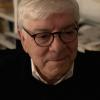
Cardinal George and the politics of liturgy

Nov. 18, 2009
Printer-friendly versionPrinter-friendly versionSend to friendSend to friendPDF versionPDF version

News Analysis
Cardinal Francis George of Chicago has several times recently addressed the relationship between bishops and ordinary Catholics and how that relationship affects the manner in which we all live out a life of faith.

“Relations do not speak first of control but of love,” he said in a Nov. 16 speech as president of the U.S. Conference of Catholic Bishops. “If there is a loosening of relationship between ourselves and those whom Christ has given us to govern in love, it is for us to reach out and re-establish connections necessary for all to remain in communion.”

Exactly what the cardinal meant by that comment was evidently to be unpacked the next day in a secret meeting of bishops, a gathering closed to the media and to staff at the U.S. bishops’ conference.

George treated the topic in his recently released book, The Difference God Makes: A Catholic Vision of Faith, Communion, and Culture, and he elaborated on the matter during a recent interview with NCR’s John Allen. In that exchange, the cardinal expressed his weariness with the Catholic liberal-conservative divide, suggesting that each was similar to the other in the exaggerated attention they give to intrachurch politics and in focusing far too much on bishops, the power they have and the way in which they exercise it, and not enough on Christ.

The inference to be drawn from it all is that Catholics, liberal or conservative, are incorrect to view the relationship with bishops through the lens of control and power and that if laypeople would concentrate more on being “simply Catholic” and less on what goes on in hierarchical venues, there would be less contentiousness all around.

The sentiment deserves attention because during the bishops’ gathering in Washington this month, George would be overseeing what might be the last installment of a debate that has gone on, at times bitterly, over liturgical reforms that have their origins in the documents of the Second Vatican Council (1962-65).

The council is fading into history as a marker of a certain generation of contemporary Catholics. However, how that council is interpreted — indeed, whether some of our bishops today are willing even to concede that anything significant occurred at the council to change the church — will continue to have an effect on Catholic life for the foreseeable future. The effects of the council are somewhat akin to the effects of the feminist or civil rights movements. Young people today do not have to worry about the same battles that their parents fought, but the benefits that both women and minorities today can take for granted are both a direct result of those earlier efforts and something to be diligently guarded.

And while the council was hardly a movement — indeed, it was far more formally structured and produced a body of documents approved by the world’s bishops — what some would perceive as its benefits or gains are now far more disputed than those achieved in matters of race or the rights of women.

A reading of even a portion of the record on liturgical reform shows that the council inspired deep shifts in ecclesiology, as well as the role of bishops in relation to the way we pray. The essential nature of the changes underway was noted in 1963 by then-Fr. Joseph Ratzinger, today’s Pope Benedict XVI.

As a peritus, or expert, at the council, he wrote: “The first chapter of the Constitution on the Sacred Liturgy contains a statement that represents for the Latin church a fundamental innovation. The formulation of liturgical laws for their own regions is now, within limits, the responsibility of the various conferences of bishops. And this is not by delegation from the Holy See, but by virtue of their own independent authority.”

He termed the development “especially important” in “the decentralization of liturgical decision-making.”

It is clear that the Ratzinger view contained in those comments has undergone substantial change since. But what invalidates his understanding back then that “this small paragraph, which for the first time assigns to the conferences of bishops their own canonical authority, has more significance for the episcopacy and for the long desired strengthening of episcopal power than anything in the Constitution on the Church itself”?

By extension, what invalidates others’ similar understanding that, in Ratzinger’s earlier view, the council had, “without fanfare, and largely unnoticed by the public … produced a work fundamental in the renewal of ecclesiology”? It is a conclusion far different from that expressed by some today that the council merely confirmed a continuation of what had gone before.

While George asserts that Catholics should pay less attention to bishops, it was bishops — he among them — who have argued that those who hold the early Ratzinger view of the council as marking a fundamental change in ecclesiology are wrong and that liturgical renewal has gone off in the wrong direction.

It was bishops who, in 1997, convened a committee of 11 men who met in the Vatican to secretly overhaul the translations of the American lectionary, or the scripture readings used at Mass.

Overturned by the committee was a translation process that had been in use since the council and that was broadly consultative and had included a number of women. Only one of the men on the new committee held a graduate degree in scripture studies; two were not native English speakers; and several had a history of objecting to inclusive-language translations, including two of the American archbishops and the lone scripture scholar. Three American bishops who had worked most closely on the lectionary and were themselves Bible scholars — including Donald Trautman of Erie, Pa., currently the lone voice of opposition to certain translations in the missal under consideration by the bishops — were excluded from the group. They were replaced by conservative prelates Bishop Jerome Hanus of Dubuque, Iowa; William Levada, then of San Francisco and now a cardinal and head of the Congregation for the Doctrine of the Faith; Justin Rigali, then of St. Louis and now cardinal in Philadelphia; and Cardinal Francis Stafford, then head of the Pontifical Council for the Laity.

In 2002, leadership of the International Commission on English in the Liturgy, known as ICEL, was replaced under pressure from the Vatican’s Congregation for Divine Worship with bishops more congenial to that congregation’s view of how translation should be effected.

Chosen as executive secretary was Fr. Bruce Harbert, a former Anglican who was previously critical of the commission and who had served the previous year as a visiting faculty member at George’s liturgical institute at Mundelein Seminary. At the time, Allen characterized the institute as “in part conceived as an alternative to progressive liturgical approaches associated with some ICEL consulters.”

For lack of more precise terms, as much as the matter of translation and liturgical reform have been the battleground between conservative and liberal forces within the church for more than 40 years, George has weighed in heavily and influentially on the conservative side. He now gets to oversee deliberations that will lead to important decisions in the debate.

George may wish Catholics rise above the fray and eliminate considerations of power and control from their assessment of church life, but it might be difficult to ignore bishops when their politics and ecclesial persuasions ultimately determine the very words we use in worship.

Roberts is NCR editor at large. His e-mail address is troberts@ncronline.org.

At the heart of the matter of

At the heart of the matter of what we are reading about the Bishops conference is this: Just what is it that we as Catholics must believe at a minimum?

We hear what the bishops are saying and we know what it means. Just the same, it is obvious from the voting that not all bishops are in total agreement one with the other.
Therefore, I ask for the minimum because too often on this website, the Conservatives or the Liberals are telling one another that they should get out of the church.
What is it that makes one a Catholic? After another article about this conference, I have asked a number of questions, which I hope will be answered that pertain to the differences between dogma, doctrine and teachings of the Church.
Here I am asking all who know to answer the same questions. Will you please explain the difference between dogma, doctrine and teachings of the church.

When we say that the Pope is infallible but not all his words are infallible, what makes the difference"? Are all of the popes encyclicals infallible?

Is a study and document produced by a Cardinal absolute truth and therefore must be accepted by all?

Other than the virginity of Mary and her assumption into heaven, have there been any new absolutely infallible proclamations in the last 75 years?

It has been too long for me to remember the correct answered to these questions, yet there must be some definitive teaching that many of our readers can share. Please do not give protestant answers.

I look forward to getting true Roman Catholic responses.

[Note to the NCR editors, you can put my email address in if you think it best. bbcname@aol.com]

Great questions, I will

Great questions, I will attempt to offer some explanation, though I am sure that others will be able to do so better than I do.

The Pope is infallible as a result of his office only when he speaks on matters of faith and morals and when he reiterates that which is the common understanding of the Faith. For example, Pope Pius IX infallibly declared that Mary was conceived without original sin back in 1850 (I think!). This was not a new teaching, but rather one which the Church already believed and had believed for centuries. He simply codified it and stated it as a doctrine of the Church. Papal encyclicals are not necessarily infallible in that same way, but are considered to be part of the Magisterium, the ordinary teaching authority of the Pope and bishops in communion with him.

A Pope can also offer opinion on matters referred to as "prudential". Those are matters or issues that are left up to the properly formed conscience of each Catholic, matters such as the death penalty, economics or just wars. When a Pope speaks on those matters, the Catholic has an obligation to listen carefully to the Pope's words and to consider them prayerfully and carefully, along with the various teachings of the Magisterium on those issues, and then make up his own mind. Pope John Paul II, the Great, offered his thoughts on the Iraq War, but that did not mean that every Catholic was obliged to accept those thoughts as defined doctrine.

The Magisterium is generally what we mean when we talk about "teaching" and "doctrine". It is infallible in as much as we can rely on it for salvation, but those teachings may have never been formally defined by the Pope or a Council. Transubstantiation was never infallibly defined, but rather belongs to the Magisterium. The Church's 2000 year opposition to abortion has never been infallibly defined, but rather is part of the Magisterium. The Catechism of the Catholic Church is not infallibly defined, but rather is part of the Magisterium.

A Cardinal or bishop (or priest or nun or layperson, for that matter) can never define a dogma. When a cardinal or bishop speaks on matters of faith and morals, he does so relying on the authority of the Ordinary Magisterium. But, again, not every word that a cardinal or bishop says must be believed. Only the Pope himself or the Pope and an Ecumenical Council (like Trent or Vatican II) can define a dogma. The key is that only the Pope has the authority to define a dogma of the Church, and not even an Ecumenical Council has that authority unless it is confirmed by the Pope. A study or a letter or a document from a bishop or cardinal may carry the weight of ordinary Magisterial teaching if it speaks on matters of faith and morals and is consistent with the greater teaching of the Church. No cardinal or bishop, or any other Catholic, can propose something that is not consistent with the Church's greater teaching and require a Catholic to believe it. In other words, a Bishop Ralph could not tell all the faithful in his diocese (and demand that they all accept and believe it) that abortion is okay and right and just.

Doctrine and teaching are generally considered by most to be the same thing. A dogma is a doctrine "to be believed by divine and Catholic Faith" that has been proposed by the Church to be "divinely and formally revealed," according to the Congregation for the Doctrine of the Faith. Dogmas have the highest level of certitude about them (in other words, we can absolutely rely on the fact that those dogmas are absolutely true). Doctrines have varying levels of certitude and some are debatable and can even be condemned. For example, Galileo was condemned by the Holy and Universal Roman Inquisition for his position that the earth orbited the Sun, not the other way around. The Church believed that the earth was the center of the universe at the time as a doctrine, but that was proven false and abandoned by the Church.

Have there been any infallible proclamations by a Pope in the last few decades, since the doctrine of the Assumption? Yes. Every canonization of a saint is an exercise of papal infallibility, but in terms of newly defined doctrine or dogma, no. In fact, there has been only two instances in Church history when Popes have explicitly used their "Extraordinary Infallibility" (the Magisterium is "ordinarily infallible"): the definition of the dogmas of the Immaculate Conception and the Assumption of the Blessed Virgin Mary.

Here is a list of examples of defined dogmas (defined mostly by Councils but also by Popes in the cases of Mary cited above) which must be held by every Catholic:

* The articles of faith of the Creed
* The various Christological dogmas and Marian dogmas
* The doctrine of the institution of the sacraments by Christ and their
efficacy with regard to grace
* The doctrine of the real and substantial presence of Christ in the Eucharist
and the sacrificial nature of the eucharistic celebration
* The foundation of the Church by the will of Christ
* The doctrine on the primacy and infallibility of the Roman Pontiff
* The doctrine on the existence of original sin
* The doctrine on the immortality of the spiritual soul and on the immediate
recompense after death
* The absence of error in the inspired sacred texts
* The doctrine on the grave immorality of direct and voluntary killing of an
innocent human being.

I hope that this helps somewhat.

Thanks for this. It does

Thanks for this. It does clarify things.

It's difficult to focus on being "simply Catholic" when our bishops keep telling us how to vote and what to think, and that our consciences are not "well formed" unless they are identical to a bishop's conscience.

Why would one need a conscience at all if bishops are qualified to do all our thinking for us?

Here's what you must NOT

Here's what you must NOT believe. It's an ERROR to believe anything listed on Pope Pius XI's Syllabus of Errors.

http://www.papalencyclicals.net/Pius09/p9syll.htm

good one, but I think you

good one, but I think you might have transposed numbers; it was Pius IX, Pius nono.

I do not agree with nor

I do not agree with nor disagree with the dogmatic nature of the Syllabus of Errors (I honestly just don't know) but would feel more comfortable if its authenticity as dogma/doctrine/pastoral guidance was made by someone other than Anonymous.

What follows is a set of universal comments that really applies to this group or that group - over the past 40 or so years:

Many years ago my teacher of dogmatics (a Canon Lawyer) said something to the effect that there was something like 32 levels of authority concerning 'noises' made by a Pope. The highest being the Formal 'ex cathedra' Pronouncement all the way down to his 'passing gas' (but my teacher did not use this term).

The comment got the expected laugh but it also communicated something that was and still is most significant:

Most Americans - with their love of certitude and respect for law are not able to - nor interested in - telling the difference.

Thirty-five or so years ago when "Noises come from Rome" US Catholics would bow down.

Since Vat II many Catholics have become 'cafeteria' in approach splitting the hair of Dogma/Doctrine/USCCB statements/(and yes) politically driven comments of some bishops until all 'from Rome' is seen merely as "passing gas."

This is not a totally bad thing. Every teenager - and yes most US Catholics were very immature - must be a bit wild before they grow up. Sadly some never grow up. Some reject all authority and others return to the teat.

The pendulum had swung too far to the left and now is in the process of swinging back too far to the right. If one doubts this then just look at the terrible translations that are coming out revising the Missal. Another area is how 'Leadership' is trying to manipulate the revolutionary nature of the Teachings of Vatican II into some kind of nice story - even for some, Myth.

A nuanced but well sourced article on Authority is found at http://geneva.rutgers.edu/src/faq/infallibility.txt

Warning: it is very long but worth the energy. Of special significance to this comment:

"Finally, I would like to address the infallibility of one papal
pronouncement in particular: _Quanta Cura_(QC), given by Pius IX.
This encyclical and the accompanying _Syllabus of Errors_ were
normative of the response of the Church to the Enlightenment
until Vatican II. At that time the bishops gave (and Paul VI
approved) _Dignitatis Humanae_(DH), a document which is at odds
in substance and in outlook to QC. Many conservatives reject DH
on the grounds that QC is infallible. (One bit of evidence cited
for this is the article on the _Syllabus_ in the _Catholic
Encyclopedia_ of 1910.) It is unclear to me whether QC meets the
formal criteria of Vatican I; at least one theologian [7] argues
that its infallibility rests on the Maximalist position that the
ordinary magisterium can be infallible. However, the fact that
DH was given by the bishops in an ecumenical council, was
ratified by Paul VI and accepted by his successors is strong
evidence that QC was not infallibly given. This is not to say
that QC was wrong and DH was right; the Church may yet again
change its mind. But I think it is wrong to argue (as some
extreme conservatives have) that the Church has fallen into
heresy because of this. (Certainly the notion the infallibility
of the Church seems to preclude this, arguments adduced from the
Arian controversy notwithstanding.)"

The Syllabus Errorum was

The Syllabus Errorum was superceded by the documents of the Second Vatican Council, especially Gaudiem et Spes. Even Joseph Ratzinger (prior to his election to the papacy) has admitted as much. At any rate, the Syllabus was not a dogmatic document, and does not claim to be such.

Got links to support your

Got links to support your notions about what Joseph Ratzinger "has admitted"?

And aren't "the documents of the Second Vatican Council" themselves being "superceded" by the current regime?

And aren't YOU committing Error #23, by imagining that "Roman pontiffs and ecumenical councils have wandered outside the limits of their powers, have usurped the rights of princes, and have even erred in defining matters of faith and morals"?

I agree with you that there

I agree with you that there is massive confusion within the Church, even among the bishops, with what is dogma or doctrine that must be believed and what is simply the dominant theological thinking of the Pope or hierarchy at any given time. Unfortunately, both John Paul II and Benedict XVI have further confuseed things by deliberately trying to "enforce" the latter as if it were the former. Both have known the difference but have preferred obedience to their own and/or the curia's theological views, e.g., refusing to ordain priests or consecrate bishops with different theological views on a dozen or more non-dogmatic matters. It is now a sorry mess and is not being directly addressed by the US bishops at all, merely avoided for the most part.

You wrote: "Will you please

You wrote: "Will you please explain the difference between dogma, doctrine and teachings of the church."

The most recent edition of Fr. Richard McBrien's magisterial work, "Catholicism", defines "Doctrine" as "An official teaching of the church" and "Dogma" as "A doctrine which is promulgated with the highest authority and solemnity. Its denial is a heresy." The glossary of the Catechism of the Catholic Church states that a "Dogmatic Definition" is "A solemn declaration by an ecumenical council or by the Pope that a doctrine is revealed by God and must be believed by the universal Church; such definitions are called infallible, and must be adhered to with the obedience of faith."

You asked "When we say that the Pope is infallible but not all his words are infallible, what makes the difference?"

The First Vatican Council, in defining the dogma of papal infallibility, set down very strict and specific parameters in which that infallibility could be exercised:

"...we teach and define as a divinely revealed dogma that when the Roman Pontiff speaks EX CATHEDRA, that is, when, in the exercise of his office as shepherd and teacher of all Christians, in virtue of his supreme apostolic authority, he defines a doctrine concerning faith or morals to be held by the whole Church, he possesses, by the divine assistance promised to him in blessed Peter, that infallibility which the divine Redeemer willed his Church to enjoy in defining doctrine concerning faith or morals." Chapter Four, Session Four, First Vatican Council (July 18, 1870)

The Code of Canon Law warns "No doctrine is understood as defined infallibly unless this is manifestly evident." Since the First Vatican Council, only Bl. Pius IX, in defining the Dogma of the Immaculate Conception, and Pius XII, in defining the Dogma of the Assumption, have exercised the charism of papal infallibility. The clarity of the language both used when they made their definitions is very important. Pius IX, in defining the Immaculate Conception, said "We declare, pronounce, and define that the doctrine ..." and Pius XII, defining the Assumption, said "We pronounce, declare, and define it to be a divinely revealed dogma..."

You asked "Are all of the popes encyclicals infallible?"

No. An encyclical is not in and of itself dogmatic. Canon 749 of the Code of Canon Law is worth repeating in this regard: " "No doctrine is understood as defined infallibly unless this is MANIFESTLY EVIDENT." (emphasis mine)

You asked "Is a study and document produced by a Cardinal absolute truth and therefore must be accepted by all?"

Absolutely not. An individual cardinal does not enjoy the charism of infallibility. As mentioned earlier, the Catechism states that a dogmatic definition is "A solemn declaration by an ecumenical council or by the Pope..."

You asked "Other than the virginity of Mary and her assumption into heaven, have there been any new absolutely infallible proclamations in the last 75 years?"

No. The Congregation for the Doctrine of the Faith's "Doctrinal Commentary on the Concluding Formula of the Professio Fidei", which can be read in English at the Vatican website, leaves little doubt as to that point.

I hope that helps.

I think we need to be careful

I think we need to be careful in using a term such as "magisterial" in reference to a particular book, like "Catholicism", for example. In the Church, as you know, "magisterial" has a specific connotation, while in most other environs, "magisterial" simply might mean the same as "teaching". Fr. McBrien's book, "Catholicism", is not a "magisterial" book in either sense, given the fact that it does not belong to the Ordinary Magisterium (teaching authority of the Pope and those bishops in communion with him) of the Church; nor is it a book which can be used as a "teaching tool" in classes, since that has been expressly forbidden by the USCCB's committee on doctrine.

Further, the Magisterium enjoys ordinary infallibility. In other words, when a pope, council, bishop, priest or authorized teacher teaches in accordance with Sacred Tradition, Sacred Scripture, the Sacred Deposit of the Faith and what has always been taught and accepted by the Church in the past, that teaching is considered to be infallible; not that the doctrine itself is necessarily infallible apart from the Ordinary Magisterium, but that the entire Ordinarhy Magisterium is infallible and that teaching, as part of the Ordinary Magisterium, shares in that infallibility.

So, using that definition, Pope John Paul II's document "Ordinatio Sacerdotalis" ("On Reserving Priestly Ordination to Men Alone") is considered to be a part of the infallible Magisterium. It is so because the Pope taught a doctrine that is in accord with:

* Sacred Tradition (the Church from earliest times taught that only men could be ordained priests);
* Sacred Scripture (the priesthood was instituted by Christ at the Last Supper and there were no women present);
* Sacred Deposit of the Faith (this teaching has been taught consistently for nearly 2000 years with no deviation); and
* What has alwasy been taught and accepted by the Church in the past (at no time has the Church ever denied this teaching, at no time has the Church ever attempted to ordain a woman or claimed that a woman was validly ordained, and, except for the last few decades, this has not been an issue of debate in any past council).

In addition, Pope John Paul II's encyclical letter "Evangelium Vitae" ("The Gospel of Life") is considered infallible as it is a part of the Ordinary Magisterium of the Church -- the Church has always taught that abortion is a gravely sinful act; Scripture explictly condemns on more than one occasion the willful taking of innocent life; this has always been an accepted teaching of the Church.

So, in short, when a papal document (or a pastoral letter from a bishop, etc) meets those criteria -- consistent with Sacred Tradition, Scripture, the Deposit of Faith and has been always taught and accepted by the Church, then that document belongs to the body known as the Ordinary Magisterium and is considered infallible.

Please support your assertion

Please support your assertion that Richard McBrien's CATHOLICISM cannot (in your words) "be used as a 'teaching tool' in classes, since that has been expressly forbidden by the USCCB's committee on doctrine." I reviewed what is purported to be the text of the doctrinal committee's statement and can find nothing in the text to support your claim. See http://www.guweb2.gonzaga.edu/~dewolf/mcbrient.htm .

Your second paragraph reflects the hyper-inflation of the church's official teaching on infallibility. This phenomenon is also known as "creeping infallibility," i.e., the erroneous idea that all teaching from Rome and the bishops is infallible. Indeed, the Second Vatican Council acknowledged the hierarchy of truths, indicating that not all teaching is infallible.

Your assertion that JPII's "Ordinatio Sacerdotalis" is "considered" to be infallible is interesting because most Catholics reject the idea that women cannot be ordained to the presbyterate or episcopate. In addition, numerous theologians, biblical scholars, historians, and other experts have challenged JPII's claim as well as Ratzinger's Responsum and Letter regarding same. JPII and Ratzinger never addressed the challenges, and Benedict has yet to address these objections in his capacity as pope.

For some excellent commentary on the subjects of infallibility and women's ordination, I refer our fellow bloggers to the insights of Francis A. Sullivan, SJ, professor emeritus of theology at the Pontifical Gregorian University in Rome and a leading authority on the magisterium:

a. http://www.womenpriests.org/teaching/sulliva1.asp

b. http://www.womenpriests.org/teaching/sulliva2.asp

Check out this site:

Check out this site: http://www.catholicculture.org/culture/library/view.cfm?id=541&CFID=1217...

and this one: http://www.catholicculture.org/culture/library/view.cfm?id=6710&CFID=548...

Further, Fr. McBrien's book does not bear either the Imprimatur or Nihil Obstat, indicating that a book is free from moral or theological error. As such it cannot be considered to be magisterial in any manner.

Moreover, regarding Ordinatio Sacerdotalis, that some laity, theologians, Scripture scholars, etc. do not agree with it is irrelevant when it comes to whether or not it belongs to the sacred deposit of the faith. The fact is that the Church, in every time and place, has taught that women cannot be ordained priests. Both Pope John Paul II the Great and Pope Paul VI stated that in the last 30 years.

Finally, in a Responsum ad Dubium, the Congregation for the Doctrine of the Faith declared that Ordinatio Sacerdotalis is indeed infallible. The body charged with protecting and defining Church doctrine has declared the issue closed and so it is.

Thank you for the link to

Thank you for the link to another reprint of the USCCB doctrinal committee's statement. Again, I see no episcopal prohibition on colleges/universities using McBrien's book.

Your second link includes footnote 18, which refers to a newspaper statement that the bishops had "condemned" McBrien's text. Again, the bishops' statement does not condemn his book. Yes, it finds what it purports to be serious doctrinal flaws in CATHOLICISM, but, in fact, my familiarity with this man's work leads me to conclude that it reflects the vanguard of serious --- and orthodox --- theological inquiry that challenges many assumptions we've taken for granted in the past.

Given the attempts by JPII and Cardinal Ratzinger to stifle serious and responsible theological inquiry, I place little if any stock in Imprimaturs and Nihil Obstats. I have no problem with popes and theologians giving us the "official line" on theological matters, but I do have a very real concern when they believe an educated and informed laity --- in an ever smaller and interconnected world --- are unable to discuss religious matters (disciplinary, theological, biblical, historical, anthropological) in an intelligent way. The old "Roma locuta est" no longer works. As an aside, we also have Vatican II's teaching on the "sense of the faithful," the understanding that God works through all of us, not just the ordained. Perhaps one of these days, a future pope et al will finally grasp the truth that they can learn from us just as much as we can learn from them.

Contrary to any official assertion, the conclusion in Ordinatio Sacerdotalis that women cannot be ordained to the presbyterate/episcopate is just that, a papal assertion --- supported by fallible statements from the CDF head who acknowledged, by the way, that OS was not (and is not) an exercise of "ex cathedra" teaching authority. I remind you of canon law provisions --- 749.3 and 750.1 --- that effectively put the onus on the proponent(s) of allegedly infallible teaching to make their case. In addition, canon 212.3 acknowledges "the right and even at times the duty" of the faithful to give "their opinion on matters which pertain to the good of the Church and to make their opinion known to the rest of the Christian faithful." To date, most Catholics do not accept JPII's conclusion in OS. This rejection is not a matter of majority vote but, rather, of the developing sense of the faithful, i.e., a manifestation of Catholic doctrinal development inspired by the Holy Spirit. I remind you, too, that your use of global/universal language ("The fact is that the Church, in every time and place, has taught...") invites logical suspicion and historical challenge.

Your understanding of the weight to be given to the CDF's Responsum ad Dubium is fatally flawed. A CDF head has no ecclesiastical authority to define infallible teaching. Under canon law, only the pope (teaching "ex cathedra") or the world's bishops (under prescribed conditions) have such authority. In other words, Cardinal Ratzinger's telling us that OS reflects infallible teaching does not make it, in point of fact, infallible. The Responsum ad Dubium is merely a CDF (and questionable) statement, mothing more, nothing less.

If you truly believe that the issue of women's ordination is "closed," that's your prerogative. Galileo, of course, turned out to be right. On the other hand, I've got a West Coast orange bridge to sell you. Let me assure you, my deal would be a "steal"!

As far as I know,

As far as I know, Canonizations, are not dogmas since there is not a doctrine of the Church. That is, as a Catholic I do not have to beleive in a particular canonization as I beleive that Jesus is God.

You are correct in that a

You are correct in that a canonization is not a dogma, per se. However, it is an exercise in infallibility, since during the canonization, the Holy Father, through his divine authority as Supreme Pontiff, declares that a particular person, or group of persons, is currently in Heaven and enjoying the Beatific Vision of God. This is a sure and certain truth exercised on the basis of Christ's promise to Peter that "Whatever you bind on earth shall be bound in Heaven, and whatever you loose on earth shall be loosed in Heaven".

A saint cannot be "un-sainted" or "de-canonized". Once a saint, forever a saint. The only thing that can be done is for the Church to remove the commemoration of the saint from the Universal Calendar (which was done in the instance of St. Christopher, for example). This is partially why the process of declaring a person a saint is so painstaking -- the Church is so very careful with whom is elevated to the honors of the Altar because she realizes that once the Supreme Pontiff has declared a person to be a saint, to be in Heaven in union with Christ, that is the truth, and they are, period.

The authority exercised in proclaiming someone to be in Heaven, to be a saint, is the same authority used by the Holy Father when declaring that Mary was assumed body and soul into Heaven by God upon her death (or just before it, depending on what you believe in that particular instance) or that Mary was the only person (aside from Jesus Himself) ever to be conceived without original sin.

I posted my response where

I posted my response where you previously posted your question.

http://ncronline.org/news/bishops-mull-fighting-abortion-gay-marriage?nocache=1#comment-76676

The politics and ecclesial

The politics and ecclesial persuasions of bishops have always determined the very words we use for worship. Words of worship are powerful things. At least now we know who these men are and what, not Who, it is they worship.

Cardinal George doesn't get it, but why would he? Nothing in his or his colleague's experience of life prepares them to write the language of love. He wants everyone to go back to paying and obeying and let the bishops do what this bunch of bishops do best: play sycophants to papal authority in all its corruption, a sorry way for men who portend to have read the Gospels.

In other words, George wants

In other words, George wants us to Pray, Pay and Obey. Nothing new there. He's a disappointment to the laity of the Archdiocese of Chicago and he will NEVER fill the shoes of the saintly Cardinal Bernadin.

Why do the views of Fr.

Why do the views of Fr. Joseph Ratzinger and Pope Benedict XVI differ on the issue of liturgical reform? Why would Fr. Ratzinger praise the idea that local bishops' conferences would be in charge of reform only to find that, as Cardinal and later Pope, his view is that Rome should be in charge?

Could it possibly be because he has witnessed, like so many others, the wholesale dismantling of Catholic liturgy since the Council? Could it be because he has seen, first-hand, how the Council's ideals were perverted by the insidious "Spirit of Vatican II"? Could it be because he has seen that "Spirit" being used as a convenient excuse for everything from liturgical translations that do not say what they are supposed to, liturgical innovations like the "clown Mass" or Halloween "Costume Mass", the wholesale replacement of Gregorian Chant (which Sacrosanctum Concilium said should retain "pride of place" in liturgies) and the organ (again, Sacrosanctum said should retain "pride of place") with silly and meaningless little ditties like "With Clapping Hands and Happy Sounds" and guitars, bongos and tambourines? Could it be because he has seen bishops and priests (and laity) take it upon themselves to insert vertical inclusive language in the liturgy, in direct contravention of Church teaching and the example of Christ Himself?

The Church has had enough so-called "innovation", and when I say "the Church", I mean not only the hierarchy but also the regular folks in the pews. This innovation over the last few decades has not led to increased participation in the liturgy by the laity, rather it has led to fewer Catholics attending Mass regularly than at any time in the history of the Church in this nation. It has led large numbers of Catholics to question even the most basic reality of the Mass, the Real Presence of Christ in the Eucharist.

If there is a liberal/conservative divide on the liturgy, it is due to the fact that after the Council, the "liberals" tried to do too much, too soon, with little consideration for the faithful or the Faith. They pushed through a "reform" that the Council never intended (nowhere in Sacrosanctum Concilium does it say that the priest must face the people through the entire liturgy, rather it speaks of the "free-standing Altar", meaning an Altar that a priest can walk all the way around when he is incensing it). That was an innovation by the "Spirit of Vatican II" that Vatican II itself never intended.

The Council never intended that the translations of the Mass should be paraphrases of the typical text in Latin ("Et cum spiritu tuo" being translated as "And also with you", for example). The Council did not expect that "alternative opening prayers" would be made up, wholesale, by translators when the Latin only provides one collect ("opening prayer"). The Council never intended for Latin to be completely cut from the liturgy. All these were innovations by the "Spirit of Vatican II" that Vatican II itself never intended.

And now we have reached the end of the tether and those who support this abandonment of the Church's traditions are trying to find someone on whom to fix the blame, the Pope, the USCCB, men, etc. The fact is that the innovation was never intended to go as far as it did away from the Church's traditions, and the Church is simply returning the liturgy to its proper form.

The biggest disappointment for these folks is still to come: when the revised (authentic) translations are finally implemented and, after some initial complaint and difficulties, the vast majority of Catholics will accept these translations, will understand the words that Bishop Trautman thinks we are too ignorant or stupid to understand, and will find the Mass far more meaningful and beautiful.

Mr. Green, why did Ratzinger

Mr. Green, why did Ratzinger change his views not long after Vatican II ended? Fear, nostalgia, attraction to the fancy/imperial stuff of Roman antiquity. Anyone who wants to see the current pope's views of more than 43 years ago should peruse his HIGHLIGHTS OF VATICAN II, which includes his comments in stark contrast to what we see and hear from this man today.

As for the clown masses, ad nauseum, these are always trotted out by folks enamored of the Tridentine mass and all associated with it. There have likely been abuses of prerogative throughout the ages (I once served a Tridentine mass in the 1960s that was "said" in less than 15 minutes, and the priest boasted about it).

As for your assertion that "innovations" have not led to increased lay participation in the liturgy, please be careful trying to connect the dots. In all likelihood, we would have continued to see decreasing levels of church involvement over the years, with or without Vatican II. It was Good Pope John, after all, who told us to recognize "the signs of the times." On the other hand, his successor Paul VI waffled on ecclesial renewal and JPII would appoint conservative/autocratic/reactionary/fundamentalist/suckup hierarchs rather opposed to renewal. No wonder the church sees a diminution in church participation. Furthermore, as sociologists of religion James Davidson and the late Dean Hoge have observed based on their longitudinal studies, the JPII priests/bishops are moving in one (autocratic) direction while the laity, both old AND young, are moving in another one. Give another decade or two, and these sociologists predict the greatest "expectation gap" between lay and ordained.

Vatican II called for ecclesial renewal, that is, to restore, make new again. When I read your opinion, I see what I typically see in reactionary thought: a preference for black-and-white thinking and all stuff pompous and imperial, the very opposite of what educated and informed people gravitate toward today.

The Tridentine church was a dying church. John XXIII read the tea leaves, and the world's bishops were persuaded that mere reform would not work. As theologian Bernard Lonergan wrote, "The meaning of Vatican II was the acknowledgement of history." We needed to rediscover our ecclesial roots and get rid of the liturgical and other "accretions" (Ratzinger's word back then) that were hampering the church's mission.

And what did we get fairly soon? Paul VI who was fence-sitting, JPII who favored papal prerogative, and now B16 who is desperately trying to turn back renewal. Not a good picture. Not conducive to making the Church of Rome relevant to the lives of Christians today.

Unlike you and others your comparatively young age, I and others of my thinking have lived before, during, as well as after Vatican II. We speak from actual experience, not from some desire to see the Church of Rome continue on its path toward irrelevance and institutional obsolescence.

The constant mention of clown

The constant mention of clown masses is funny. I'd like to see one.

You're right, of course, that there have always been odd masses. My favorites, so far, from an NCR article by Gary Macy:

"Laws passed to deal with the worst problems were collected by Burchard, bishop of Worms, in the 11th century. . . . Even more disturbing, however, is the law which threatens 'if any bishop or priest outside the command of the Lord offers something else in sacrifice upon the altar, that is, either honey or milk or raisins instead of wine, or some other concoction, or a bird, or some other animal, or beans, thus working against the constitution of the Lord, he is to be deposed.'”

http://natcath.org/NCR_Online/archives2/1999d/102299/102299p.htm

LOL

Father Ratzinger saw the

Father Ratzinger saw the writing on the wall after the Council. He saw that the Council said one thing and those charged with implementing the Council's decrees were doing another. He realized the danger that a complete break with history and tradition would cause. A read of the documents of Vatican II will demonstrate that, particularly in the area of liturgy. Sacrosanctum Concilium said one thing, the reformers did something else entirely. Sacrosanctum Concilium, for example, did not say to erect portable altars facing the people, remove the Communion Rail, stop kneeling to receive Holy Communion, do away with all Latin from the liturgy, eliminate the organ and Gregorian Chant, remove all statuary from churches (actually, it didn't say to remove any!), move the tabernacle to some remote location in the church where it is difficult to find, etc. The liturgy is simply one area in which Vatican II reformers went too far afield from the instructions and documents of the Council Fathers. But, it is also the most visible.

The Second Vatican Council, unlike so many other Church councils, was not dogmatic but rather pastoral. The Council was not caused to address a particular heresy or heresies, but rather to address the need to renew the Church, so that it might speak to the Modern World. However, that renewal was not about wholesale change. It was about taking the dogmas, doctrines and traditions of the Church and, rather than reforming or changing them, to present them in new ways, ways that were appropos to the modern day. Rather than changing the Church to conform to the modern age, the Council intended to reform the WAY in which the Church preaches and proposes its eternal truths. The Council was intended to "return to the sources" of the Church's beliefs. Prior to Vatican II, Trent was the most influential event in the Church's recent history. The Council Fathers hoped to revisit the links between the Church's dogmas, doctrines and traditions and the earliest days of the Church Fathers. The Council Fathers did not mean to ignore all that went before, but rather to reestablish in the minds of all Catholics how the modern age evolved from, and depends upon, all that came before.

Sadly, since the Council, the "Spirit of Vatican II" allowed reformers to question everything in the Church, right down to its very divine constitution. Never before in the Church's history (at least since the days of the Apostles and Fathers) has the very make-up of the Church been brought into question. This questioning was aided by a method of catechesis of an entire generation of Catholics (my generation) that was simply inadequate. When confronted with questions, so many Catholics were simply unable to respond and the Council's mission and purpose was never adequately explained to the majority of Catholic laity (and clergy too!). The result was a completely mistaken belief that EVERYTHING was up for debate and that Vatican II intended to reform and overhaul EVERY aspect of Church life and teaching, which it never did.

And so, we find ourselves in a position in which the last two Roman Pontiffs (the current and previous) have and are attempting to draw the Church back from the brink it has tottered on since the Council. The Popes are trying to reform that which needs to be reformed while, at the same time, returning the Church to her traditions. Vatican II never meant to separate the Church of today from its traditions, nor did it ever intend to say that it was the only Council anyone should be concerned with. Rather, Vatican II recognized that there were other councils before it and attempted, in its documents, to build on those councils.

What did the Council mean about collaboration with the laity? Did the Council mean that laity and clergy should together govern the Church? Of course not. The Council recognized that clergy and laity each have specific roles to play in the mission of evangelization. Clergy are to serve the laity by teaching, governing and sanctifying. Laity are to take that which they learn through the Church into the world. Clergy are to continually serve and evangelize the laity, the laity are to evangelize the world.

The Council did indicate that laity should be more actively involved in the liturgy, but that did not necessarily mean that the laity were expected to "storm the Altars" as it were. Rather, the liturgy should be reformed to include more vernacular (particularly the Scripture readings and prayers of the day) and to simplify it (gone, rightly, for example are the multiple Signs of the Cross during Eucharistic Prayer I and the double absolutions after the Confiteor), removing extraneous ceremonies and making the liturgical calendar more streamlined and more logical. There is nothing wrong, of course, with lay lectors and with LIMITED lay extraordinary ministers of Holy Communion, present only when there are too many people present at Mass for the priest(s) and deacon(s) to communicate them easily.

I am sorry that you see my posts as "reactionary", "black and white", "pompous and imperial". I see them as anything but. If there is anything reactionary in what I say, it is a reaction to those who have tried to pervert our faith into something nearly unrecognizable as traditionally Catholic. Yes, I like pomp and ceremony at Mass as befits a people worshiping their Creator and Redeemer. I find liturgies that are lacking that pomp and ceremony, reverence and majesty (even simple liturgies can have those traits!) as less than pleasing to God. I find Tridentine Masses that are raced through in 15 minutes (as you described) to be as offensive as guitar and bongo Masses with priest and people gathered around a coffee table Altar.

As to your assertions about the expectations of clergy and laity, I have only this response. The proper expectation for both humility. The clergy should be humble enough to know their place -- teaching, governing and sanctifying and should be humble enough to teach only that which is the authentic faith of the Church; govern with integrity, correcting errors and standing up for the Truth; and sanctify through the proper celebration of the sacraments and ceremonies of the Church in accord with the rubrics of the liturgies. The laity should be humble enough to recognize their place -- humble enough to know that their proper calling is to bring the Gospel of Christ to the public square, to exercise their priestly character by offering sacrifices of time and talent, personal preferences and treasure. They should be humble enough to accept that they do not know everything, that the Church may know more than them, and to accept the teachings (even, and most especially, those they do not agree with) and correction when offered. Humility is the watchword and the most necessary quality of Christians in this world today. It is a quality, sadly, in short supply both inside and out of the Church.

Mr. Green's telling us what

Mr. Green's telling us what Vatican II was really about is like me telling him (and others within earshot) what it was like for me to live during the Civil War.

Thank you, Joseph Jaglowicz,

Thank you, Joseph Jaglowicz, for seconding and articulating so clearly what Tom Roberts was trying to stress in his analysis. Joseph Ratzinger has never offered a convincing rationale for retreating from his wholly accurate analysis of Vatican II's significance during and shortly after the council. The reason given most often by those who try to 'apologize' for his switch is that he was frightened by the anarchism he perceived in the European student revolts of the late 1960s and 1970s. That, however, is not a rationale. It's panic masquerading as thought.

It is a great exercise in misplaced concreteness for Cardinal George to blame over 40 years of contentiousness in the church on lay people obsessing on the bishops. What we are in fact obsessing on is the bishops' treason to the teachings of Vatican II--including the last two bishops of Rome. The contentiousness may diminish when enough of us who are faithful to the council age and die off. But I continue to pray with the true Catholics left that the Spirit who inspired the council to surprise us so much will find a way to prevail.

For more on this, please see my blog, http://creativeadvance.blogspot.com

Well said.

Well said.

"Between us and those whom

"Between us and those whom Christ has given us to govern in love." Reminiscent of the argument for the divine right of kings.

George wants the people to go

George wants the people to go back to "pray, pay and obey" Catholics and that will never happen. We are concerned with what the bishops do because it effects us. We want a say in what does on. We have a right they are NO LONGER IN CHARGE.

Odd! I haven't noticed any

Odd! I haven't noticed any bishop reaching out to women to establish a working relationship with them. Especially lay women.

Which sure does seem to be

Which sure does seem to be the problem with claiming that attempts to seek control are really 'those of love.' Relationships rarely improve because control is asserted, particularly among adults. If ever a group of people were more off-base anymore, it would seem to be the bishops, who seem to be in a 'state of confusion since their moral authority has been questioned.' Beter headline.

You haven't notice any USA

You haven't notice any USA bishop reaching out to women. Please be precise. I do know bishops form other countries doing so. As a matter of fact in my country a bishop requested a female counsin of mine to be the administrator of his diocesis. Americans, open your eyes, there is more Church than the USA Church.

Get over it, the hermeneutic

Get over it, the hermeneutic of continuity is what the Second Vatican Council was, is and will be forever. The spirit of Vatican II was a concoction of silly, immature church people who like a teenager in his first year in college thought he knew it all, did it all and could do it all. After the euphoria of that silliness wears off, its back to reality. So sad that the dying generation in the church never really grew up.

How sad Mr or Ms, Father or

How sad Mr or Ms, Father or Sister "Anonymous", that you have such a simplistic and jaded view of what happened at the council and after. Yes, there were instances of the silliness (and worse...sacrilege) which you describe. But there were some holy, learned, compassionate men who did a fantastic job of navigating the Church through those early rough waters (in cooperation with the real navigator--The Holy Spirit, of course.) Many even tried to draw on the gifts given to the laity and religious or lay women as much as possible while respecting the discipline of the Church.

Some of that generation were "conservative" but pastorally implemented the council and others were "liberals" who pushed the envelope but respected the unity and hierarchy of the Church.

Thank you God for Vatican II, and these 4 decades of baby steps to implement it. Most, if not all, of us will be long gone before Vatican II's implementation reaches full maturity.

"Get over it" is what people who have not experienced passion, death and resurrection say.

By "silly, immature church

By "silly, immature church people" I assume you are referring to Blessed John XXIII and Paul VI???

Strange how comments like

Strange how comments like this are always submitted anonymously.

love is the operating word.

love is the operating word. Just let the bishops be bishops and the people be sheep is the mandate. It is the role of the bishops to rule and the role of the people to obey. Somehow, in my reading of the life of Jesus in the Gospels, this does not seem to be the modus operandi of Jesus or the early church. It is hard to believe that power and control are not the over-riding concerns of the heirarchy. It seems, at least on the surface for instance, that celibacy is more important than the Eucharist and that the Holy Spirit has been relegated to closed meetings in order to be controlled. The fear of scandal and the need to at least be seen to be of one mind still control the operations of the institution. The Scribes and Pharisees are alive and well.

William: There are many

William: There are many books that you can consult but just two books I suggest you read are: Archbishop John Quinn's intelligent book, The Reform of The Papacy (first published in 1999) and Father Hans Kung's insightful book, The Catholic Church (Published in 2001). Both books will probably offer you insights that might help answer your question, "What is it that we as Catholics must believe at a minimum?" They are well written and not that long. I expect their will now follow several posters to this thread who have suggestions, many different from the two books I suggested. I would not be surprised if critics on the right side or reactionary types of people will mock my suggestions with violent and hate filled diatribes that devalue my suggested reading. I say ignore them, I encourage you to pick up a copy of both of these books at your local library. I think you might fight it hard to put them down as they are well written and succinct. I hope you enjoy them and I hope they help answer the question you posed.

It is my humble opinion that

It is my humble opinion that the laity is spending too much time and energy worrying about the bishops and the Vatican. We practice the worst form of clericalism when we give over our personal power and the power of our consciences over to a generation of men who are failing to protect our Church. We engage in this our fetish with "hyper-clericalism" at our own peril. The Church belongs to the People of God, and we should own it and take responsibility for it.

Amen! I don't want to give

Amen! I don't want to give my energies over to obsessing about people who are 1: doing their work very poorly and 2:not under my control at all. It sucks the joy right out of life and leads in the sorrowful direction of believing that the worst is yet to come. I do not believe that the Holy Spirit has abandoned the Church and I don't have to answer for the Catholic Bishops---only for myself. I want to be happy and that is the direction I have set out in---under the guidance of the Spirit.

How many infallible

How many infallible statements has the Pope made?
First it is important to note that the Pope's infallibility concerns defining faith or morals (Pastor Aeternus, 4); therefore, Papal infallibility helps the Church to understand truth with regards to faith and morals. Infallible statements made by the Pope are incredibly rare. Catholics agree on two infallible statements. Some may claim more, but these two are not disputed among Catholics. The doctrine of the Immaculate Conception was declared by Pope Pius IX in 1854. This doctrine states that Mary had been conceived in her mother's womb free from the stain of original sin. The other infallible doctrine, the Assumption of Mary, was declared by Pope Pius XII in 1950. This doctrine states that Mary was assumed bodily into heaven.

From www.LifeTeen.com

I used this website because it is easy to understand. Please note that both statements are in regard to Mary.

The blatant hypocrisy of it

The blatant hypocrisy of it all: "Relations do not speak first of control but of love.”

These guys didn't get to where they are (nor stay there and advance even further) via "love." It is and has always been about control and power.

Williewe, Baptism is what

Williewe,

Baptism is what makes one Catholic.

Only dogmatic definitions are infallible. Papal encyclicals are not infallible (except in the rare instances were they promulgate a dogmatic definition).

A study and document produced by a Cardinal is not necessarily absolute truth.

The definitions by John Paul II in Evangelium Vitae on the direct and intentional killing of innocents and abortion are also infallible.

God Bless

The primary duty of a bishop,

The primary duty of a bishop, if I understand it correctly, is to teach. They study issues which should be primarily related to faith and morals and then pronounce or teach what Catholics within their jurisdiction should accept as Catholic truth.

Only the Pope has the right to speak and write infallibly and this is only done with great discretion. You are right to say that the Assumption was the last declared dogma.

Encyclicals are not dogmas neither are the pastoral letters written by bishops of any country. They contain the teachings of the church and should be accepted by us because we assume that they were written after much prayer and under the guidance of the Holy Spirit. In my opinion, they can be rejected because nothing surpasses the primacy of one's conscience which is a bone of contention in our post modern church.

Basically, what George is

Basically, what George is saying to the laity is, in the words of Handel,

We are like sheep

The most important message

The most important message the Bishop proclaims is to focus on Christ and not on a divided Hierarchy, although we must not ignore our confused leaders! The centralization of liturgical reform through Vox Clara (the latest!)in Rome has brought nothing to clear the muddled waters. Surely, the answer must lie in letting individual Bishops' Conferences around the World settle this issue based on cultural interpretations rather than on a verbatim latin translation which is nonsensical! After all, Bishops are inspired by the Holy Spirit, so we are told!

Williewe Ponderwitmi: I think

Williewe Ponderwitmi:

I think your question is a good one and one that people (especially Catholics) don't often think about. Almost 30 years ago I was teaching in a Catholic high school in the Archdiocese of Detroit. We were studying Vatican II with seniors and juniors. I invited Cardinal John Dearden, the retired archbishop, to speak to the students since he was a prominent bishop at the Council and the Council had a profound impact on him as a bishop. I had asked the students to prepare questions for Cardinal Dearden regarding what we had been studying. When we got to the Q&A part of the presentation, one student stood up and very respectfully asked the Cardinal if there were any Catholic beliefs that he had personal trouble believing in. The Cardinal was silent for a moment and then answered that there were very few things that Catholics must believe to qualify themselves as Catholic. Of those few things, he had never had a problem with his faith. What a great answer, I thought!
I think that is what Cardinal George is trying to get at as well. We need to focus on the core of our beliefs as Catholic Christians and not go to extremes thinking that we are more Catholic than the bishops or than other folks, and certainly not judging others on how well they practice their Catholic faith (Judge not, lest you be judged!). We need to focus on Christ and the Gospel message of God's unconditional love. If you look at the saints, that is what they did. Each had a particular "spin" on it, yet each focused on the core of our faith, just as Cardinal Dearden was saying to my high school students.

I would recommend to you a brief article that summarizes what Catholics believe. It is a "Catholic Update" published by St. Anthony Messenger Press. This particular issue is called "What Catholics Believe: A Popular Overview of Catholic Teaching" written by Franciscan Fr. Leonard Foley. It can be read online at: http://www.americancatholic.org/Newsletters/CU/ac1086.asp
peace and all good!
tfn

"I ask for the

"I ask for the minimum..."

Everything we need to know and believe relevant to the saving actions of Jesus will be found in the gospels. Everything else is "extra."

"Will you please explain the difference between dogma, doctrine and teachings of the Church?"

The words 'doctrine' and 'teaching' are synonyms, that is, they mean the same thing. The word 'dogma', on the other hand, is the highest level of church teaching, i.e., what we must believe. If there is a danger today, however, many Catholics (self-described "orthodox" or "traditionalist" Catholics) believe that every teaching/doctrine is infallible when, in fact, such is not at all the case. This phenomenon has been called "creeping infallibility."

Although there are many teachings of the church that are infallible, the only recent ones pertain to Mary, namely, the Immaculate Conception (1854?) and the Assumption (1950).

In addition to infallible teaching, there are, if I recall, three lower levels of doctrine. Below dogma is "definitive teaching," that is, non-revealed teaching that is considered by Rome as necessary to safeguard and explain dogmatic teaching. (I don't recall the two lowest levels of official teaching.)

Hope this information helps.

Fr. Donald Cuzzens speaks of

Fr. Donald Cuzzens speaks of "creeping infallibilism" in his book, FAITH THAT DARES TO SPEAK. That comes as close as anything I've seen to describe the attempt to restore the imperial church that has been taking place since Pope John and Vatican II. Protestants have been right to reject the substitution of the human institution of Roman Catholicism for the gospels. John sought to restore the gospels to primacy in the Catholic Church.

Dear Joseph: You said:

Dear Joseph:

You said: "Everything we need to know and believe relevant to the saving actions of Jesus will be found in the gospels. Everything else is "extra.""

Please tell us, Dear Joseph, where you found this particular doctrine in Holy Writ?

In Christ,

Smooches.

Dear Smooches: The gospels

Dear Smooches:

The gospels portray Jesus teaching, preaching, and healing --- and instructing his disciples to go forth and do the same.

Now let me ask you a question: When a good and upright Protestant, i.e., a baptized Christian who accepts Jesus as Lord and Savior, dies, is this person's eteral salvation contingent on his/her having accepted doctrine/teaching built upon --- but not contained in --- the gospels?

Truly yours,

Joseph Jaglowicz

A number of Catholic

A number of Catholic theologians have had reservations about the matter of “infallibility”…   and a few have challenged it directly.     Dissent from such a teaching and the raising of it to the status of dogma,   actually began within the 1870 Council itself and among the participating bishops.     One of the problems involves the very political circumstances surrounding its promulgation and the reigning pope,   during Vatican I.     In a sense,   the notion of “infallibility” as dogma was “creeping” and politically suspicious upon its arrival.

It requires a certain degree of circular reasoning to infallibly proclaim that infallibility is a legitimate claim.     Trying to wrap your brain around the full explanation of it is even more curious,   especially since papal infallibility explicitly does not claim personal impeccability (perfection and sinlessness) for the pope.     It is a grand example of Church-speak and has potential for serious abuse within the politics of the Church.

It’s interesting to hear some of the neo-traditionalist laity wield the word “infallible” like an ax when arguing that all of what they believe to be true of the Church is absolute,   when in fact thus far,   the popes have had the good sense to rarely use that power in its official capacity.

When the bishops admit that

When the bishops admit that they are out of touch with the laity and we are all necessary for each other to remain in communion, I agree. In an educated population, the bishops and the Vatican can say the moon is made of green cheese and most everyone will shrug their shoulders. Life goes on somewhere else. Baptized Catholic but experienced in life. A life that is ignored by the hierarchy.

I defend their right to have an opinion, but nobody listens anymore unless our opinions are included in decision making based on our life experiences.

For example, cohabitation does mean building a secure nest before having children. If there is fear of commitment, let the bishops discuss that in light of the sexual abuse habits of so many priests who "lead"us. Also address the ongoing needs of celibate men and how we are to regain faith that nothing will happen again. They must lead the same lifestyle that led to the problem all along.How do they effect marriage? Please speak from your experience, not ours.
We can speak for ourselves.

Cohabitation gives couples reason to pause and make sure they are not facing abusive relationships that are difficult to break, especially with children. The bishops as leaders are discussing marriage, but has recently and by history had sexual difficulties of their own. The answers are much deeper than making up a boundary or rule. It would take the sexual needs of the whole community, priests and laity, to be placed on the table and openly and honestly looked at to see the real problems and God-given realities.

Also,bishops'reading of a biology book or taking of a course on the female reproductive system before announcing reproductive positions would lend to credibility. 50% or so,nothing being certain, of all embryos ever adhere to the uterine wall to secure the potential of life continuing to grow and reach full term. The other embryos are aborted in God's natural abortion system and flushed out in the menstral cycle. Can the bishops address God's apparent understanding that not all materials are used? That life is a process? And so forth.....

I think the core problem is that the bishops do not take into account that I, as a woman, have many more choices than in the past due to my education and that of others before me. My relationship is first and foremost with God and being part of salvation history. I will always be a part of Christ's church.I can listen to the bishops but will that be returned?

A leader is hard to come by. In our democracy, the presidential debates were forever and then we complain about the choice. Bishops appointed by a pope do not win absolute allegiance. They will have some who follow them because they agree. If being Catholic means agreeing with the bishops, I guess it will be a small church of like minded folks. Jesus revealed his identity in being different from the other rabbis.

Trish, Yours is a very good

Trish,

Yours is a very good letter. It should be an open letter to our Leadership.

Peace and Understanding,

R. Dennis Porch, MD

Nicene Creed.....

Nicene Creed.....

I can understand why Cardinal

I can understand why Cardinal George would prefer that we don't pay attention to what the USCCB does. They recently went to Washington to push for an amendment that allows for federal funding of abortion under certain circumstances which are not consistent with Catholic teaching. Who will be speak on behalf of these forgotten unborn if not the Catholic Church. They should stay out of politics. The only way to end abortion is through prayer and reaching out to those who disagree with the Church's position not making concessions to achieve a small political victory.

The only way to end abortion

The only way to end abortion is by ending unwanted pregnancies.

You cannot own a church you

You cannot own a church you do not govern. The bishops govern the church, not the laity. That may not seem like something the laity ought to be concerned with as far as George is concerned, but there is a down side that he and the other bishops overlook or may not care about. When you don't own the church, you don't own the doctrine that it puts out. In that case, he and the other bishops should not be surprised that more than half the Catholics in the US do not follow church teaching on a number of issues. These are vital issues that Catholics have decided on their own because their church has left them out of the process, and in the process, has left them behind. Now George and the other bishops may not care about that one twit, but it is a point well worth considering. He and the other bishops need to stop giving lip service to the doctrine of the "sense of the faithful." If he and the other bishops want people to listen to what he and the other bishops say on certain matters and accept what they say, he and the other bishops will have to include the laity in the formulation of what gets said. In other words, the laity must be part of church governance, as that is the only way to have a say that counts in terms of what gets said. Now George may not care about that, but he seems to care about so much when it comes to the laity, speaking adult to adult, that is. C'mon George--stop with the naivete; it is not at all attractive on one so, experienced, shall we say? And by the way, George wants the laity to stop focusing on something they have absolutely nothing to do with, namely, the power, control, and authority of the bishops. Well, we want the bishops to stop focusing on something they have absolutely nothing to do with, namely, sex. We'll handle our end. They should focus on theirs.

Neither the bishops, nor the

Neither the bishops, nor the Pope, nor the laity "own" the Church. The Church belongs to Christ Jesus. He governs the Church through His Vicar on Earth (the Pope) and His bishops. It is Christ we obey when we are faithful to His Vicar on Earth and the Church's pastors. It is Christ we disobey when we are unfaithful to them as well.

I realize that this flies in the face of the "Theology of Power" that you and so many others seem interested in, but it is the truth. Just as Christ did not consult any of His followers when He taught, neither does He consult us now. He has no obligation to do so, He is the Creator, we the creation. Get the order straight and things will begin to make sense.

The Roman Rite speaks to

The Roman Rite speaks to Christ the King. The Mass is not a chat with my fellow Catholics. Therefore Catholics should speak 'The King's English' inside The Roman Rite.

Dude, Christ the King was

Dude, Christ the King was just so NOT English, dude

The Mass is precisely a chat

The Mass is precisely a chat with my fellow Catholics.

Read once more your Solentiname, dude!

If that is what the Mass is,

If that is what the Mass is, forget about it.
Better to be a good atheist.
"Chat with my fellow Catholics?"...I can do that over coffee after Mass.
How about entering into the Sacrifice of our Lord Jesus Christ in His obedience to the heavenly Father, the eternal liturgy of heaven?
Now THAT'S what Mass is according to the Catholic Church.
Hermit dude.

"chat with fellow Catholics"

"chat with fellow Catholics" is another phrase for "communion with the Body of Christ". We eat the same food and drink the same drink together. Our "chat" together is simply respect an love for Christ himself.

Ordination of Women! Don't

Ordination of Women! Don't even THINK about it.

Ban all sexist bigots! Ordain

Ban all sexist bigots! Ordain Women Now! Stop Thinking! Start Acting!

Ordination of women: It's

Ordination of women: It's already here!

I think it significant how

I think it significant how quickly George jumps from "not ... control but love" and relationships to govern.

Is this in any way, shape or

Is this in any way, shape or form how "ordinary Catholics live?" Its Cardinal George's mansion in Chicago.

http://www.companionsinhope.com/images_global/MansionChicagoNV.jpg

Rather imposing "digs", to

Rather imposing "digs", to say the least.

And to think the Son of God had no place to rest his head!

Thank you Tom Roberts! . .

Thank you Tom Roberts! . . .for pointng out the contradiction in the arguments of those who on the one hand say that Catholics pay to much attention to bishops and on the other say that Catholics don't pay enough attention to bishops. That's given as the reason the bishops need to reach out to Catholic lay folk.

Sorry Cardinal George but you can't have it both ways; something about the principle of contradiction wrankles.

Anyone who reads a biography of Pope John and sees that he calls the council a new Pentecost and many other satements, cannot seriously say that nothing really happened there. There were no condemnations; there was only counsel and encouragement, kind of like the gospels. IT WAS A PASTORAL COUNCIL!

Law in not the only acceptable literary form in Catholicism.

Post new comment

The content of this field is kept private and will not be shown publicly.
  • Web page addresses and e-mail addresses turn into links automatically.
  • Allowed HTML tags: <a> <em> <strong> <cite> <code> <ul> <ol> <li> <dl> <dt> <dd> <font> <swf> <swf list>
  • Lines and paragraphs break automatically.
  • You may use <swf file="song.mp3"> to display Flash files inline

More information about formatting options

CAPTCHA
This is prove you are a human visitor and to prevent automated spam submissions. Solve the simple math problem.
6 + 4 =
Solve this simple math problem and enter the result. E.g. for 1+3, enter 4.