
NCR on Kindle - NCR classifieds - YouTube - Twitter - Facebook - Email Alerts - RSS
When a congregation chooses its pastor
For almost a year now, I’ve been doing something in my Presbyterian church that Catholics don’t get (or have) to do.
I’ve been serving on a pastor nominating committee. Our job is to search for a new senior pastor and, when we’ve found one, recommend that our congregation vote to call him or her (yes, Presbyterians have been ordaining women since 1956 — and I even know that now-retired first ordained female.)
The congregational vote then needs to be matched by an affirmative vote by our presbytery, the regional governing body of the 100-plus Presbyterian churches in our area.
There are, of course, advantages and drawbacks to this system. One drawback is that it often takes 18 months to two years after one senior pastor leaves before another is installed. That also can be an advantage, in that it gives a congregation a chance to reassess its nature and future and to decide on the specific skills it should look for in its next pastor.
Bishops in the Catholic church must make those decisions, and usually there is little or no space between one priest’s last Sunday and a new priest’s first Mass.
It has always seemed to me that in that kind of appointment system, there is more of a possibility of winding up with a mismatch between priest and parish. United Methodists use a similar system and this kind of complaint is not uncommon among them.
There is no perfect system for training and hiring clergy, but I’ve been thinking that both Protestants and Catholics might benefit by moving toward something like the system that some segments of the early church used — one in which clergy in effect arise from the community they ultimately serve.
This is not a new idea with me. Indeed, in his book, Like His Brothers and Sisters: Ordaining Community Leaders, Bishop Fritz Lobinger, who before his retirement served in South Africa, suggests something quite like what I have in mind.
In a recent article describing his vision of homegrown priests, Lobinger writes this:
“I know that if the church continues to admit only celibate, university-trained candidates to ordination, there will be no hope of ever overcoming the scarcity of sacraments. I equally know that the early church indeed did ordain local leaders who were married, had received brief local training, were chosen by the local community, and had proven their worthiness over some time. I am not alone. There are hundreds of bishops who feel that renewing this ancient tradition is the only solution to the shortage of priests.”
I’m not here to tell the Catholic church how to solve its priest shortage problems. But I think there are countless advantages to having clergy of all faiths with close ties to the communities they serve. Identifying members of one’s own congregation or diocese or presbytery who might serve as ordained leaders could, in fact, lead to clergy who know in a deep and profound way the heart of the people to whom they minister. What a concept.
In any Presbyterian church there’s always a starting over that happens when a new pastor is called — especially when, as often is the case, that pastor comes from elsewhere. My congregation called our previous senior pastor from Scotland, for instance, and the one before that from Florida. The man from Scotland worked out well. The Florida man was a disaster. But in both cases it took a good year for the pastor to have a good sense of who we were.
No doubt it will take a long time to change our systems for training and ordaining clergy, but surely we should be thinking now about how to do this better.
As Philip Jenkins says in his new Christian history book, Jesus Wars, “A religion that is not constantly spawning alternatives and heresies has ceased to think and has achieved only the peace of the grave.”
----------------------------------------------------
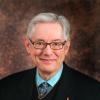
Bill Tammeus, a Presbyterian elder and former award-winning Faith columnist for The Kansas City Star, writes the daily “Faith Matters” blog for The Star’s Web site and a monthly column for The Presbyterian Outlook. His latest book, co-authored with Rabbi Jacques Cukierkorn, is They Were Just People: Stories of Rescue in Poland During the Holocaust. E-mail him at wtammeus@kc.rr.com.
Editor's Note: We can send you an e-mail alert every time Tammeus' column, "A small c catholic," is posted to NCRonline.org. Go to this page and follow directions: E-mail alert sign-up. If you already receive e-mail alerts from us, click on the "update my profile" button to add Tammeus to your list.





Suggestions make a lot of
Suggestions make a lot of sense. Therefore, we can be sure they will be ignored. Too bad.
Amen. You said it, and
Amen.
You said it, and perfectly.
Thanks for your thoughts, keep 'em coming.
Have a good one---
bob
An answer to the time gap
An answer to the time gap between leave-taking and a call can be very productive using an interim pastor, especially one who is trained in this specialized work of helping a congregation in transition.
As for "local" priests, the Episcopal Church has this and it is proving invaluable - - worth a look.
Bill, one presumes in the
Bill, one presumes in the Catholic system that the bishop knows every parish in his diocese well enough to appoint a good match for a new pastor, and that the pope, with assistance of his fellow bishops, knows the diocese well enough to do likewise. In theory, it is a good system, but cannot be compared to the individually autonomus Presbyterian/Reformed tradition.
As for appointing bishops from within the diocese, electing them, and by extension, parish priests, there have been numerous voices within the Roman Catholic Church calling for this for a long time, especially Fr. Hans Küng. I would imagine readers of NCR are quite familiar with these assertions, whether they support or oppose them.
It is not necessarily a
It is not necessarily a question of "individually autonomous". In many, perhaps most Episcopal dioceses the call of a new pastor needs the approval of the local bishop, so there is a sense of at least diocesan investment. As for bishops, a diocese may elect a new bishop (with laity and clergy voting separately), the election is never complete until the bishop-elect has garnered the approval of a majority of the bishops nationally holding jurisdiction (not assistants or retired) as well as a majority of the diocesan standing committees, composed of 4 lay and 4 clerics, which are sort of both a council of advise to the diocesan as well as having their own authority in many matters, including the consent of episcopal elections. I suggest this is not quite individual autonomy, at least not in this polity.
But I have no quarrel with the rest of your comment - - it makes all sorts of good sense. Thanks.
Getting substantive input
Getting substantive input from those who will be pastored! How novel. How ecclesiastically uncomfortable. How unCatholic.
What a great idea!
Before the New Testament was
Before the New Testament was written the Didache, a Christian manual of instruction, stated "Elect for yourself, therefore, bishops and deacons worthy of the Lord". Bishops of Rome were elected only by the citizens of Rome until after Constantine.
Edgar, You said it,
Edgar,
You said it, perfectly. Constantine really ruined what is left of our Church. Now it seems to be far more of a political organization than the religion that Jesus Himself started. How far the Vatican, not necessarily the faithful, deviates from the teachings of Jesus, including: "Do unto others... and: "Render unto Caesar... and "my kingdom is not of this earth".
But then what do I know I'm one of the hated and targeted libs/progs who are scheduled for... You fill in the blank.
I can guarantee one thing, I learned my lesson, I'll never vote for any Republicans (Voinovich, DeWine, LaTourette, etc) ever again. They got my last votes in the 2000 election. Repubs worship St. Reagan and Trickle-down economics despite the fact that it has never worked, since Reagan and that's a long time. Nor did it work in Chile under Pinochet and The Chicago Boys from the Univ of Chicago. All it does is allow the 1% super rich to live off the labors of everyone else.
Thanks to the Rethugs America is a Fascist nation and now, thanks to GWB, well on it's way to becoming a Fascist Theocracy. Interestingly, the Pope has the audacity to condemn secularism when his Repub party and it's unending mindset of rampant consumerism is the single greatest cause of secularism, worship of money and endless lust for power to maintain their "greed machine".
Furthermore, Repubs are all blind lock step Stepford wives who only obey the party line and NEVER think for themselves, and never do what is right for our nation.
When the Vatican/the pope(s) STOP playing politics America and the world can begin to heal from Theocratic divisiveness and theocratic self promotion.
Ghandi said something like: I like your Christ but not your Christians! That says it all for me, as well.
Fortunately for me that I found this site(NCR Online) and so many other people who think like I do.
Thanks for your thoughts, and keep 'em coming.
Have a good one---
bob
Yeah, we can pretty much
Yeah, we can pretty much thank Constantine for the mess the Church has become. I wish he had never converted...
Regarding bishops supposedly knowing what a parish needs in a priest - well, I have seen too many mismatches in my life to even try to believe that one. The really bad ones go by the wayside within a year. It's so inefficient, and drains too much energy.
for a faith community to discern its own priest - way too radical for Rome.
Sir: From friends in the
Sir:
From friends in the Episcopal Church I am told that it is a mixed bag. Even my Low to Tween Church friends there say there are more drawbacks than advantages to "hiring" their own pastor. He becomes an employee and is treated as such, and when their minister has to challenge them, they rather remain in their complacency and drive the minister/priest out. I've personally have seen this done.
You immediately presume celibacy, university education, etc... are barriers to their people. I have not experienced this at all, and I've had priests from all over the world as my pastors. The fact is, holiness and the struggle is universal. Most priests...even "climbers" who want to be bishops, I've known those types too, are pretty good to their people.
Alas, telling people what they want to hear is not the job of the priest, nor is telling them the right message in a poor way any more effective. There must be a balance.
Further, it is sheer antiquarianism to believe that we must return to every practice of the patristic era. Salvation history doesn't work that way!
The formula has already been proved true!! That is, in a diocese or religious community where fidelity to the magisterium is valued, and priests and religious are happy and encourage others to consider that way of life, and the bishop sees it as a priority, there are an abundance of vocations!!!!!!
St. Thomas Aquinas said, and I paraphrase here, "a community receives the vocations it deserves!"
I grew up Presbyterian and
I grew up Presbyterian and converted to Catholicism as a young adult. One of the formative events in my life was the experience, that took place when I was ten or eleven, of seeing our scholarly, quiet, gentle,kind pastor pushed ut of the parish by a group of aggressive parishioners who wanted someone more like a televangelist as their pastor. These people did not hesitate to use their roles as Sunday School teachers to recruit us children to their side. I am still proud of my single mother for telling me and my two sisters that this was wrong, and I am proud that I had the courage to stand up and tell my Sunday School teacher in front of the other kids that I thought it was wrong. The risk of "mismatched" parishes and pastors is a small one compared to the risk of situations like the one I actually experienced, back in the 1950s. What is to stop a parish from getting rid of a pastor because he opposes the death penalty or of hiring one because he supports immigration laws like the one in Arizona? In addition to the simple injustices visited on pastors, the hiring and firing of pastors on a parish level (or bishops on a diocesan one) would lay our Catholic Church open to the kind of centrifugal forces that are now tearing apart the Episcopal communion. What would constitute a Catholic identity, rather than a pro-death-penalty church in one part of town and an anti-death-penalty church in another? The Presbyterians split into two groups in the US in the 19th century over the issue of slavery, and at least a third group has formed in the past few years as the northern part of the denomination has become more liberal, alienating conservative members. In Islam, the lack of a central authority (the raising up of anyone a community chooses to be its imam) has led to the unchecked rise of militants who call themselves Islamic and cannot be declared un-Islamic with any authority. Sorry guys, but we need authority in the Church, with all its headaches, rather than the huge problems we would have with the author's proposed solution.
I agree the Church should
I agree the Church should move in this direction. I'm a former Catholic who grew tired of hierarchical decision-making and the increasingly conservative swing of the pope and bishops. I joined a Unitarian church and recently wrapped up a year of service on a ministerial search committee. We found a great match for our church. The congregation approved our recommendation last Sunday, following eight days of "candidating" by the new minister, including leading two Sunday services. It was a deliberate process that forced both parties to think long and hard about where wanted to go, and whether the match made sense. Long live the congregational system. The Catholic church is free to borrow it any time!
My church is a lay-led
My church is a lay-led church. The only pastoral position is the one I hold, which is called "pastoral counselor." I am indeed called by the congregation, represented by the board of trustees, but I do not have a leadership role beyond the pastoral care of, and attention to the spiritual life of the church. All administrative functions are handled by the laity, and lay-leaders officiate at every service and often give the Word as well.
More and more, I feel that this is the model that God has called for in this church. It may not be right for all communities, but Bill is on to something about the pastoral leadership arising from the community. More avenues for this happening are needed in communities of faith. I love how it is happening in the Catholic church, necessitated by the priest shortage. Laity are truly taking leadership wherever they can. I hope this trend continues.
Don't get too comfortable if
Don't get too comfortable if you are in the Catholic Church. Your situation of lay leadership will last only as long as it takes to get a visa for a Nigerian or Columbian priest to come in.
I've been there, seen that.
As one who has worked in
As one who has worked in several parishes as a professional minister for many years, I say “Amen” to a parish having a voice in choosing a pastor. I have seen so many “bad matches” mostly involving a pastor who thinks that he has to “make things right” in the parish immediately after his arrival. It’s not unusual to see staff changes and firings, and a major shift in liturgical practices with rearrangement of liturgical space. Very often there a condescending demeanor and attitude that the last pastor did everything wrong.
If a parish is to participate in selecting a pastor, the parish must have a strong parish pastoral council. This, however, is not usually the case. Since the pastor is the chairperson of the council, he usually has manipulated events and people to see things “his way.” In some parishes the professional staff and pastoral council do not interface.
A diocesan procedure needs to be in place for the evaluation of the incumbent pastor by the parish, and candidates for the parish to interview. Now, I must be dreaming to think that this can happen in a Catholic parish!
I think the Presbyterians
I think the Presbyterians have a great idea. Matching leader to those to be led would be a good start. However, in many churches with which I am familiar, there is a big split between those who are longing to look backward in the tradition, and those who want to take a forward look. It might be hard, even under the best of circumstances, to find a match that would be most productive for everyone.
The ancient church sounds
The ancient church sounds better everyday. What d'ya say. Let's jump ship !!!
After having a hugely popular
After having a hugely popular priest for a pastor the last 30+ years, I cannot stress how refreshing to have a new priest as pastor. Having in our diocese a rotation of priests, usually a 6 year term, allows each parish to experience the greater and the lesser priests. What one parishioner’s gold standard for a priest may be another's pot metal. Having the chance to vote relegates poor priests to poor parishes and good priests to wealthy parishes. It will happen as priests would gravitate to better settings if at all possible. In the history of our parish when a truly bad fit happened, it has been both the priest and the parish that contacts the Bishop and asks for a change. And, a change happened.
Unfortunately, one of the
Unfortunately, one of the arguments that will never be stated openly but will be a guiding force behind why the bishops will reject such a concept is, "What do you do with the 'unhire-able' or undesirable priest?" The current system allows for levels of mediocrity to continue ("You are a priest forever..."). If a priest can no longer serve a parish, because the diocese has incardinated him, the diocese is "stuck" with caring for him. It's been far easier to fob a dysfunctional priest off on a parish and let them worry about paying his bills. So it ends up being easier on the diocesan officials; the only ones who suffer are the poor parishioners who have no say in the process, but are the ones being harmed. So much for a vision of servant leadership...
The congregational system
The congregational system undoubtedly has it advantages; it does promote pastoral unity. That is also its disadvantage because pastoral unity in the face of social injustice makes it possible to ignore the call for justice in society. Often bishops are the key to the implementation of the teaching of the Church; that has often been the case with the recognition of Latino culture in parish activities and structures.
I disagree - there are many
I disagree - there are many instances of Protestant parishes taking years to call a pastor, and then firing him/her quickly. One Lutheran parish I know called 4 pastors within 4 years because the community itself was in turmoil. Eventually their bishop had to step in and help the situation. The Catholic system may not be without problems, but neither are those systems in other denominations.
My presbyterian brother in
My presbyterian brother in law once told me serving on a pastor nominating committee is the surest and fastest way to lose friends. Not for the faint of heart it seems. Good luck!
I have thought for a long
I have thought for a long time that this idea of home grown priests would be helpful in solving the shortage of priests as well as providing ministers who were well aware of the strengths and weaknesses in the parish, Perhaps if mature men(!!!!) were chosen they would not need the same training in some areas as a young person. This should be assessed and it is probable that the whole community also would benefit from help in those areas where his background is inadequate.
I would love to see therefore his preparation being done in the parish with those who are interested being invited to share in the learning process. Everyone then would benefit.
It doesn't address an
It doesn't address an important issue: we are made in God's Image, and not to remake the Church into our own. How then, if the congregation chooses, do they they get a pastor that they may have never chosen themselves, but may be the one they need to challenge them. People nowadays vote for their own comfort and security, for someone who does what they want, not what they need. Just take a look at the civil system of elections. When's the last time we voted in anyone who would make changes we knew were needed, but would be terribly painful? Choosing one who "matches" actually ends up creating very insular communities that don't change, even when necessary.
I remember meeting a
I remember meeting a Presbyterian minister who at our local ecumenical gathering was describing this very process. After explaining this whole 18 month procedure, my pastor, at the time said, "I just got a call and showed up two weeks later." Everyone laughed and admitted that, in their experience, it yielded the same success rate for pastors. Remember, the grass is always greener on the other side of the street.
Excellent commentary. In our
Excellent commentary. In our parish, we've had some pastors who were very poor fits for the congregation. It's sad. The people aren't happy, but they have no alternative because the pastor was assigned to them by a bishop who doesn't know them. It's also sad for the pastor who has much more difficulty connecting with the people.
The greatest benefit of having the congregation involved in the process is that it gives the people a voice and a reason to be truly involved. They know that their thoughts matter. Yes, you see the "politics", but that is present in Catholic churches too - it's just hidden because those who don't like what they see/experience stay silent or quietly slip away because they know that their thoughts don't matter.
Having pastors arise from
Having pastors arise from among their congregations also means that the pastor will have more investment in the local community as ministry, rather than in 'the system' as a career path.
Luckily, American CATHOLICS
Luckily, American CATHOLICS are smart enough to place their FAITH in the LOCAL church:
http://www.cbsnews.com/stories/2010/05/05/eveningnews/main6463604.shtml
http://documents.nytimes.com/new-york-timescbs-news-poll-national-survey...
And the Vatican wonders why people are moving "BEYOND the CHURCH?"
http://ncronline.org/blogs/essays-theology/vatican-and-us-women-religious
There are many things to like
There are many things to like about both Presbyterians and Methodists, both Evangelicals but NOT Evangelical fundamentalists.
I recall, in Nov, 05 and again in Nov, 07 the Methodists separated themselves from the Bush admin. May God bless them, for that. I have not read their position stating why they did that. But, could it be they remembered that Jesus Christ said: "Render unto Caesar... Also could it be that they did not want to be a part of the GWB-GOP political strategy of using Religion and God as a political weapon against Dems.
Also, according to the writings of Ray McGovern(see Wikipedia) the Presbyterians are not part of the GWB-GOP politicization of God and religion; and the GWB-GOP killing machine for oil and oil company profits. May God bless the Presbyterians. I wish I could say the same thing about the Vatican.
Where has: Thou Shalt not kill gone/ And how about: Thou shalt not covet(oil), And Thou shalt not steal(oil) and Thou shalt not bear false witness(against Dems/Progs/Libs). I'm a male lib/libertarian who has never had an abortion, nor am I a homosexual, and yet the GOP and the Vatican has targeted me and everyone like me; this would included the 240+ million Americans who are not GWB-GOP voters. IOW, in 2004, 59.6 million voted for GWB-Cheney-GOP and somehow the rest of us are the "bad guys" because we do not support Trickle-down economics, nor do we support the GWB-GOP killings in Iraq for oil and oil company profits.
All the Denominations since
All the Denominations since 300 do not follow what Jesus taught. His Movement was for Celibate Males and Sharing the Resources Equally, in the Gospels, in year 30. All the Ritual problems will continue, and more and more Divisions will result, for all the Denominations added since he was made a Trinity God.
Doesn't the historical
Doesn't the historical evidence indicate that most of Jesus' followers were non-celibate males and females even at the time he was alive, and certainly through the first century or two? Celibacy as a religious lifestyle didn't become a prominent factor until the monastic period. Any early celibate and communal groups of Christians died rather quickly.
Jesus was not involved in
Jesus was not involved in Organized Religion. His Movement, in 30, was for Celibate Males, and females and children they took into their group. It was a Lifestyle of Equal Sharing of the Resources, not a Man-Made Religion like the Christianity that formed in 300. No Priests, Pastors, Rabbis, or any of the things that compremise Organized Religion by other Human Man-Made Religions. Is there any God-Made Religions on Earth, or only Religions made by Man about Supernatural Gods, in our Image?
Duh - do you think it might
Duh - do you think it might even cause a break through in vocations? I've watched several recent appointments of pastors and all of them were terrible misfits/mistakes and short-lived as it turned out. The so-called parish town hall meeting to discern parish needs is conducted by outsiders in an hour and a half or so. In some cases the newly appointed priest is announced within the next day or week. The truth is that bishops have a short supply of priests and are desperate to find someone to fill the gaps. All they have to be is male, celibate and breathing. Thus parish priest and the people are joined in a shotgun wedding. It is completely arrogant of a bishop to pretend to know what is best; we have over 105 parishes and it would take years for him to understand even a handful.
I am Roman Catholic,
I am Roman Catholic, belonging to a quasi-parish. We are a non-territorial group that has been in existence since the 1970s. We selected our own pastor and I was chair of that committee. We advertised in NCR back in 2003-4, then arranged for two priests selected to visit the community for a weekend. Various activities were aimed at exposing everyone in the community (about 200) to the visiting priest. We then voted. To make a long story short, we selected a new pastor by an overwhelming vote and in July he arrived. Within 5 months, we knew we have made the incorrect decision - he was a micromanager with visions of the functioning parish 20 years behind the times! He denounced me from the altar. Then he was removed then by the Archbishop and the subsequent pastor was appointed. Selections by the group is not necessarily the answer but it helps. Since then, we have not processed where we went wrong, how this man fooled everyone with his answers during the interview process. The current appointment is destroying the community and our hands are tied! Yet we are unable to respond! We must learn what is expected of a pastor and there must be some system to review his position. We only learn by making mistakes and then accepting them and moving on!
why 12 apostoles were chosen
why 12 apostoles were chosen by one person and NOT by the congregations they suppose to serve???
The Twelve had an
The Twelve had an unrepeatable ministry.
They were not chosen by Jesus to lead congregations.
Their ministry was spreading the Good News far and wide, not settling down as pastors of local Christian communities.
The saying, “A religion that
The saying, “A religion that is not constantly spawning alternatives and heresies has ceased to think and has achieved only the peace of the grave,” is nonsense.
Not necessarily (granted,
Not necessarily (granted, perhaps a matter of different interpretations here).
Good Pope John XXIII saw the need to respond to the "signs of the times".
The Church of Rome, its Tridentine trappings notwithstanding, was losing influence in the world. By the 1960s, church attendance was declining to pre-World War II levels. Vocations were also tapering off, as seminaries and monastic communities were drawing upon decreasing numbers of war veterans who had seen the horrors of combat and felt drawn to Godly service.
Like it or not, we live in an age when people appreciate the opportunity to think on their own and set their own life course. If the church is to reach such people, it must be able to appeal to them in ways that respect the dignity of the human person.
The church must be able to articulate the Truth in a way that distinguishes the essential articles of faith, on the one hand, from various modes of expression, on the other. The church must be able to "connect" with modern people.
This is my take on the quotation.
If the Roman rite of the
If the Roman rite of the Catholic Church would allow married male priests, the grave shortest of priests would cease to exist. There are enough married former priests to meed the needs.
The Church needs to reexamine the issue of female priests. If honestly studied, I believe that the Church would begin to ordain women. If the Church ordained women, there would be sufficient number of priests and deacons that the bishops could keep only the best. Today, the Church is filled with hypocrites.
WE NEED GOOD AND HOLY PRIESTS, MEN AND WOMEN, WHO KEEP THEIR VOWS.
While it sounds appealing for
While it sounds appealing for a congregation to choose its pastor there is ultimately a bigger issue at stake in every church when it comes to a new shepherd; a decision by the flock to accept, love, and honor their new pastor as a unique child of God.
As a member of a number of parishes due to work related moves over the years I have seen seen those in love with their pastors and those at war. In some cases the pastor was charismatic and easy to follow. In others he was introverted and even hot tempered. In all cases he had a deep love for the Lord and a sincere desire to serve him as his priest.
What ultimately makes the greatest difference in the success of a pastor is not his skills, but the love and generosity i.e. spiritual maturity, of the parish leadership. Many welcome a new pastor with open arms and support him on his terms and find ways to help even the most challenged individual to be successful. It is a beautiful thing to see a priest grow through the love and support of his parishioners!
Sadly others demand that a new pastor conform to their demands, be a clone of a beloved past pastor or let them have more authority than the priest is comfortable with.
When a community welcomes a pastor as an individual on the path to holiness and recognizes its role in helping them achieve that gift it does not matter who makes the appointment because that role is a far distant second to the greater mission.
Before his retirement, Bishop
Before his retirement, Bishop Michael Begley initiated a consultative
process for the selection of his successor, the second bishop of Charlotte.
He held vicariate gatherings and invited everyone in the area to join him
in prayer, discernment, and brainstorming on the state of the diocese
and what kind of person would best serve the needs of God's people
in our relatively new diocese.
Try to imagine the energy generated at our vicariate gathering and
throughout the diocese! Bishop Begley invited all of us to participate,
to be part of this collaborative effort: to list spiritual and administrative
qualities needed, and to recommend possible candidates for consideration
as our second bishop.
As the consultative process continued, we received notice from someone
"above" our bishop, that the consultative process is to cease. No parishioners
had the authority to engage in such a process regarding their bishop,
much less make suggestion about diocesan leadership.
Seems that our faith community is this far beyond changing systems and
more a matter of changing hearts cemented into fixed systems.
Seems to me that church leadership is all about vocation, the CALLING
from God and the Community to serve in Christ's name. It has nothing
at all to do with what seems to have evolved into "clerical careerism"
and empathsis given to institutional "climbing" a contaminated, hierarchical ladder.
I have experienced both
I have experienced both systems, in a congregational church and in several RC parishes. The bishop has a very limited knowledge of most parishes. He has a little better knowledge of his priests, depending on the size.Perhaps a hybrid system could develop where the bishop meets with parishioners after the pastor leaves, to find out what thye see as their strengths and weaknesses, and what they would like in their next pastor. He can at least try to meet their needs. Open listing can work very well also.
Following my own exploration,
Following my own exploration, millions of persons on our planet get the home loans from various creditors. Thus, there's a good chance to get a commercial loan in any country.
Post new comment