Seeking religious harmony, the urgent call of our time

In speeches and columns over many years I have made the point that interfaith understanding is vital if there's to be any hope for world peace.

And America — a stunning amalgam of ethnic and religious traditions — can be a model for the world in this regard.

In fact, if the call of the 20th century for Americans was to work toward racial harmony, the call of the 21st century is to seek religious harmony in our increasingly pluralistic culture.

That's why I was delighted recently to learn of the efforts toward this goal undertaken by Merrimack College, a Catholic school in the Augustinian tradition.

Just last month, this North Andover, Mass., school's Center for the Study of Jewish-Christian-Muslim Relations announced the award of its Goldziher Prize to Prof. Mark Cohen of Princeton University. The prize is named for a 19th century Jewish scholar of Islam, Ignác Goldziher, a Hungarian who respected Islam and who legitimated Islamic studies in European universities.

Cohen, a rabbi, teaches Jewish Civilization in the Near East and is author of Under Crescent and Cross: The Jews in the Middle Ages, which focuses on advantages Jews in that era had when they were governed by Muslims and when, as Cohen told me, Muslims and Jews got along better than they usually do today.

What I found most hopeful about this award is the very existence of Merrimack's Jewish-Christian-Muslim center. I hadn't known about it before. A press release describing the Goldziher award said the center has expanded its mission from mostly Jewish-Christian relations studies to include Islam. Good. As Cohen told me, "It's extraordinarily important that Americans learn about Islam, understand Islam and know and respect Muslims. That's the primary need.

"My experience is that up until recently dialogue was dialogue. It was Jews and Christians. Now Muslims have been brought into the picture ..." So, he says, we are starting to have "trialogue."

Preview NCR's Family Life Issue

Watch this video from NCR Editor Dennis Coday for highlights from our annual Family Life special section.

You won't find these articles on our website. Subscribe now to receive all the content from each biweekly issue.

Although the record of all of Christianity is quite spotty when it comes to understanding and appreciating other religious traditions, Catholicism has made some helpful steps toward doing exactly that in recent decades. Evidence includes the Vatican II creation in 1964 of the "Secretariat for Non-Christians," later renamed the Pontifical Council for Interreligious Dialogue.

Add to that the pioneering 1965 document, "Nostra Aetate," in which the church — after centuries of anti-Judaism — finally said Jews should not be held collectively responsible for the death of Jesus, and there has been cause for hope.

This hope finds expression in the work of, among many others, Fr. Dennis D. McManus, consultant to the Secretariat for Ecumenical and Interreligious Affair of the U.S. Conference of Catholic Bishops. I've heard McManus several times and am always encouraged by both his scholarly approach to interfaith conversation and his warm embrace of people of other faiths, even as he stands solidly in the Catholic tradition.

And that's precisely the lesson I hope Merrimack's center and others promoting inter-religious understanding are teaching: Learning about other faiths does not require us to abandon our own. Indeed, my own experience of learning more about Judaism as I researched my new book, They Were Just People: Stories of Rescue in Poland During the Holocaust, has made me a better Presbyterian even as I think it has made my rabbi co-author a more committed Jew.

We need not shrink from exposure to religious traditions beyond our own (and in that I include atheism) for fear that we'll compromise our way of being. Rather, the idea of interfaith dialogue is simply to know and to be known. And it helps to approach that task with the Benedictine virtue of humility.

Without such an attitude, we may begin interfaith encounters with a conversion agenda. That almost certainly will sow distrust and end the conversation. And why would we Christians do that when we know that the job of conversion is not ours but, rather, the Holy Spirit's?

----------------------------------------------------

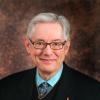
Bill Tammeus, a Presbyterian elder and former award-winning Faith columnist for The Kansas City Star, writes the daily “Faith Matters” blog for The Star’s Web site and a monthly column for The Presbyterian Outlook. His latest book, co-authored with Rabbi Jacques Cukierkorn, is They Were Just People: Stories of Rescue in Poland During the Holocaust. E-mail him at wtammeus@kc.rr.com.

Editor's Note: We can send you an e-mail alert every time Tammeus' column, "A small c catholic," is posted to NCRonline.org. Go to this page and follow directions: E-mail alert sign-up. If you already receive e-mail alerts from us, click on the "update my profile" button to add Tammeus to your list.

St Francis thought as you do

St Francis thought as you do when he prayed "O divine Master,
Grant that I may not so much seek...to be understood as to understand..."

How can we ever hope to build peace and understanding if we don't listen to each other? My experience has taught me that the more I learn about other faiths, the more I see that we are all truly one with different approaches to God. Yes, there are differences in the details, but the overall message is the same. We are all called to love God and one another.

Years ago the image of a

Years ago the image of a wheel with spokes all leading to the hub came to me: religions are the spokes leading to the center---God. We have much more in common than we have that divides us, so listening to each other is the key.

Thank you for your article.

Thank you for your article. Maybe if those of us, who call our nation a "Christian" nation, would be more Christian-like toward people from other spiritual backgrounds/nations, we would begin to narrow the gap between Muslims and others who want peace in the world, just as we say we do. It all begins "at home" and at this point, there is a tremendous amount of work to be done in that regard. We need to be a lot less judgmental and realize that everyone in the world (or in our country, for that matter) does not have to believe or live as we do. It gets more obvious every day that Americans do not have the market cornered on happiness or we would not be so materialistic! Another "problem" that we should look at more closely is that grandiose mantra of many in this country: "if you're not for us, you're against us". NOTHING is that black and white.

We could use some intra-faith

We could use some intra-faith understanding as well.

"...the job of conversion is

"...the job of conversion is not ours but, rather, the Holy Spirit's?"
Even here:
http://ekklesia.co.uk/node/12399

As a hospital chaplain I find

As a hospital chaplain I find that a knowledge of other faith traditions extremely useful. As Tammeus points out "Learning about other faiths does not require us to abandon our own." In fact learning about other faiths and working alongside chaplains of other faiths has strengthened my own. Unfortunately many who come to me wanting to be chaplains come with a conversion agenda. When I explain that respect for, not tolerance of, other faith traditions, yes including atheists, is a core value of chaplaincy many of those with a conversion agenda find my lack of a passion for conversion to be unchristian!
Pat

It is not only "religious

It is not only "religious understanding" that we need, as valuable as it is. Before the "understanding" can begin and even without that level of progress we need human tolerance and respect. Only when that basic value is embraced can we begin to listen, to acknowledge that regardless of religious content for understanding, mutual acknowledgement of each person's right to be is sacred and to hold his/her truth is contingent upon that. I guess that is the essence of compassion.

When we "tolerate" because our religion tells us so and see that as sufficient, can we really listen? Moreover, we are at risk of ignoring that creational obligation and of its fragility. Our religious toleration reinforces and "sacramentalizes" human tolerance and understanding and is not a substitute or sufficient of itself.

Very nice to see this piece

Very nice to see this piece today--Thank you. Even beyond the "trialogue", I gained some clarity on the issue of better inter-religious understanding by the Dalai Lama's recent book, Toward a Kinship of Faiths

http://tinyurl.com/DLKinship

and through his recent talks here in New York. He singles-out the presence of compassion (to varying degrees) as a common thread among faiths, and by recognizing at least this "small" area of common ground, we must seek to forge respect for other religions.

Though it's always been obvious that we need to cultivate a spirit of community between all people in which everyone is appreciated for their own unique gifts, I had been uncertain where dialogue was supposed to lead--To an equating of faiths? To some distillation of One Truth? Such reductionist results seem to miss own Catholic faith's full splendor of truth.

So, in the Dalai Lama's book it helped me to see--through recognizing common goals and true differences between religions--that the goal is simply building *respect* for each other. I feel as if this is so apparent that I doubt my comment will help anyone here, but as I said it is a clarifying insight that helps me understand that muddying the waters of my own faith isn't the inevitable byproduct of good intentioned dialogue.

Thank you again for your message today and for the chance to share this thought.

The most direct way to

The most direct way to achieve harmony is to follow the "Charter for Compassion" which one may find at Charterforcompassion.com.

Thanks for this thoughtful

Thanks for this thoughtful and expansive post. Others might also be interested in Rabbi Brad Hirschfield's You Don't Have To Be Wrong For Me To Be Right. It's a good story-ladden read and he makes some compelling arguments. sr.d

The truth that Jesus came to

The truth that Jesus came to remind us of is that we are One with God and one with eachother through Divine Love. As we allow ourselves to be open to remembering this truth, we will find that all perceived separations, including those of religious denomination, will eventually fall away. This is the path toward the harmony of which Tammeus speaks.

Lauri Lumby Schmidt
Spiritual Healing and Empowerment Consultant
Authentic Freedom Ministries
http://www.authenticfreedom.net

Bill Tammeus' words are basic

Bill Tammeus' words are basic for any honest interfaith encounter. So many people lack a simple self-confidence in their own tradition and fail to appreciate God's great joy in diversity. I believe fear is the opposite of faith. So I would heartily recommend this article as a staring place for discussion so that "We need not shrink from exposure to religious traditions beyond our own (and in that I include atheism) for fear that we'll compromise our way of being." What a humble and enlightened approach!

Fr. Bob Cushing,
St. Theresa Catholic Church
Cordele, GA USA

Before meaningful interfaith

Before meaningful interfaith dialogue happens between Catholics and Jews, we need to work on our coming together as Catholic Christians. Today, there is a wide gulf between conservative and progressive Catholics. Those who hope for fulfillment of Vatican II promises are less and less likely to agree with those who want to reform the reforms of Vatican II.

While our Protestant brethren may be more confident of achieving a better raport with non-Catholics, most Catholics I know would hope for peace first among the various divisions withing the Catholic Church today.

Boy, ain't that the truth. I

Boy, ain't that the truth. I find myself so preoccupied with intra-Church conflict, I sometimes forget there ARE other religions.

"We need not shrink from

"We need not shrink from exposure to religious traditions beyond our own (and in that I include atheism) for fear that we'll compromise our way of being."

This statement means very much to me in my search for a deeper understanding of my Catholic beliefs as well as my faith values(there is a distinction between beliefs and faith). It seems to me as we progress through time, our globalized awareness may demand a more syncretic view and response to time-bound understandings of beliefs.
I think that the need for psychological security often is displayed in rigid, unbending adherence to a specific ideological belief system. After all, if the faithful start incorporating ecumenical values and embrace and integrate into a wider circle of believers and rituals, then what will the hierarchy do with their current jobs that rely on narrow descriptions?

Mr. Tammeus' statement ) ". .

Mr. Tammeus' statement ) ". . . interfaith understanding is vital if there's to be any hope for world peace . . .") is an important ingredient in any soup that would be palatable for a world hungry for peace.

But he, as with nearly all other prognosticators, lacks a clear understanding of human spirituality which clouds his vision of how to achieve world peace.

Einstein's dictum that "The problems of the world cannot be solved on the same level of consciousness that created them." is relevant. He understood that "consciousness" is everything when it comes to personal and global problem solving. Although he is not primarily known for his views on spirituality, he clearly understood the basis of true spirituality: consciousness.

As did all Masters who have come to this planet to help us achieve personal and global peace; Lord Krishna, Lord Buddha, Shankara, Moses, Jesus (in the Gnostic Gospels), Maharishi Mayhesh Yogi, and Walsch's book "Conversations with God" all espoused the same theme: that the Kingdom of God is within and that we can find our salvation by "going within." This is the fundamental theme of my novel THE MICHELANGELO DECEPTION.

The great artist could only intuit such wisdom, and longed for a way to experience -- in his words -- "...O' send the light so long foretold for all, to thy dear bride, so that my soul will glow, and I may know thee inwardly and never doubt." He did not have the knowledge we have today that would have made it possible for him to experience the wonder and glory of personal salvation prior to death . . . and to realize this is the source of global peace.

Why? Because all the Mssters mentioned above -- who came to us before the 20th Century had their message of "going within" to find personal salvation -- turned on its head, replacing it with what we now know are religions that are mere shadows of what the masters taught.

Michelangelo expressed his discontent with what the Catholic Church had done to humanity when he embedded deceptions in the "Last Judgment", the fresco he painted on the wall behind the altar in the Sistine Chapel. He portrayed the quicksand into which humanity had fallen -- a trap we are still in 500 years later.

Today, we have the knowledge of how we fell into a deadly pit of suffering and conflict that is threatening the very survival of our planet. And we know, as Einstein did, the way out: raise global consciousness and eliminate the religious animosities, doctrinal differences, and other factors that inhibit interfaith understanding which is vital to achieving the world peace that Mr. Tammeus seeks.

My novel has a blueprint -- as expressed by all of our Masters -- with a clear path toward personal and global salvation; it does not require abandoning personal religious or secular beliefs, but provides an alternative to them when they no longer serve one well.

Amen amen. Just as Jesus

Amen amen. Just as Jesus didn't condemn non-Jews for being non-Jews, neither should we Christians do the same unto others who are different from us. Great article, much to and pray about.

“I appeal to you, brethren,

“I appeal to you, brethren, by the name of our Lord Jesus Christ, that all of you agree and that there be no dissensions among you, but that you be united in the same mind and the same judgment.” (1 Cor 1:10 RSV)

The Eastern and Western Church know that if they unite to UNIFY THE DATES OF EASTER, which they celebrate separately because they follow different calendars (Orthodox use Julian, Catholics use Gregorian), Jesus promised the Holy Spirit will come in full force and enlighten them with steps to take for the Complete Unity of the Body of Christ. Jesus has been asking us to UNIFY THE DATES OF EASTER for the past 25 years because His Body is shredded and recrucified each year when one part celebrates His Resurrection while the other part is entering into His Passion. But the East and West continue to dialogue and argue on which date....making Our Lord suffer their division. Meanwhile, by the grace of the Holy Spirit, the laity suffers with Christ as they wait and watch in prayer, seeing that His sheperds choose to remain divided among themselves.

“Brothers have you done everything you can to preserve the unity of My Body?” (March 10, 1990 TLIG)
“Every Easter season I must drink of the cup of your division since this cup is forced on Me… …the more time passes for them to unite the dates of Easter, the more severe their sentence this generation will receive.”
(May 31, 1994 TLIG)

Let us pray very much for the

Let us pray very much for the UNIFICATION OF THE DATES OF EASTER. Our Lord says, “I appeal to you, brethren, by the name of our Lord Jesus Christ, that all of you agree and that there be no dissensions among you, but that you be united in the same mind and the same judgment.” (1 Cor 1:10 RSV) In the True Life in God messages, Jesus says, “Brothers have you done everything you can to preserve the unity of My Body?” (March 10, 1990 TLIG) “Every Easter season I must drink of the cup of your division since this cup is forced on Me… …the more time passes for them to unite the dates of Easter, the more severe their sentence this generation will receive.”
(May 31, 1994 TLIG)

I beleive that we can

I beleive that we can experience actual unity by choosing ONE DATE for EASTER. How can others , who are not Christian come to believe if we continue this sin of Division and can not even agree on our MOST Important Feast, the Day of Easter!! I beleive we have been given a grace to know how to do this, and it is very simple! Pope John Paul 11 Cannonized St. CAtherine Emmeich in our times. You can go to her web page St.Emmerich and read how she experienced the Passion of our Lord, and always on the LAST FRIDAY OF MARCH. She did this not only was, but serveral times , and no matter when the Date of Easter was for the Orthodox or the Romans, it was always on the Last Friday of March.. Something to pray on and decern.

Wowie. I am quite happy and

Wowie. I am quite happy and astounded by this article. Great work! As an interfaith activist (on the near side of 30!) who works hard to make sure that such ideas are widely disseminated, words like these are wildly reinforcing.

I'm a committed Catholic, but I am only so because of my interfaith work. If not for dialogue and experiential action across faiths, I would be living quite shallowly, in a religious sense. Thank you Bill.

Every one remembers that

Every one remembers that modern life is very expensive, but some people need money for different issues and not every one gets enough money. Hence to receive quick home loans or short term loan would be good way out.

Post new comment

NCR Comment code:

  1. Be respectful. Do not attack the writer. Take on the idea, not the messenger.
  2. Use appropriate language. Avoid vulgarities and slurs.
  3. Keep to the point. Deliberate digressions don't aid the discussion.

For more detailed guidelines, visit our User Guidelines page.

The content of this field is kept private and will not be shown publicly.
(if you have one; if not, leave this blank)
  • Web page addresses and e-mail addresses turn into links automatically.
  • Allowed HTML tags: <a> <em> <strong> <cite> <code> <ul> <ol> <li> <dl> <dt> <dd> <font> <swf> <swf list>
  • Lines and paragraphs break automatically.
  • You may use <swf file="song.mp3"> to display Flash files inline

More information about formatting options

CAPTCHA
This is to prove you are a human visitor and to prevent automated spam submissions.
Image CAPTCHA
Enter the characters shown in the image.