
NCR on Kindle - NCR classifieds - YouTube - Twitter - Facebook - Email Alerts - RSS
Coming back to a sustainable pace of life
PITTSBURG, Mo. -- Just as my wife and I parked the car at the end of the long gravel roadway into the Hermitage Spiritual Retreat Center here, Fr. Paul shouted a hello and hustled down the path for a hug.
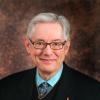
Earlier in the year we had attended a surprise party for Paul’s 80th birthday, but I still don’t believe he’s that old. He’s physically, emotionally and spiritually in wonderful shape and quite able to live here as a hermit three weeks of each month. The fourth week he spends at Assumption Abbey in Ava., Mo.
W. Paul Jones, who spent most of his career as a United Methodist clergyman teaching at St. Paul School of Theology in Kansas City, is now a Catholic priest and Trappist monk. He continues to write books and to serve as caretaker of the small 13-acre retreat center that has been his dream.
And a lovely dream it is. In addition to the rustic but comfortable hermitage where he lives, there’s a nearby converted house for retreatants and a new one-person hermitage in the woods, just up a hill from Lake Pomme de Terre. That building has electricity but no running water.
There’s no set fee for any of the center’s guests. You pay what you can. If that’s nothing, then nothing it is.
I’ve just agreed -- after years of Paul asking me -- to serve on the center’s board. So I wanted to spend a little time here to try to get into my Protestant mind why such retreat centers are necessary. From what are we retreating? Or, maybe: From whom?
I suspect that many Catholics -- especially those with some understanding of the monastic tradition -- may be able to answer those questions more quickly and accurately than can Protestants, though of course that’s a wild generalization. The reality, however, is that nearly everyone now lives at an unsustainable pace and needs to be slowed.
Forty years ago, futurist Alvin Toffler warned us in his book Future Shock that we were sprinting on a highway to incoherence. And if it was true then -- when nobody had a laptop, a cell phone or an iPad and when instant messaging meant talking to someone face-to-face -- imagine how true it must be today.
Indeed, one recent study found that the average pace of life has sped up another 10 percent just since the early 1990s.
The human body can and does evolve -- but at far from warp speed. And the reality is that we’re not built to live at the pace most of us now endure. At a minimum, we need ways to remind ourselves that the miracles that are our bodies and our brains must be operated at reasonable speeds.
That’s at least part of what retreat centers can do for people.
For instance, Fr. Paul has e-mail through a phone line but refuses to have any Internet connection. He knows that with his curious mind he’d spend far too much time surfing the Web and being distracted from the verities he’s pledged to notice while living at the slower pace of a hermit.
When I remove myself from the pace of writing a daily blog, columns for two publications, church work, nonprofit board work, being a grandfather to six (all close by), helping my wife maintain a home and on and on, I realize that I begin to notice things. I do what my Buddhist friends tell me to do -- I become mindful. And I start to reverse the true charge I once read in a Jewish prayer book, which is that “we walk sightless among miracles.”
The life I’ve chosen requires me to be connected fairly rapidly with the world around me, and that means cell phones and laptops, Facebook and Twitter. But time at a retreat center draws me back to a sustainable pace. And it reminds me that speed kills.
* * *
Bill Tammeus, a Presbyterian elder and former award-winning faith columnist for The Kansas City Star, writes the daily "Faith Matters" blog for The Star’s website and a monthly column for The Presbyterian Outlook. His latest book, co-authored with Rabbi Jacques Cukierkorn, is They Were Just People: Stories of Rescue in Poland During the Holocaust. His e-mail address is wtammeus@kc.rr.com.
Editor's Note: We can send you an e-mail alert every time Tammeus' column, "A small c catholic," is posted to NCRonline.org. Go to this page and follow directions: E-mail alert sign-up. If you already receive e-mail alerts from us, click on the "update my profile" button to add Tammeus to your list.


Thanks Bill. I'm presenting
Thanks Bill. I'm presenting a wellness workshop to area clergy in November and would like to include this article in the self-care packet I will give to those in attendance. "Speed kills." How true!
I am a former Catholic, but
I am a former Catholic, but am still appreciative of many things in Catholicism, such as the monastic tradition. Why retreats and retreat houses and hermitages? To quiet the mind and quiet the soul so as to be able to hear the voice of God. In Psalm 46:10 it says
Be still and know that I am God.
The "Slow Movement" is trying to achieve in everyday life some of what we try to achieve by going on retreat - escaping the frenetic pace of 21st century life in the industrialized world. Just type "Slow movement" into a search engine and you will find it.
"we walk sightless among
"we walk sightless among miracles" - thank you for that Jewish prayer book quote. I think there's a growing unease about the speed, the constant "connectivity" and the superficial nature of these on the go relationships. There is no time for quiet reflection, whether in prayer or just in giving some undivided attention to our own thoughts,or to our surroundings. And I don't think this is only a concern for the religious. There are folks who sense that a speeded-up life is not compatible with a fully human life. Recently, I heard a radio interview (sorry I can't rememember the author) who wrote about her decision to "go dark" on mondays. No TV, no radio, no phone calls, no surfing on the net, no texting, etc. Not easy to stick to. Her family and friends have learned not to attempt to reach her on monday. Not everyone could choose this particular solution, but I think everyone could benefit spiritually from a periodic withdrawal from the white noise that surrounds us.
Thank you for this reminder
Thank you for this reminder to slow down and be in the quiet and peace that is so hard to find in todays world. My wife and I live in the Twin Cities area of Minnesota. We utilize and volunteer at a hermitage retreat center near St Francis, MN, called "Pacem in Terris." It is amazing what can happen in a quiet, noiseless (save the sounds of wind and animals) hermitage. Some acquaintences have questioned the ability to be silent for hours/days at a time. However, it is wonderful. When "Pacem" was begun it was assumed that most retreatants would be Catholic, but from the beginning it has been true that most hermits are protestant, and usually not mainline liturgical protestants. How wonderful that God's divergent world, regardless of spiritual background from western and eastern religions alike can hear the voice of God calling and can respond with quite time alone listening to God's presence in our lives.
How true this is! How can we
How true this is!
How can we ever break away from all our responsibilites to be responsible for ourselves before GOD!
oh how I wish. . .
The essay and replies remind
The essay and replies remind me of my brief visit to the Monastery of Christ in the Desert (in New Mexico). How wonderful the peace there. I admire the Desert Fathers, old and new.
But I also laughed when I thought how my factory boss might react if I told him "our bodies and our brains must be operated at reasonable speeds".
It is true that we can find peace in the city, but how I long for peaceful and sacred retreat.
Sometimes there is a jealousy and bitterness in my heart when I think of those such as Father Paul on the 13 acres, or Merton in his hermitage. I wouldn't take a thing from them, God Bless them, but the evil one whispers to me in those moments "Do they really understand what you face each day?".
No one worked physically
No one worked physically harder than my parents did, but Sundays were always a day of rest, going to church, an early afternoon dinner and occasionally a visit to or from friends. My immediate thought when I began to read this article, is how a retreat was not a reality for my parents, and probably for many working class poor people who probably could use a retreat as much if not more than those of us "successful" people who can actually make choices of just how busy we want to be. Sundays were as much of a retreat as my father had.....and then there is my mother who maybe had 4 hours (if she was lucky)to do nothing. Perhaps there is a reason for Fr. Paul hitting 80 in good physical and mental condition. Sounds like a wonderful way of life.
Post new comment