
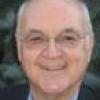
Schillebeeckx: No salvation outside the world

One of the fast-diminishing number of theological giants died Dec. 23. Edward Schillebeeckx, a Flemish Dominican priest, was 95 years old.

Unlike Jesuit Fr. Karl Rahner, (d. 1984) and Dominican Cardinal Yves Congar (d. 1995), for example, the bulk of Schillebeeckx's major work was done after rather than before or during the Second Vatican Council (1962-65).

Professor Lieven Boeve, the president emeritus of the European Society for Catholic Theology, of which Schillebeeckx was a member, wrote a brief statement of appreciation following the announcement of the Dominican theologian's death.

He referred to Schillebeeckx, without any exaggeration, as one of the most important theologians of the post-conciliar period, singling out his efforts to engage the Christian tradition in dialogue with modern secular culture and society.

Boeve noted that Schillebeeckx's insights were the result of a long intellectual journey. He first studied philosophy and theology at the Dominican houses of study in Ghent and Leuven (Louvain).

The formation, however, was typical of the times, which is to say that it was largely neo-Thomistic and classical, although Schillebeeckx did come into contact with phenomenology, a philosophical movement that was especially popular in northern Europe, and the writings of one of its leading figures, Maurice Merleau-Ponty (d. 1961).

His most direct philosophical influence, however, was his mentor and fellow Dominican, Dominic DePetter.

One of Schillebeeckx's best-known books, Christ the Sacrament of Encounter with God (1960; English-language edition, 1963), was strongly influenced by phenomenology and also by the principle of sacramentality in Thomas Aquinas, which was the topic of his doctoral dissertation in 1952.

It was during his post-graduate research in Paris, where he studied at Le Saulchoir and the Sorbonne from 1945, that he came into close contact with Yves Congar and another accomplished Dominican theologian, Marie-Dominique Chenu, both of whom left a lasting impression on the young theologian. Schillebeeckx learned, especially from Chenu, how to understand the development of tradition within the context of history.

He became professor of theology at the Catholic University of Nijmegen in 1958, a position he held until his retirement in 1983. His major works were many, including Jesus: An Experiment in Christology (ET, 1979) and Christ: The Experience of Jesus as Lord (ET, 1980).

NCR: February 3-16, 2012

Subscribe to NCR to get all the news and special features that aren't always available online. In this issue:

- US News: Bishops Host Conference on Immigration
Conference fields advocates' questions on law, policy

- Special Section: Deacons. Serving as parish administrator; roles of wives; and more

- Study: Black Catholics are more engaged
New study by Notre Dame researcher about parish involvement in America

Subscribe now!

Unfortunately, the Vatican contributed a number of distractions from his theological work in the form of at least three investigations by the Congregation for the Doctrine of the Faith -- in 1968, 1979, and 1984, each of which ended without any condemnation.

In 1982 he became the only theologian ever to be awarded the Erasmus Prize for his contributions to European culture.

In her excellent statement of appreciation in the Jan. 18 issue of America magazine, Domincan Sr. Mary Catherine Hilkert, a devoted friend, fellow Dominican, and master of Schillebeeckx's work, and a valued friend and colleague of my own at the University of Notre Dame, reported on Schillebeeckx's final message to his theological colleagues at a symposium held in his honor in Leuven in December, 2008.

That message was Extra mundum nulla salus – "There is no salvation outside the world." It was a conviction, Hilkert noted, that "captures the love of the world and the 'grace-optimism' that characterized [his] life's work. ..."

From the earliest to his latest books, she wrote, Schillebeeckx "helped readers grasp the core sacramental insight disclosed by the Incarnation: The mystery of God is to be encountered in human life and creation."

For Schillebeeckx, "the creative and saving presence of God's grace" becomes manifest "wherever human persons minister to one another, especially to the neighbor in need. Human love is an embodiment, a sacrament, of God's love." He called these experiences "fragments of salvation."

This sacramental view of the world and of the church's role within the world were, according to Hilkert, at the heart of Schillebeeckx's writing, preaching, and teaching for over seven decades, just as they were central to the vision of the Second Vatican Council, where he served as an adviser to Cardinal Bernard Alfrink and the other Dutch bishops. He served in the same capacity at the Dutch Pastoral Council immediately after Vatican II.

Even in moments like our own, Hilkert observed, Schillebeeckx reminded his readers that "God is new each moment," and that wherever injustice occurs, whether in the world at large or in the church itself, the Spirit is actively at work, prompting resistance, hope, courage and change.

We can make Professor Hilkert's final prayer our own: "May this gifted theologian and preacher of the Gospel now enjoy the fullness of life that he once described as 'God's eternal surprise.' "

[© 2010 Richard P. McBrien. All rights reserved. Fr. McBrien is the Crowley-O'Brien Professor of Theology at the University of Notre Dame.]

May he rest in peace. I hope

May he rest in peace. I hope this sweet man whose faith filled message finds rest in the boosem of the Lord.
He gave us hope and a reason to believe.

AMEN!!

AMEN!!

While his work on ministry

While his work on ministry may ultimately prove the most useful pastorally, I am forever grateful for his two great tomes Jesus and Christ for truly opening our Faith even to me, at least for a peek, limited only by my own severely incapacitating literary disability and my lack of an excellent, disciplined and Faithful theological mentor such as the Reverend Father Richard P. McBrien.

Your insights and selection

Your insights and selection quotations from Schillebeeckx are gifts to the reader. Thank you.

I will never forget my final

I will never forget my final course in my graduate study toward an M.A. in theology, a weeklong seminar on the Resurrection which used Schillebeeckx's book on Christ as the fundamental text. Owing his epistomology to the German philosopher Gadamer (I think I have this correct), Schillebeeckx was able to articulate an explanation of the Resurrection that did not rely on some objective evidence that would have reduced the mystery to science. This study enabled me to give an assent to my faith that has anchored my appreciation of sacraments ever since.

At the end of my study toward

At the end of my study toward a B.A. in English and Theology, we were able to meet Gadamer at a dinner; he said, interestingly (and cryptically, at first), that American students are "too proud." Around the same time, I was also reading Schillebeeckx and writing a senior paper on Christology. I was surprised at how many theologians (including Rahner) articulated some version of Schillebeecks's observation regarding the many theologians exploring the implications of how "the resurrection was not the resuscitation of a corpse." At that time in my life, I had thought resuscitation had been the main point. Schillebeeckx and others forced me to re-imagine the upper room, the road to Emmaus, with many other gospel stories, and alternative readings that might account for them in some other way. And finally I began to notice how many times Jesus encounters disciples and strangers who take his words and spiritual analogies too literally, only to be corrected by Jesus himself. It seems the point might not be simply that Jesus was smart and others were all dummies, but a series of warnings in the gospels against too much literalism when it comes to scriptural analogies. I was never the same. In a good way, of course.

Modern thinking is fond of

Modern thinking is fond of making statements without any kind of proof. A good example above is "The mystery of God is to be encountered in human life and creation." Tell that one to a kid who grows up battered & abused in a rotten family!

The problem is that humans are sinful and some unbelievably so. While it is true that we may encounter God in other people, this is the exception to the rule. We often encounter anything but God in other humans. Humans are characterized by three things, stupidity, selfishness & sinfulness.

Trumpeter Feb. 01, your

Trumpeter Feb. 01, your trumpet is awfully out of tune.

On the contrary, it always

On the contrary, it always hits the high note! Ta-da!

Dear trumpeter, I wonder if

Dear trumpeter, I wonder if you realize how circular your own thinking and statements are. At first you appear to revile "making statements without any kind of proof" but you end by doing exactly that in your whole final paragraph. The encounter of God in other people - or not - is based in experience, which you rightly validate. What bothers me though is your completely negative view of the entire human race: stupid, selfish and sinful. This doesn't leave much room for faith, hope, happiness, love as animating features for life in the world. I notice also that you completely ignore the other half of the quote: "The mystery of God is to be encountered in ... creation." Perhaps the kid you care about who grows up battered & abused... will, with help, encounter God in creatures other than humans and thus experience faith, hope, happiness and love. We don't live by "proof"; we live by experience. Good luck.

Trumper trembles: "Humans are

Trumper trembles: "Humans are characterized by three things, stupidity, selfishness & sinfulness" whose trumpet typically triumphantly intones traditionalist tracts.

Humans are characterized by Faith, Hope and Charity, and the greatest of these is charity.

Trumpeter, the writing here

Trumpeter, the writing here is not being addressed to a kid who grew up battered and abused in a rotten family, but to adult Catholics, perhaps some who did grow up in an abusive Catholic family, but who have spiritually matured in the love and grace of Jesus Christ.

You seem to want to insist and emphasize that humans are ONLY "characterized by three things, stupidity, selfishness & sinfulness." You are making a very broad generalized attack against ALL humans which is tantamount to saying that God's Creation and intentions are destructive only. If your statement was true, entirely the truth, there would be no humans, no civilization, not a shred of hope or love at all in the world or existing in anyone ever. Your statement is a denial of the existence of love. It is a refutation against the existence of the Holy Spirit. Truly, you are denying the Holy Spirit.

Well said, Anonymous. In the

Well said, Anonymous. In the Book of Romans Paul backs your statement:
" Hence, now there is no condemnation for those who are in Christ Jesus.
For the law of the Spirit of life in Christ Jesus has freed you from the
law of sin and death." (Romans 8:1-2)
Paul continues in Romans 8:"The concern of the flesh is death, but the concern of the Spirit is life and peace. For the concern of the flesh is hostility toward God.." (6-7)

Trumpeter, I would agree with

Trumpeter, I would agree with some of your statements, but not all. Luther and Calvin both taught that humanity was intrinsically sinful; indeed they were fond of the image of of human beings as large piles of horse dung covered over totally in snow (the snow being Christ's redemptive sacrifice and His divine grace). This image, this theology, however, blinds us to a truth that the Catholic Church has held to since her inception: by becoming Man, by virtue of His Incarnation, Christ has sanctified the world.

Humanity was created by God and God called His work, "good". Mankind must remain "good", even after the fall of Original Sin, since God "sent His only Son" to save mankind. There must be good remaining.

Having said that, I agree that human beings can be foolish, selfish and sinful. I even agree that we tend toward sinfulness as a result of Original Sin. We each need God's grace and His mercy. For, with that grace and mercy, with the strength of the Sacraments, human beings are capable of immense and incredible acts of goodness, love and mercy. We are even capable of the smaller, and in some ways more meaningful, acts of kindness and charity toward one another.

The danger we fall into as Catholics is to become too immersed in one or the other: we believe that all mankind is evil and inherently sinful; or we reject the concept of sin entirely and talk about how good mankind always is. Catholic theology is about moderation -- mankind is inherently good, but also has a predilection to sin. Thus, God's grace is absolutely necessary in order for mankind to realize its inherent goodness. We must realize and accept both truths of our reality in order to properly understand the mission and ministry of Jesus Christ.

Clint, I was being a little

Clint, I was being a little caustic for effect. I certainly accept the fact that everything God created is good. Creation is good; humans are created good. In particular the human body is something good and it must be borne in mind that the body is an integral part of the human person, not an appendage so to speak. The person has two parts; body & soul and we need both to be human. However, the created person is one thing. The personality which is affected by sin is quite another. A certain number of humans have personalities deformed by sin. These are called the Reprobate, those foreseen to damnation.

I certainly don't accept the Calvin & Luther view on human nature which sees it as almost depraved after the fall. However, the Catholic view is not really diametrically opposed to the Reformed view. While not denying that humans can be good even without grace, the general understanding is that it requires grace for a human to be very good. There are such people, we call them saints.

But there is a problem today with humanity in what might be called the post Christian era where faith & very clear moral standards are almost gone in the West which used to be the site of Christendom. When the large majority of people are far from God & Truth, they are far from goodness.

If the statement I object to was refined to talk of human living in the state of grace, then it would be true. These modernist theologians like Schillebeeckx (what a name to spell!) are really humanists and not Christians for all their talk of Christ. Yes, God is to be found in his creation but not in sinful humans. The same is true of creation in the sense that it can be deformed. We can think of God when we pass by beautiful country scenes (which includes human effort, say farms). But we do not think of God when we see an abandoned strip mined site.

Having said all that, I do concede that humans in certain circumstances can truly soar to Godly heights. I'm thinking in particular of the firemen & other heroes who died in the 9/11 tragedy.

trumpeter says: " The

trumpeter says: " The personality which is affected by sin is quite another. A certain number of humans have personalities deformed by sin. These are called the Reprobate, those foreseen to damnation."

Are we not all "affected by sin?" Whose "personalities" are not "deformed by sin?"

The word "reprobate" is a word derived from Calvinist, at least that is what my dictionary in the computer says.

If we are all "deformed by sin" then, according to your statement, we are all damned.

Your statements are too general for anyone to really glean the Truth, the entire Truth.

As I see it, a pedophile certainly has affected the victim by their sin. A murderer also certainly has affected the victim by their sin and has affected the surviving family members of the victim. How are we as Catholics to respond to the affects of sin upon us?

Your view seems to say, that there is nothing for us to do, just sit back and wait to be damned.

You may not realize it but

You may not realize it but Predestination is a Catholic as well as a Calvinist teaching. Look it up in the book of Catholic Dogma by Dr Ludwig Ott. However, in contradistinction to Calvinism, Catholicism does not teach a positive reprobation but rather a falling through the cracks as it were. God decides whom He will save. God loves some humans more than others. Why is a mystery. Everyone has a chance at salvation and is given sufficient grace to that end. But the rejection of the grace through sin means it stops coming after awhile.

The only question (never resolved by the Church) is whether God makes his determination freely or with regard to the foreseen merits of the man as taught by St Francis De Sales. Trumpeter concurs with St Francis De Sales. Parents always maintain that they love all their children equally but this is rarely true. In reality the parent loves the child who loves him or her back more than the others. This is only human but perhaps it is also godly in a manner of speaking.

trumpeter, you say " In

trumpeter, you say " In reality the parent loves the child who loves him or her back more than the others." Not necessarily and I would maintain that Jesus would often show examples of His love for all, especially the lost sheep, the Prodigal Son is another example from the OT about a father's love. Even Jesus on the Cross said "Father, forgive them, they know not what they do." This is divine love, which is not the way of the world's kind of superficial love; loving those who only supposedly love us back in ways we have predefined or predetermined, which is subjective reasoning, not reasoning with the divine reasoning of grace.

God is patient. It is man who is impatient and in a tremendous hurry to judge others, condemn others, predestine whom they suppose are saved and I would suggest that this type of thinking creates a heart that has fallen through the cracks by their prejudiced & worldly judgment against others.

In your comment you are putting the emphasis on the entire decision of salvation onto God alone, but we have free will to make decisions about our salvation. The salvation is not instantaneous, but in process for and in a conscious relationship with God now. It is the repentant heart that is saved. If one has nothing to be repentant about, one is surely in denial and cannot therefore be saved, for what is there to save in one who believes they are righteous and perfect?

I don't believe that there is anything godly about doting one's love on the child that loves you back more than the others. It is a more comfortable position for the parent, not really about love that you speak about.

Trumpeter writes: "God loves

Trumpeter writes: "God loves some humans more than others."

Did you also find this curious theology within the "book of Catholic Dogma by Dr Ludwig Ott?"

I recommend you review the

I recommend you review the basics of our faith in the earliest works of the Reverend Father Richard P. McBrien, in particular his "101 questions and responses" for an orthodox clarification upon these points.

Excuse me, "God is to be

Excuse me, "God is to be found in his creation but not in sinful humans"! God is in all of us! We may block him but we can't exist without God. That's why it hurts him when we sin. Immorality of the west? Yes, we have become too greedy and don't want to share our resources in ways that would make everyone's lives healthier and less hard while we enjoy the "good life", I will admit. We need to work on that but we have become more moral in many other ways such as the outpouring to Haiti by so many who don't want those people to suffer so and by accepting others who are different from us in many ways which we didn't use to do. What is moral in one age can be different than that from another age. God's spirit keeps working WITHIN us all to make humanity grow better and better. We have to always remember to keep Jesus' message of love in mind and we won't get too far off the mark from righteous to sinful.

Dear Trumpeter, Your comments

Dear Trumpeter,

Your comments and your negative attitude about finding God in people saddens my heart. Perhaps you don't see things as they are. Perhaps you see them as you are.

While I have been one of the

While I have been one of the abused, battered and bereft myself, somehow God has shown me a better way and I have come through to the other side.

My life has been an on-going attempt to do something about the things you are talking about.

The grace of God is always there. Sometimes, truly, it is almost impossible to see. But without what each of us has been through, would we be the persons we are ?

We don't see things as THEY

We don't see things as THEY are. Instead, we see things as WE are.

I was delighted to see this

I was delighted to see this observation by Fr. Richard McBrien concerning the late theologian Edward Schillebeeckx, whom OBrien calls truthfully
"one of the fast diminishing number of theological giants"most of whom were
seen as experts at the Second Vatican Council. He joins others like Karl Rahner, Yves Congar, Cardinal Suenens , Cardinal Willebrands,Godfrey Diekman all now deceased but not forgotten.The few that remain:e.g.Hans Kung,
,Charles Davis, Gregory Baum, to name some, must still keep alive the reformation and evolution of Catholic (Christian theology for our times. We may never see their like again. They were and are true prophets (as Jesus states in Sunday's Gospel: "No prophet is accepted in his own native place".)

The Institutional Church rejected much of what they wrote, calling for a number of investigations just as they do today in investigating the
orthodoxy of what women religious teach today. There are few prophets in the Vatican, but, in this millenium we will se new prophets, many of whom
will come from the laity. The Holy Spirit will prevail and the church will witness "a new breath of fresh air" according to Blessed Pope John XXIIIrd

This man was a gift to

This man was a gift to seminarians. I remember studying and teaching from CHRIST, THE SACRAMENT OF ENCOUNTER WITH GOD... His idea made the sacraments so much more personal. They were not simple rituals,ceremonies which somehow produced grace. They were the occasion for us to have a personal encounter with Jesus and the Father, and the living power of God's presence and power touched us and made us whole. The sacraments were moments which transformed us because they brought us into contact with the Person of Christ. Thank you for that, Edward Schillebeeckx!!

If Schillebeeckx' [God rest

If Schillebeeckx' [God rest his soul] teaching is that through the sacraments are moments where we are brought into the Person of Christ and made it more real, is hardly a new teaching. It is as ancient as the Holy Scriptures. The dear and departed cardinal added more confusion in much of his modernist writing than clarity. My prayers are that his soul is at rest!

So true, no salvation outside

So true, no salvation outside the world :

Jesus said you encounter God in each human we help and love: Feed the hungry, shelter the homeless, give drink to the thirsty, love and mercy, help the other. Those are the commandments of God and Jesus, that's obedience.

Yes, and He did not say feed

Yes, and He did not say feed the hungry and shelter the homeless only if they deserved it.

I hate to break it to you

I hate to break it to you liberals, but the official teaching is No Salvation Outside the Church. To advocate no salvation outside the world is to preach heresy.

My, my. "Heresy." Such an

My, my. "Heresy." Such an easy rock to clonk people with.

Tom A on feb10: "No Salvation

Tom A on feb10: "No Salvation Outside the Church."

In what church document? When was it produced? Who wrote it?

Tom A: "To advocate no salvation outside the world is to preach heresy."

In what church document? When was it produced? Who wrote it?

And did Jesus say so on both counts?

What a beautiful article to

What a beautiful article to read. It makes me want to read the works as cited above. There is much to contemplate in two phases 'God's eternal surprise' and God is new each moment.' In these two phrases the beauty and magnificence of God's eternal Presence in all His creation including ourselves - Christ Jesus within us and with us gives us contemplation for a lifetime. Thank you so much for your article.

Yours in Christ,

Sister Sharon

Father Schillebeekx was

Father Schillebeekx was indeed a giant of theology, but in our time nowadays we need others who would treat concrete subjects, not the abstract ones we have been accustomed to for the last sixty years. Islam and its problems is one which needs to be addressed urgently, in my opinion.

Please see the compelling

Please see the compelling works of the Roman Catholic Deacon George Dardess, as well as The Tent of Abraham to which contributed the Reverend Sister Joan Chittister OSB.

I've read some of his

I've read some of his writings in Dutch and in English (I am fluent in both languages). It's dense material in any language. Nevertless, Schillebeeckx was one of the theologians who made being a catholic in Holland very exciting in the '60's and '70; we were part of a very vibrant church. At that time, Holland had also some outstanding bishops. Then "Rome" moved in and appointed a man like bishop Gijssen and others much like him. This started a "downhill" movement which is still continuing to this day. It's true: the post-Vatican II history of the Dutch church is far more complexthan I have very briefly described it here, but it cannot be understood without paying close attention to Schillebeeckx, a giant of a Holy Spirit-filled theologian.

This is a far cry from -if

This is a far cry from -if not inspired reaction against- the "Extra ECCLESIAM nulla salus" that is becoming increasingly and in vogue by the current traditionalist tendencies in Rome and elsewhere.
http://www.encyclopedia.com/doc/1O101-Extraecclesiamnullasalsst.html
http://www.vatican.va/holy_father/john_paul_ii/audiences/alpha/data/aud1...
http://catholicism.org/category/outside-the-church-there-is-no-salvation

I have no hope save the Cross

I have no hope save the Cross of Our Lord Jesus Christ. In His Name, and no other, are we saved.

How consoling to know that

How consoling to know that these men are living in the eternal NOW. I hope they can look kindly on those of us who are left to negotiate the inevitable future as a return to the past.

Fr. Richard, I am glad that

Fr. Richard, I am glad that you are around to continue the reflections on post Vat II theology. I still cherish the summer course I took from in Houston in the MRE program. It has been alive in my life ever since the 60's and I return to some of the core teaching on the relationship of the Church to the coming of the reign of God. It is especially strengthening when I am challenged by a defensive attitude among us Catholics.

Time Magazine, dated December

Time Magazine, dated December 17, 1965 reported the following:

For the first time in its two-thousand year history the church showed a desire to accept change from the outside. At the conclusion of Vatican II Dominican Edward Schillebeeckx of Nijmegen University called it "the triumph of anti-triumphal ism"—the rejection by the council of the world-hating, anathema-hurling Counter Reformation conviction that Catholicism alone possessed the truth of life. In contrast to past councils, which devoted much of their time consigning to eternal flames those who did not agree with majority decisions, Vatican II issued no such condemnations. On the floor of St. Peter's, Vienna's Franziskus Cardinal Konig argued that the church has much to learn from the world, even from atheism.

Unfortunately for Fr. Schillebeeckx and the rest of us very little has changed for those of us who hoped for a more embracing and ecumenical church.

Henk Gal Nevertless,

Henk Gal Nevertless, Schillebeeckx was one of the theologians who made being a catholic in Holland very exciting in the '60's and '70; we were part of a very vibrant church. At that time, Holland had also some outstanding bishops. Then "Rome" moved in and appointed a man like bishop Gijssen and others much like him. This started a "downhill" movement which is still continuing to this day. It's true: the post-Vatican II history of the Dutch church is far more complexthan I have very briefly described it here,

.....

Sheesh; it's always Rome's fault, isn't it? There is no church in Holland, and it's the fault of Bp Hijssen. There's no church in Germany, and it's Ratzinger's fault. There's not church in England, well, you get the idea.

The data are clear: the church collapsed in the years immediately after Vatican II. The data imply that it was the Council, not the Bishops, who were at fault. AFter all, the data show that church attendance and vocation collapsed immediately post VII, and Bp Gijessen was a response to that development. If anything, his diocese has produced priests and other vocations. Hardly evidence of someone who has hurt the church in holland.

One problem w/ the devotees of VII is a lack of self reflection. The ruins are all around us, the evidence of the collapse quite clear, yet it is always someone else's fault like JP II, as if everything was going swimmingly until him or Ratz or some Bishop somewhere they don't like ruined it. Fact is, the data are clear that the collapse of the Church is co teminus w/ VII. If you've got some other data, I'm open to it. But I never see data, just griping.

These are terribly incorrect

These are terribly incorrect conclusions, Scrantonian. The "evidence" you cite are in fact limited observations and a constricted interpretation of the "data." You are lacking a broader view of what has happened since the conclusion of Vatican II. For example: the impact of massive social changes in everything from the expanded opportunities for women, the advance of technology, the Church's own building resistance to organizational change (knowing Organizational Theory is one fascinating tool in understanding what dynamics our Church has been going through), the expanded religious choices brought about my the surge in various evangelical communities, significant population shifts, internal Church (i.e., Vatican) struggles for dominance and control, and so on and so on. This is all so much more complex than what you present as "fact." And by the way, how do you come up with the statement that "it was the Council, not the Bishops, who were at fault"? The Council was composed of the bishops, and it was they collectively and by a wide majority who approved every single document. Your need to attack "devotees of VII" betrays your true intentions - which is not devoted to the true facts of recent Church developments.

If I recall, it was the late

If I recall, it was the late sociologist of religion Dean Hoge and/or a colleague sociologist James Davidson who noted a few years ago that declines in church attendance levels after Vatican II were not unexpected: This decline merely took attendance levels back to pre-WWII times!

We do know that vocations, for example, tend to increase after major armed conflict. As the years go by, we witness gradual but real declines.

Perhaps we need another major world war (maybe an armageddon this time?) to increase religious vocations and church attendance levels?

OHThor The "evidence" you

OHThor The "evidence" you cite are in fact limited observations and a constricted interpretation of the "data."
...
CARA date (Georgetown) are quite good. What's your data? The collapse of the religious orders - men and women - are not open to discussion, in that those numbers are facts. The rebound in the diocesan clergy is co terminus w/ the advent of JPII's pontificate. Check out CARA; don't believe me. Then come w/ a thesis. The data inform my thesis.

Sorry; the facts are numbers. You've got opinions on what led to the emptying of the churches, the lack of belief in the Real Prescence; the reduction in the number of people taking the sacraments (esp Reconciliation). But the fact is that the Bishops left the Council, implemented the interpretation of the spirit of VII and the rest is history. Much of what was done is not in the documents themselves. You know that; the 'spirit of VII" is invoked quite a lot on these pages.

My comment on the devotees of VII reflects the lack of data; perhaps self reflection was not the right term. Yes, I'm born in 1958 and am dismayed by what happened following VII, not least the iconoclasm which destroyed works of art in churches throughout NEPA. My thesis fits the data, and data must be the starting point of the reconstruction from the rubble.

Perhaps the problem with VII

Perhaps the problem with VII getting off the ground and truly be implemented was due to the fact that it came from the top down and the people in the pews just didn't get it and it was not related to them in such a way for them to get it. The complainers now in the Church are those such as yourself Anonymous Scrantonian, who don't quite get why after WWII that Vatican II took place and the importance for all of humanity. It is so important, yet few understand and we have witnessed a sweeping judgment opposed to VII when it has been essentially destroyed within the Church itself by those who never got it to begin with.

The appetite to destroy VII is the appetite of bulimia in the Church and it is not a healthy choice.

I was born in the earlier part of the 50's and I witnessed the VI Church and left the Church. Later in life I returned to the Church. It is not art works that keep my faith alive.

You say, "data must be the starting point of the reconstruction from the rubble." Really? Data? That is what will save our Church? And, oh, I thought Jesus was all about love, forgiveness, healing and that the Church existed to bring His light, love, forgiveness, healing into the world.

If you really are into "data" that much, then read Hans Kung's History of the Catholic Church. Read that "data" and get back to me once you have the proper "data."

Exactly - and thank you for

Exactly - and thank you for responding so well that I don't need to.

But I will add one thing: I have indeed read the research from Georgetown's CARA Institute. A singular specific observation: many conservative/orthodox commentators persist in stating that the traditional order of sisters/nuns are growing and - often described as "flourishing." This ignores the "date" in CARA's report: traditionalist women's orders have slightly more entrants to their convents that progressive/apostolic women's orders, but in BOTH - almost none are staying to make perpetual vows and beyond. So data can be easily overlooked by anyone if they have a predetermined agenda to foward.

OHThor That's the extent of

OHThor That's the extent of your perusal of the CARA data? The utter collapse of the traditional orders, men and women, are of no note but the strawman of traditional orders not really growing is what concerns you?

Cara data shows for women, for example, that 2/3s of new members join orders which wear habits. Perhaps they are not staying, perhaps a habit is not a good marker for traditional, but it does say that the more liberal orders are losing relatively.

The growth of diocesan clergy is right there in the data, and the rot was stopped during JPII's papacy and the rebound in vocations continues. Gratia Deo.

As for complaining, heck yeah I'm a complainer. It's my generation that was hit with the most volatility and disruption, with no benefit on the other side. In fact, we have to do the hard work of rebuilding.

I'm interested in how the average NCR reader thinks we should respond to the utter collapse of the post VII church. Should we pretend that all is well? Should we ignore the actual data? The collapse doesn't bother the average NCR reader?

I've read Kung; what data are

I've read Kung; what data are you referring to?

Perhaps you are not familiar w/ the term 'data', which is just the systematic compilation of actual people. So when one says 'data', that means it is fact based on actual people. There can be no improvement unless we know where we stand and came from. The data are just the tracks of what happened. It is the only way to piece together 1 bn people, and make some sens of where they stand. It is aka revealed preference. Unfortunately, that data (ie, the measured history of individuals) show just how destructive the implementation of the mythical 'spirit of VII' was to the church. And that collapse affects actual individuals, as you rightfullyl point out.

Anonymous Catholic, you know just how unfortunate that trip has been for the church and the work we 'complainer' have to do to put the pieces back together.

Deal with it, folks. There is

Deal with it, folks.
There is no salvation outside the world. I just love this concept; I am savoring it.
I don't think I understood the spiritual life until I got to the point where I accepted my humanity (and still strive to do so) and began "to fall in love with the world" the way Jesus did, as shown in the Gospels.
Spirituality and mysticism, knit together in the delightful dance of contemplation, begins in the embrace of God's gift of creation - all of it.
I think so much of the conflict between "right" and "left" Catholics and Christians is measured by the degree that we embrace our humanity and love the world, or not. When we cannot resolve the conflict between body and soul within us in the peace that comes from the effort to accept our limitations, we take the frustration out in rhetoric that distracts from living the Beatitudes.
Thank you for this exceptional reflection, Fr. McBrien.
Thank you for turning on more light by sharing Fr. Schillebeeckx's work with us. It shows that we lose nothing by loving the world and by embracing; that in loving the world we are filled with God's grace that flows from the world as sacrament, the outward expression of invisible realities.
Aristotle's observation (principle) that there is nothing in the mind that was not first in the senses might reassure those who struggle to love the world.

Of the loudly touted

Of the loudly touted accusations of dissenting thrown so freely by certain self-proclaimed orthodox and Magisterium obedient little ones, it is always good and centering and refreshing and reinvigorating to read once more the entire opus of the Reverend Father Richard P. McBrien, beginning with these earliest writings, so prophetically relevant to the present one-sided debate.

In Who is a Catholic? for instance we find these words lifted from Avery Dulles:

'Father (Avery) Dulles comment is appropriate here: "Many . . .recite the orthodox formulas with so little understanding that their thoughts may well be heretical . . .the more one studies language, the more obvious it becomes that words are a poor test of right thinking. What most people call 'orthodoxy' really ought to be called 'orthophony'; it has to do with right speech rather than with right ideas (p. 65)."'

I would like to charge this 7

I would like to charge this 7 outside of Twelve

Post new comment

NCR Comment code:

  1. Be respectful. Do not attack the writer. Take on the idea, not the messenger.
  2. Use appropriate language. Avoid vulgarities and slurs.
  3. Keep to the point. Deliberate digressions don't aid the discussion.

For more detailed guidelines, visit our User Guidelines page.

The content of this field is kept private and will not be shown publicly.
(if you have one; if not, leave this blank)
  • Web page addresses and e-mail addresses turn into links automatically.
  • Allowed HTML tags: <a> <em> <strong> <cite> <code> <ul> <ol> <li> <dl> <dt> <dd> <font> <swf> <swf list>
  • Lines and paragraphs break automatically.
  • You may use <swf file="song.mp3"> to display Flash files inline

More information about formatting options

CAPTCHA
This is to prove you are a human visitor and to prevent automated spam submissions.
Image CAPTCHA
Enter the characters shown in the image.