Join the Conversation
Send your thoughts to Letters to the Editor. Learn more
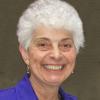
Julia Occhiogrosso, 50, was the sixth of seven children born to Frank and Gloria Occhiogrosso. Her twin sister, Christa, followed her by 3 minutes.
 Her parents, respected leaders in their local parish of St. Jerome in the Flatbush section of Brooklyn, sent their children to its elementary school. And as owners and agents of Ideal World Travel, they could arrange trips for anyone to go anywhere in the world, taking particular delight in sending tourists to the Holy Land.
They could not have guessed that three of their daughters would journey across the country to live among the destitute served by Catholic Worker communities in Los Angeles and Las Vegas. These are lands made holy by those who devote themselves to serving society's homeless and hungry men, women and children.
Julia, what values did your parents instill in you?
My parents valued integrity. They led a life guided by Christian principles. They modeled hard work and contributed to the local community. They had a caring relationship with each other and commitment to the family. They provided solid ground, consistency and a loving, affectionate home.
How did your siblings influence you?
During my years at Edward R. Murrow High School, my eldest sister, Rosemary, was studying to be a nurse and working as a volunteer with the United Farmworkers in Delano, Calif. I was aware of Cesar Chavez and the United Farm Workers movement because my two older siblings, Regina and Michael, were active with their local boycott in Brooklyn. I was 13 when I joined them on my first picket line.
Did anyone exert special influence on you?
Rosemary, through her letters describing her work with the poor in California. Her words, "We must never forget the poor," stayed inside me. While Regina and Michael had liberal political perspectives that certainly affected my formation, Rosemary was motivated by her Catholic faith. While Rosemary was in Delano, members of the L.A. Catholic Worker recruited her to administer their free clinic on Skid Row. In 1979, she joined the LACW community.
What brought you there?
The summer my twin and I graduated from high school, our parents gave us airline tickets to visit Rosemary. Rather than opting for Disneyland and other tourist attractions, I was drawn to working in the soup kitchen. Little did my parents expect us to come home with a desire to join the Catholic Worker. Following that first summer, I returned to New York to attend SUNY Cortland. Throughout the year, I stayed in contact with Catherine Morris, an LACW leader. The next summer, Christa and I returned as volunteers.
 Did some particular experience strengthen your resolve?
I remember tagging along with Mary Smith, a nurse in the community. We went door to door in the run-down Skid Row hotels. Mary spoke Spanish, informing the families about a summer project for children. We walked tenuously through darkened hallways, avoiding broken glass. The air reeked of urine. Peeking out from behind their moms were little children with dazed eyes. They seemed to wonder, "What can you do for me?" My heart knew in those moments that I was being invited to be with the poor. In 1982, I dropped out of SUNY and Christa left the New York School of Visual Arts. We lived and worked at the LACW until 1986.
Christa then left to pursue her degree as an art therapist. Rosemary moved on and I was commissioned to open the LACW's first sister house in Las Vegas, not far from the Nevada Nuclear Test Site, which we opposed.
How did you get started?
LACW volunteer Rick Chun spent six months with me. We hit the streets serving ice water to people in the streets. We asked what would best serve their needs. They wanted coffee and breakfast for the day laborers. This was the start of the morning soup line.
Did others join you?
For the first five years, different people came for six months to a few years. The lack of a consistent, long-term community was taking a toll on me. Just as I thought I needed a break, Gary Cavalier, whom I'd known at the LACW, joined me. We shared similar values. Gary brought insight, energy and creativity to the LVCW. His background in printing and publishing helped improve our newsletter, Manna. We were married in 1994.
How did that change your life?
Because I wanted a family, we adopted two boys. We moved out of the hospitality house with Gary commuting to run the projects. When the boys started school, I was able to spend more time at the Worker. We soon were running a grassroots interfaith program for homeless families, along with the Catholic Worker house.
Did the boys bring about any change in your commitments?
In 1996, we moved closer to a Montessori school run by a friend who accepted the boys without charge. When they approached adolescence, Cody and Nick began developing bipolar disorder and were reliving the psychological trauma of early childhood abuse and neglect. By the time they were 12 and 13, we were losing them to the streets. Many years at the Catholic Worker had shown us the pains of mental illness, but now it was in our home.
What happened next?
After they spent months in dangerously disturbing acting-out behaviors, I found a place in Colorado that understood what was happening and how to help our family. In the summer of 2010 we were granted a sabbatical leave to move to Colorado for the support and expertise needed to stabilize our sons.
 What happened at the LVCW?
The work continues. Just when we needed to leave, a couple that had spent a year in L.A. volunteered to take over. Gary commutes to Las Vegas. And day by day we work toward our sons' stability and independence. The older will be 18 in March. We've taken in three more foster sons and plan to return to the LVCW in a few years.
Julia, you've taken on some large challenges. Has any particular Scripture passage sustained you?
Different passages speak to me differently in different moments. The parable of loaves and fishes and Matthew 25, "Whatsoever you do to the least of these you do unto me," have special meaning for me. The paradoxes and metaphors found in Scripture show up often in my thoughts and they influence my writing.
What is your image of God?
I envision God incarnated in the dynamic of human relationships. I embrace my image of God when I'm able to revere both the wounds and sacredness in myself and others. In human relationships, we're given the privilege to engage in the give-and-take of a love that endures suffering, sacrifice and commitment, as well as a love that comforts, rejoices and hopes.
What about your faith is most meaningful to you?
Faithfulness to Jesus' message of radical love and forgiveness provides infinite possibilities toward personal and social transformation.
Who most influenced your belief system?
Dorothy Day and Peter Maurin, co-founders of the Catholic Worker Movement. Other influences include Jeff Dietrich and Catherine Morris, who were my first mentors with the Catholic Worker and remain loyal friends.
Please explain.
I was in my 20s when I first joined the L.A. Catholic Worker community. It was a very exciting time for me. The work with the poor and nonviolent peace protests and living in community all felt right for me. But it was not until a couple years into it that I became interested in understanding the history, vision and principles that sustained the Catholic Worker lifestyle. Dorothy, Peter and all the early members of the Catholic Worker gave expression to a contemporary understanding of the Christian life that still inspires my journey.
Where did you feel most at home?
Surrounded by the love, friendship and support of my community and family.
Why?
The heart of the Catholic Worker mission revolves around the practice of the corporal Works of Mercy, and I have known the treasures and disappointments of attempting to follow this practice faithfully. It is this type of human engagement that continues to be a path of personal challenge, introspection and spiritual growth. For me, the practice of the Works of Mercy provides the opportunity to experience the power of God's love incarnate.
How do you bring your faith to the workplace?
Here in Colorado, I work with some of the most severely abused and neglected children in our society. Their need for healing requires much patience and understanding. They exhibit behaviors that would push the kindest of hearts to abandon them -- this is indeed part of their pathology. Jesus' witness of relentless persistence to the outcast "undeserving poor" is an enduring model for me. My faith in the presence of the Divine in even the most volatile and aggressive ones sustains me in this work.
How do you pray?
In many ways. I feel close to our Creator when I walk down a beautiful country road. In the same way, I know God's wonder and holiness in liturgical rites and communal prayer. Prayerful moments can come to me as I comfort a crying child or look in to the eyes of a man as I serve him a bowl of soup. Creative, life-giving work is a form of prayer for me.
What in contemporary Catholicism encourages or distresses you?
What distresses me about Catholicism is the misuse of power and the hierarchical structures that in many cases are antithetical to the Gospel model of love and service. What encourages me are the many, many ordinary people of faith who are guided and inspired by the powerful social teachings of the church.
What causes you sorrow?
I am filled with sorrow about injustice to the most vulnerable members of our society. Human suffering and destruction to creation causes me great pain.
What causes you joy?
I am filled with joy from friendships, community and holy work. The gift of beauty, especially from creation, fills me with joy.
[Mercy Sr. Camille D'Arienzo, broadcaster and author, has written a soon-to-be-published book titled Stories of Forgiveness.]
| We can send you an email alert every time Conversations with Sr. Camille is updated. Go to this page and follow directions: Email alert sign-up. If you already receive email alerts from us, click on the "update my profile" button to add Conversations with Sr. Camille to your list. |