Vatican II eye-witness speaks out

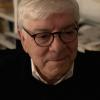
Earlier this month, theologian Giovanni Franzoni, a former Benedictine abbott and one of the youngest participants at Vatican II, and now one of the few remaining eyewitnesses, delivered his reflections on the council during the 31st Congress of the Asociacion de Teologas Juan XXIII in Madrid.

Fellow NCR Today blogger Bob McClory wrote about this yesterday (See Former Abbott: Paul VI undermined Vatican II), but it bears more attention.

Franzoni' talk, translated into English and posted on the Web site of Iglesia Descalza, is highly valuable simply for its eyewitness quality. On the website, the title is Vatican II: Lost and betrayed. The reflections are not quite that grim. Franzoni notes the positive advances, often pushed by Pope Paul VI, on matters of social justice, world peace and diminishing the temporal power of the papacy.

At the same time, he takes a different tack from most of the common, contemporary analysis that lays the blame for the rollback of council reforms at the feet of Pope John Paul II and his successor, Benedict XVI. While they may have reinforced the movement to restore papal power and cut off discussion of expansion of ministries, of gender and of sexuality, Franzoni makes a convincing case that the original papal interventions cutting off any further consideration of such matters were made unilaterally by Paul VI, even as the council fathers were signing off on documents extolling collegiality.

It is good to have these recollections in an era when the raw activity of the council and its impulses for greater lay participation and broader collegiality among the ordained can be obscured beneath decades of a kind of theological gerrymandering. The reality is that the Spirit may have moved people onto that big stage now nearly 50 years ago, but the imperfect documents that resulted were the result of a great deal of human activity, rough-and-tumble politics, and attempts to protect vested interests.

Franzoni provides a wonderful eyewitness recounting of some of those moments. And his will be among the last eyewitness recollections we'll have.

Thanks to Brian Coyne, editor and publisher of the Australian website Catholica: A Global Conversation, www.catholica.com.au, for calling my attention to the talk and sending on the link. It deserves wide circulation.

Subscribe to NCR

Want to read more about important issues in the life of the Church? A subscription to NCR will keep you up to date and informed.

Subscribe now!

ROMAN CLIQUES,NOW &

ROMAN CLIQUES,NOW & THEN....... Thanks, Tom. Since John XXIII's death in 1963, the Roman clique has constantly used, and still uses, all its weapons to undo the positive reforms Good Pope John bravely sought to initiate. For 300 years early Christians operated consensually. Constantine then tragically gave the bishops coercive power and for 1,700 years many bishops have been addicted to it. Since 1870 when the pope lost his political power in the Papal States, the Roman clique has used every trick to maintain power, including the mystical smokescreen of "infallibility". Often, this power has been and still is used to advance the privilege and personal wealth of bishops. The deceitful and manipulative way Paul VI and the Roman clique undermined the pope's own Birth Control Commission's approval of contraception is described by clicking on to http://ncronline.org/news/vatican/new-birth-control-commission-papers-re.... Perhaps John Allen is right in seeing as a "blessing in disguise" the prosecution of the Roman clique by the International Criminal Court. See the comment to John Allen's recent column entitled "POPE IN HANDCUFFS?" accessible by clicking on to http://ncronline.org/blogs/all-things-catholic/blessing-vatican-really-d...

Jerry Slevin on Sep. 28,

Jerry Slevin on Sep. 28, 2011.

You stated:

"ROMAN CLIQUES,NOW & THEN....... Thanks, Tom. Since John XXIII's death in 1963, the Roman clique has constantly used, and still uses, all its weapons to undo the positive reforms Good Pope John bravely sought to initiate. For 300 years early Christians operated consensually. Constantine then tragically gave the bishops coercive power and for 1,700 years many bishops have been addicted to it. Since 1870 when the pope lost his political power in the Papal States, the Roman clique has used every trick to maintain power, including the mystical smokescreen of "infallibility". Often, this power has been and still is used to advance the privilege and personal wealth of bishops. The deceitful and manipulative way Paul VI and the Roman clique undermined the pope's own Birth Control Commission's approval of contraception is described by clicking on to http://ncronline.org/news/vatican/new-birth-control-commission-papers-re.... Perhaps John Allen is right in seeing as a "blessing in disguise" the prosecution of the Roman clique by the International Criminal Court. See the comment to John Allen's recent column entitled "POPE IN HANDCUFFS?" accessible by clicking on to http://ncronline.org/blogs/all-things-catholic/blessing-vatican-really-d..."
----------------------------------------
Hi, Jerry
You are absolutely correct. If you have the time---hop over to www.catholica.com.au and read Edgar Davie's three part analysis of "Papal Infallibility: A Layman Challenges the Arguments". His writing is masterful and well documented.

He did a detailed analysis of the situation (with the Birth Control Commission) and writes about the 'minority reports' issued to Paul VI that caused him to change his mind. BTW---guess who was on the Roman Clique which convienced Paul VI to disregard the work of the 79 bishops and Catholic scholars dealing with birth control? It was Bishop Karol Wojtyla (later to become Pope John Paul II).

Wojtyla wrote:
"If it be declared that contraception is not sin in itself, then we should have to concede frankly that the Holy Spirit had been on the side of the Protestant Churches in 1930. It should likewise have to be admitted that for half a century the Spirit failed to protect Pius XI, Pius XII, and a large part of the hierarchy from srious error. This would mean that leaders of the Church, acting with extreme imprudence, had condemned thousands of innocent human acts, forbidding under pain of eternal damnation, a practice which would now be sanctioned."

Paul VI---did not want the fundamental principal of infallibility questioned, so he issued a decretal, "Humanae Vitae" infallibly condemning all contraception as sinful.

Yet during the time of Christ and the Apostles---contraception was approved by Jewish law and practiced by Christians under many circumstances, the primary method being vinegar soked "absorbents". This Orthodox Jewish law regarding contraception remains unchanged today.

More Vatican II’s inside

More Vatican II’s inside stories:

Influences on Pope Benedict
In the review of Georg Ratzinger's book Mein Bruder der Papst, ("My brother the pope"), (The Church in the World, 24 September) your correspondent refers to the author's "understanding" of the much-maligned Cardinal Alfred Ottaviani, who was Secretary of the Holy Office from 1959 to 1968. It is suggested that Pope Benedict exhibits sympathy for his forerunner. There can be no doubt the cardinal was the whipping-boy for the press though there were a fair number of curial officials who shared his rigid and static view of dogma. He was certainly the most powerful curial official at the time of the Second Vatican Council and was seen rightly as one of the fiercest opponents of the views that were to be embodied in the Council. With a group of like-minded, hard-line theologians, he attempted to hijack the Council's agenda in an attempt to steer discussions away from the fundamental issues facing the Church. Fortunately, the bishops whose pastoral experience convinced them that renewal was essential were able to ensure that the debates were open and uninhibited. The council documents were for Cardinal Ottaviani a bitter pill to swallow as their tenor ran counter to his whole concept of theology and the Church.

It is generally agreed that, as a person, he was a brilliant scholar, devout, dedicated, urbane and good company. However, during his tenure of the Holy Office, he supervised a harsh, suspicious and unbending administration with nostrils flared for any whiff of unconformity. He himself, in an interview with a reporter from the Milan weekly Gente in 1966, admitted that the curia had over the generations been guilty of "dogmatic imperialism" and had departed from the guidelines laid down by Pope Benedict XIV (1740-58) as part of his reform of church government procedures. The other dicasteries exhibited the same rigorous supervision over bishops, directors of seminaries and university professors; promising careers were snuffed out by the curia's readiness to react swiftly and harshly to denunciations however ill-founded they were. After his election, Pope John XXIII demanded to see the file that had been kept on him in the Vatican archives. To his dismay, he found that for years he had been under surveillance: he had been accused of being a modernist because he had received a postcard years before from a former seminary classmate who had left the Church.

I hope that Pope Benedict XVI will not allow his "understanding" of Cardinal Ottaviani's pre-Vatican II stance to overlook the fact that the latter presided over a regime that did great harm to the Church. Sadly, there are still Catholics who yearn for the old fortress-Church and its authoritarian concept of religion. If the curia were to implement the findings of the rich seam of Vatican II documents to which the Council fathers assented and which are not widely known even among devout Catholics, the face of the Church would be transformed. But how will that come about unless the Curia's remit is drastically overhauled, the term of office of heads of dicasteries is curtailed, bishops are accorded the role assigned to them in the Vatican II documents and synods be able to deal with issues affecting national and local Churches. The Holy Spirit has his work cut out.
Robert A Murphy, Newcastle upon Tyne (in a letter tho The Tablet)
-----------------------------------------------------
Limericks and humor at Vatican II
September 30, 2011, 8:09 pm
Posted by Joseph A. Komonchak
It was not all work and no play at the Second Vatican Council. While speeches, momentous, portentous, and dull were being delivered in very differently accented Latin, a few bishops kept themselves awake by composing limericks, that distinctively English literary genre. At my blog I have gathered as many of these as I could find in a variety of sources. They vary considerably in quality, and sometimes one needs to know the incidents that prompted them to appreciate them; but still they may be of general interest. I have added two pages on various attempts at humor during the Council. To entice you in, here is a limerick about four major figures at the Council; I’ve seen it in four or five different versions, including one in Latin.

Of Congar and Rahner and Küng
The praises are everywhere süng.
But Ottaviani
One fine domani (day after)
Will see that they’re properly hüng.
(In Commonweal)

Doesn't John O'Malley, S.J.,

Doesn't John O'Malley, S.J., make similar observations about Paul VI's role?

If what the Abbott states is

If what the Abbott states is accurate, then there is finally an explanation for the church's obsessions with authority and sex as well as the poor quality of the bishops.
Under the circumstances, another church council might well be very destructive.
The people involved seem to be unable to recognize the church's problems, far less to be able to heal them.
Sometime in the future, perhaps a wonderful "fluke" like Pope John XXIII will come forth. Until then,the current unhappy condition will likely continue.

"vested interests" says it

"vested interests" says it all.

Yup, typical curial

Yup, typical curial malfeasance to "bind" the Holy Spirit for political reasons and to protect their power and vested interests. Is anyone surprised?

The father of a Benedictine

The father of a Benedictine house is an 'abbot' not an 'abbott'. It is surprising that a Catholic paper would make such a basic mistake.

There was improvement in

There was improvement in attitudes toward social justice and world peace that resulted from Vatican II and survived, but liturgy is the main life activity of the vast majority of lay Catholics, and it could and should have been through preaching in liturgical settings, the only places where the so-called teachers and continuing "learners" got together, and from which the valuable meaning of everything else emanated that Vatican II education should have taken place. It could and should have been reflected in the good, thawed, continuing liturgical changes. Unfortunately, instead of promoting such changes, instead of taking advantage of making liturgy meaningful and worthwhile, instead of thawing it into sensible activity, John Paul II and now Benedict are proving themselves to be only retrogrades in the equivalent of blabbing a dead language, destroying, not just losing, the opportunities to let meaningful liturgy be the yeasting center of Catholic religious life. As a consequence, Benedict is following John Paul II in presiding over a dying church. That church has lost touch with Jesus and continues to be mired in meaningless, rigid forms, the only way that Benedict sees as a means of keeping everything unchanging and rigidly royal--according to his personal notions.

The only gerrymandering I

The only gerrymandering I have witnessed in the past 50 years since V-II has come from those who use the documents of the Council to destroy the One, Holy, Catholic and Apostolic Church.

After reading this story, I

After reading this story, I felt sad that a significant chapter in my life and that of the Church has not only ended, but was aborted before it could be birthed. What was presented as the winds of the Spirit blowing through open windows is shown, as Mr. Roberts indicated, as 'rough and tumble politics.' How much of the Catholic Church is really charade or fascade? Who can we trust? What can we trust? It seems we are continually fed from the tree of knowledge of good and evil only to taste a bitter fruit.

in fall '74, as a grad

in fall '74, as a grad student in theology at st john's university, collegeville, mn i was mining the basement of the library, when i stumbled upon the acts of vatican ii from the ante-preparatory to its completion. it had to measure several yards long. i paged quickly through one hefty volume afer another until i happened upon the oral interventions on the laity during the debate on 'de ecclesia.' whoa!
as it turned out, i limited myself to just 90 oral interventions. my objective? simply to show "this is what they said."
oh yeah, and to ask if they had any idea of the implications of what they said.
during that same semester, cardinal suenens visited sju, and we grad students had the opportunity to engage him in casual and candid conversation.
i asked him he ever imagined that his intervention about the gifts of the spirit reflected what was already happening in northern europe and north america.
cardinal speak.
so, do we take the bishops of vatican ii at what they said?
or, do we say they had no idea what they were saying?
the acta don't lie.
they record every clearing of the throat.

Residual AXE-GRINDING

Residual AXE-GRINDING notwithstanding (Paul VI suspended Franzoni from his OSB abbacy in 1973 and de-frocked him in 1976 after he joined the Communist party http://en.wikipedia.org/wiki/Giovanni_Franzoni ), one of Franzoni's most important insights about Vatican II in this paper remains extremely valid and valuable:

"But, precisely because of THE OPPOSITION OF THE TWO ECCLESIOLOGIES that runs through the documents of Vatican II, while some found strength in some assertions, others, that is, the Roman Curia and conservative bishops, fortify themselves in others, and as a consequence THE TENSION BEGAN, that has lasted to our time, between some and others, all bolstering their choices with the words of the Council."
==============================================================================
Nowhere is this CONCILIAR BI-POLARITY (SCHIZOPHRENIA?) more evident than the continuing hot-button topic of LITURGICAL LANGUAGE which began with the promulgation of Sacrosanctum Concilium #36:

36. 1. Particular law remaining in force, the use of the Latin language is to be preserved in the Latin rites.

2. But since the use of the mother tongue, whether in the Mass, the administration of the sacraments, or other parts of the liturgy, frequently may be of great advantage to the people, the limits of its employment may be extended. This will apply in the first place to the readings and directives, and to some of the prayers and chants, according to the regulations on this matter to be laid down separately in subsequent chapters.

3. These norms being observed, it is for the competent territorial ecclesiastical authority mentioned in Art. 22, 2, to decide whether, and to what extent, the vernacular language is to be used; their decrees are to be approved, that is, confirmed, by the Apostolic See. And, whenever it seems to be called for, this authority is to consult with bishops of neighboring regions which have the same language.

4. Translations from the Latin text into the mother tongue intended for use in the liturgy must be approved by the competent territorial ecclesiastical authority mentioned above.

From the get-go the linguistic battle lines were drawn and shall apparently endure PER OMNIA SAECULA SAECULORUM:
http://www.cantemusdomino.net/2008/06/23/sacrosanctum-concilium-36-a-res...

I don' defend the kind of

I don' defend the kind of decision-making about Humanae Vitae, or HV itself, but I won't forget either the brave steps of Paul VI in a strongly polarized environement. I don't forget, also, that, against the colonial empires of his time, he stood for independence and freedom of the colonies. I won't forget that he supported the LAST Christian-Democrat political leader in Italy, who, with his support, joined in the same government CDs, Socialists and... Communists (Italy's PC was the first European one to break with Moscow ortodoxy). I refuse to forget that when Moro was kidnapped by the Red Brigades, the CD party betrayed him, by refusing any offer of negotiation, so condemning him to death. And, the last but not the least, that Paul VI, Moro's personal friend and supporter, offered to exchange his life for Moro's. Sometimes, in the US and the NCR, some knowledge about history, and mainly European history, is lacking. I would trade, anytime, a JPII and a BXVI for a PVI. Surely XXIII is the greater of all - and JPI, chosen by him: since his youth, he called him "my little Einstein", could have beem greater still. Hélas, there's no way of going back. And I would recommend the enthusiasts of VIII, to analyse, one by one, who will elect the next pope. Good sense and the right portions of light and shadows are needed in such a terrible and Dark Age.Don't spend all our fireworks just because someone seems to confirm our opinions. I assure those who called me some ugly names, that perharps I'm more "liberal" than them, and in some cases, who knows, for longer and in harder circunstances. I keep praying that the Holy Spirit, who can reserve us lots of surprises,will use the crisis to bring to the world what the world, not only the Church/Churches/Religions, need the most: a structure able to accomplish Jesus' message and heal the suffering humanity.

Take a look at the kind of man that Paul VI befriended: "Aldo Moro’s widow, Eleonora Chiaravelli, died recently at Rome. She was 94. To her the president of the Christian Democracy had addressed some of the 86 letters written during his captivity with the Red Brigades. Very touching is the last letter he wrote just before his execution: “My most sweet Noretta, after a moment of very feeble optimism due to a misunderstanding on my part of what I was told, we have reached, I believe, the decisive moment. I don’t think it is the case of discussing the thing in itself and the incredible punishment that is falling on my meekness and moderation…

“At any rate, I would like the full responsibility of the leaders of the Christian Democracy with their absurd and incredible behavior to remain well clear. We must state this very firmly and a possible medal which is usually given in such cases must not be accepted… But all this is passed. For the future, there is, in this moment, an infinite tenderness towards all of you, the memory of each and everyone, a very great love full of all the memories apparently meaningless yet very precious to me. United in my memory may we live together. It will seem that I am with you…

“Give a kiss and a caress to all on my behalf, face by face, eye by eye, hair by hair. Be strong, my sweetest, in this absurd and incomprehensible trial. They are God’s ways. Remind me to all our relatives and friends with immense affection and to you and all the warmest embrace, pledge of an eternal love. I wish I could understand, with my small, mortal eyes, how we will see each other afterwards… If there were light, it would be most beautiful. My love, feel me as always with you and hold me tight…” (The letters were only discovered several years after his execution)

We could use one or two leaders like him. In the Church and outside.

I wouldn't judge so

I wouldn't judge so harshly.

Just a question: without Paul VI, and after the death of John XXI (The Great!), Vatican II would be possible? Can you imagine it under JPII? Just a comparison: in Paul VI's time, Father Arrupe, the great Jesuit General, had free access to the Pope. While during JPII time he was usually kept hours waiting and was subjected to all kinds of humiliations. Sometimes, a small "anedocte" tells a lot.

Yawn.....Pope Paul IV's

Yawn.....Pope Paul IV's Humanae Vitae ring a bell. Somebody should read "The Rhine Flows into the Tiber", A History of Vatican II By: Rev. Fr. Ralph Wiltgen which exposes duplicitous efforts by cabal of European bishops to hijack the power of the papacy amongst other things.

If the Abbott's recollections

If the Abbott's recollections are accurate, the unfortunate state of the church is easier to understand. The Vatican apparently has three obsessions: authority, sex, and money. The poor quality of the bishops is no accident. They are nothing more than sycophants of whatever clique of the Vatican can advance their careers."Humanae Vitae" isn't accepted by the laity. The Vatican uses it as a kind of "litmus" test to see if a bishop tows its'line. To the laity, the bishops look foolish by propounding it.
The disgusting priest pedophile scandal adds sex crimes and cover ups directly to the bishops and their masters in the Vatican.
Then, of course, there is the Vatican's love of money as manifested by its' bank scandal, the Marciel affair, Sedano's conduct in office, etc.
The bishops contribute with their love of money before their concern for the safety of children, their expensive lawyers to protect their attempts to evade the law, their love of "bling" (which makes them appear ridiculous), their "gifts" to Vatican officials to advance their careers, etc.
Sometime in the future, perhaps a wonderful "fluke" like Pope John XXIII will come along. Until then, it will be a long winter.

Post new comment

NCR Comment code:

  1. Be respectful. Do not attack the writer. Take on the idea, not the messenger.
  2. Use appropriate language. Avoid vulgarities and slurs.
  3. Keep to the point. Deliberate digressions don't aid the discussion.

For more detailed guidelines, visit our User Guidelines page.

The content of this field is kept private and will not be shown publicly.
(if you have one; if not, leave this blank)
  • Web page addresses and e-mail addresses turn into links automatically.
  • Allowed HTML tags: <a> <em> <strong> <cite> <code> <ul> <ol> <li> <dl> <dt> <dd> <font> <swf> <swf list>
  • Lines and paragraphs break automatically.
  • You may use <swf file="song.mp3"> to display Flash files inline

More information about formatting options

CAPTCHA
This is to prove you are a human visitor and to prevent automated spam submissions.
Image CAPTCHA
Enter the characters shown in the image.